

Join Our Newsletter To Be Informed When New Videos Are Posted
Hebrew Text
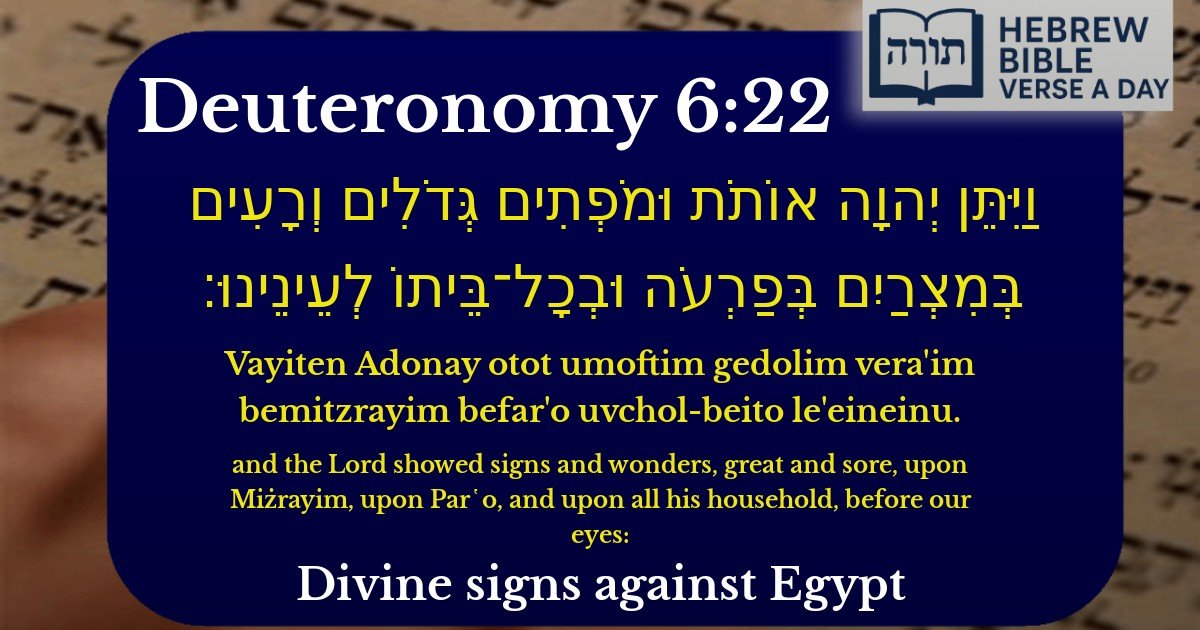
וַיִּתֵּן יְהוָה אוֹתֹת וּמֹפְתִים גְּדֹלִים וְרָעִים בְּמִצְרַיִם בְּפַרְעֹה וּבְכָל־בֵּיתוֹ לְעֵינֵינוּ׃
English Translation
and the Lord showed signs and wonders, great and sore, upon Miżrayim, upon Par῾o, and upon all his household, before our eyes:
Transliteration
Vayiten Adonay otot umoftim gedolim vera'im bemitzrayim befar'o uvchol-beito le'eineinu.
Hebrew Leining Text
וַיִּתֵּ֣ן יְהֹוָ֡ה אוֹתֹ֣ת וּ֠מֹפְתִ֠ים גְּדֹלִ֨ים וְרָעִ֧ים ׀ בְּמִצְרַ֛יִם בְּפַרְעֹ֥ה וּבְכׇל־בֵּית֖וֹ לְעֵינֵֽינוּ׃
🎵 Listen to leining
Parasha Commentary
📚 Talmud Citations
This verse is quoted in the Talmud.
📖 Pesachim 118a
The verse is referenced in the context of discussing the miracles performed in Egypt, emphasizing the greatness of the signs and wonders shown by God.
📖 Megillah 14a
The verse is cited in a discussion about the prophets and the miracles they witnessed, highlighting the divine intervention in Egypt.
Understanding the Verse in Context
The verse (Devarim 6:22) recounts the miraculous signs and wonders that Hashem performed in Mitzrayim (Egypt) against Pharaoh and his household. This serves as a foundational testimony of divine intervention in Jewish history, reinforcing the obligation to remember and internalize these events.
Rashi's Commentary
Rashi explains that the phrase "אותות ומפתים" (signs and wonders) refers to two types of miracles:
Rashi also notes that the phrase "גדלים ורעים" (great and sore) emphasizes both the magnitude and severity of the plagues, highlighting their dual purpose: to punish the Egyptians and to liberate Bnei Yisrael.
Rambam's Perspective
In Moreh Nevuchim (Guide for the Perplexed 3:50), Rambam teaches that the miracles in Mitzrayim were not arbitrary but served to establish the truth of Moshe's prophecy and Hashem's sovereignty. The plagues were meticulously structured to dismantle Egyptian idolatry, targeting their false beliefs (e.g., the Nile, frogs, and sun deities).
Midrashic Insights
The Midrash (Shemot Rabbah 9:1) elaborates that the phrase "לעינינו" (before our eyes) underscores that the miracles were witnessed firsthand by Bnei Yisrael, ensuring their transmission as an eternal testimony. The Midrash also states that the plagues were "great" in their impact and "sore" in their suffering, leaving no doubt about their divine origin.
Chizkuni's Explanation
Chizkuni adds that the inclusion of "ביתו" (his household) refers not only to Pharaoh's family but also to his advisors and magicians, who were complicit in his refusal to release Bnei Yisrael. Their punishment demonstrated that no one could evade divine justice.
Practical Lessons