

Join Our Newsletter To Be Informed When New Videos Are Posted
Hebrew Text
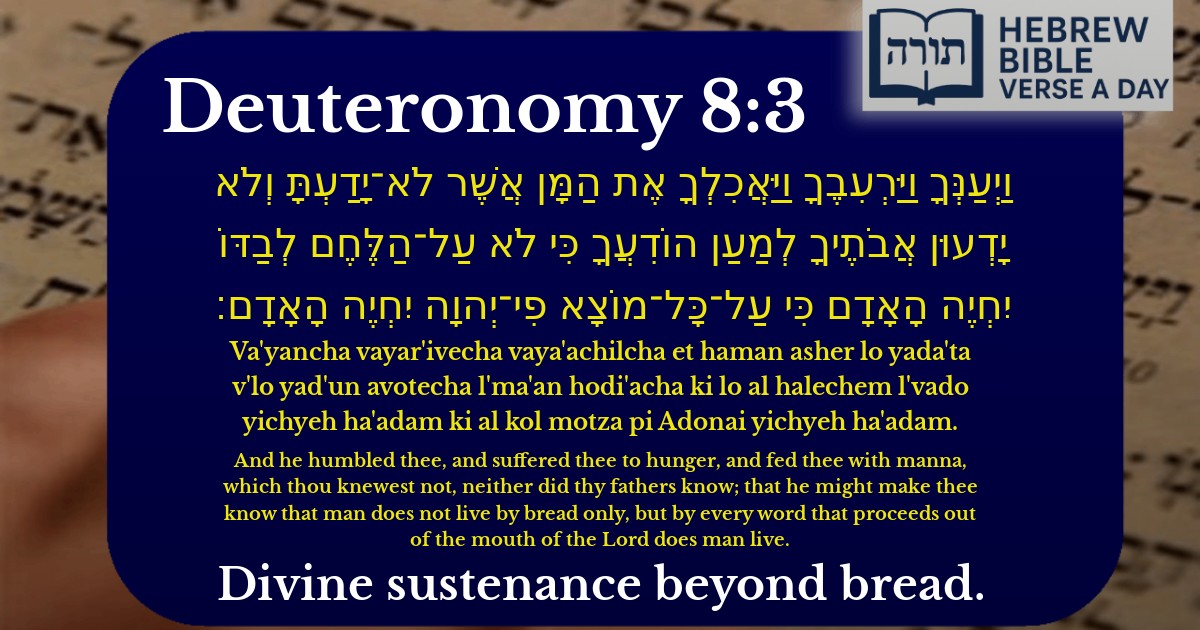
וַיְעַנְּךָ וַיַּרְעִבֶךָ וַיַּאֲכִלְךָ אֶת הַמָּן אֲשֶׁר לֹא־יָדַעְתָּ וְלֹא יָדְעוּן אֲבֹתֶיךָ לְמַעַן הוֹדִעֲךָ כִּי לֹא עַל־הַלֶּחֶם לְבַדּוֹ יִחְיֶה הָאָדָם כִּי עַל־כָּל־מוֹצָא פִי־יְהוָה יִחְיֶה הָאָדָם׃
English Translation
And he humbled thee, and suffered thee to hunger, and fed thee with manna, which thou knewest not, neither did thy fathers know; that he might make thee know that man does not live by bread only, but by every word that proceeds out of the mouth of the Lord does man live.
Transliteration
Va'yancha vayar'ivecha vaya'achilcha et haman asher lo yada'ta v'lo yad'un avotecha l'ma'an hodi'acha ki lo al halechem l'vado yichyeh ha'adam ki al kol motza pi Adonai yichyeh ha'adam.
Hebrew Leining Text
וַֽיְעַנְּךָ֮ וַיַּרְעִבֶ֒ךָ֒ וַיַּאֲכִֽלְךָ֤ אֶת־הַמָּן֙ אֲשֶׁ֣ר לֹא־יָדַ֔עְתָּ וְלֹ֥א יָדְע֖וּן אֲבֹתֶ֑יךָ לְמַ֣עַן הוֹדִֽיעֲךָ֗ כִּ֠י לֹ֣א עַל־הַלֶּ֤חֶם לְבַדּוֹ֙ יִחְיֶ֣ה הָֽאָדָ֔ם כִּ֛י עַל־כׇּל־מוֹצָ֥א פִֽי־יְהֹוָ֖ה יִחְיֶ֥ה הָאָדָֽם׃
🎵 Listen to leining
Parasha Commentary
📚 Talmud Citations
This verse is quoted in the Talmud.
📖 Yoma 76a
The verse is discussed in the context of the manna that the Israelites ate in the wilderness, emphasizing the idea that sustenance comes from God's word.
📖 Sotah 48b
The verse is referenced to illustrate the principle that spiritual sustenance is as vital as physical sustenance.
Context of the Verse
This verse appears in Devarim (Deuteronomy) 8:3, where Moshe Rabbeinu reminds Bnei Yisrael of Hashem's providence during their 40 years in the wilderness. The verse highlights the divine purpose behind the hardships and miracles experienced in the desert, particularly the giving of the mann (manna).
Explanation of Key Phrases
Spiritual Lesson: "כִּי לֹא עַל־הַלֶּחֶם לְבַדּוֹ יִחְיֶה הָאָדָם"
The central teaching—"man does not live by bread alone"—is expounded upon by the Ba’al HaTurim, who connects it to Pirkei Avot (3:17), where it is taught that without Torah, there is no sustenance. The Malbim explains that physical bread alone cannot sustain a person; true life depends on fulfilling Hashem’s commandments (mitzvot) and recognizing His providence.
Midrashic Insights
The Mechilta (on Shemot 16:4) teaches that the manna was given in different forms to the righteous, average, and wicked—showing that divine sustenance is tailored to one’s spiritual level. The Midrash Tanchuma (Beshalach 20) adds that the manna was a test of faith, as Bnei Yisrael had to trust Hashem daily for their portion.
Practical Application
The Rambam (Hilchot De’ot 3:3) derives from this verse that one should not overly pursue physical sustenance but should instead focus on spiritual growth. The Chofetz Chaim teaches that this principle reminds Jews to prioritize Torah study and emunah (faith) over material concerns.