

Join Our Newsletter To Be Informed When New Videos Are Posted
Hebrew Text
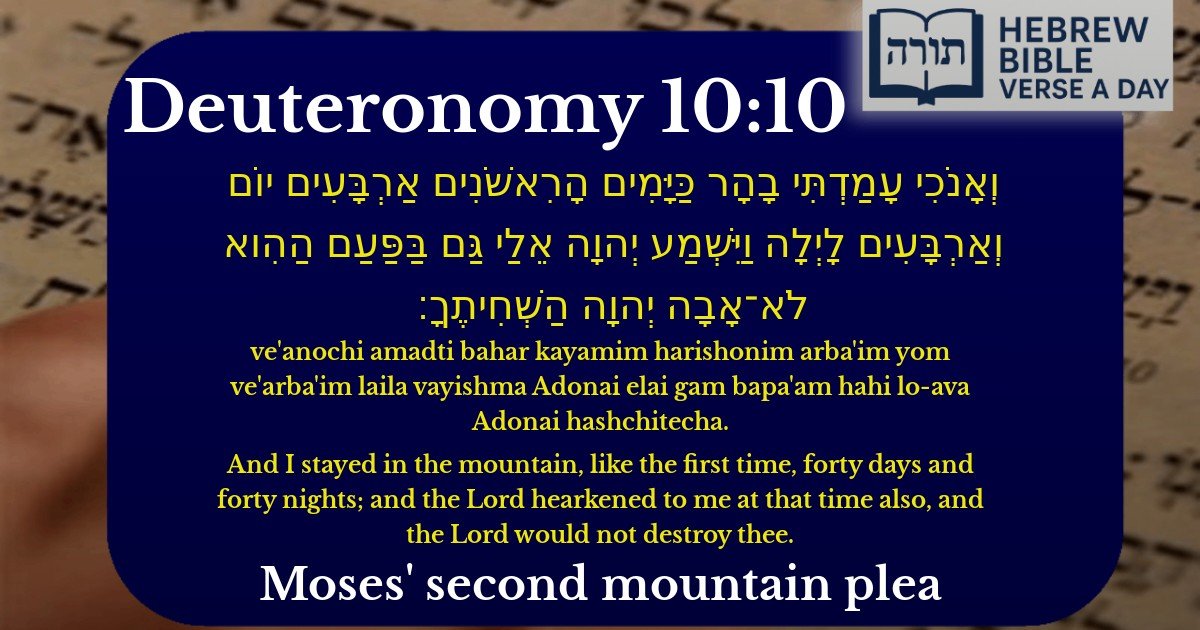
וְאָנֹכִי עָמַדְתִּי בָהָר כַּיָּמִים הָרִאשֹׁנִים אַרְבָּעִים יוֹם וְאַרְבָּעִים לָיְלָה וַיִּשְׁמַע יְהוָה אֵלַי גַּם בַּפַּעַם הַהִוא לֹא־אָבָה יְהוָה הַשְׁחִיתֶךָ׃
English Translation
And I stayed in the mountain, like the first time, forty days and forty nights; and the Lord hearkened to me at that time also, and the Lord would not destroy thee.
Transliteration
Ve'anochi amadti bahar kayamim harishonim arba'im yom ve'arba'im laila vayishma Adonai elai gam bapa'am hahi lo-ava Adonai hashchitecha.
Hebrew Leining Text
וְאָנֹכִ֞י עָמַ֣דְתִּי בָהָ֗ר כַּיָּמִים֙ הָרִ֣אשֹׁנִ֔ים אַרְבָּעִ֣ים י֔וֹם וְאַרְבָּעִ֖ים לָ֑יְלָה וַיִּשְׁמַ֨ע יְהֹוָ֜ה אֵלַ֗י גַּ֚ם בַּפַּ֣עַם הַהִ֔וא לֹא־אָבָ֥ה יְהֹוָ֖ה הַשְׁחִיתֶֽךָ׃
🎵 Listen to leining
Parasha Commentary
📚 Talmud Citations
This verse is not quoted in the Talmud.
Context of the Verse
This verse (Devarim 10:10) is part of Moshe Rabbeinu's recounting of the events following the sin of the Golden Calf. After the first set of Luchos (Tablets) were shattered, Moshe ascended Har Sinai again for another forty days and nights to plead for mercy on behalf of Bnei Yisrael and to receive the second set of Luchos.
Forty Days and Nights
Rashi explains that the phrase "like the first time" refers to the initial forty days Moshe spent on Har Sinai when receiving the first Luchos (Shemos 24:18). The repetition of forty days emphasizes the complete process of repentance and renewal. The Midrash (Tanchuma, Ki Tisa 31) teaches that these forty days corresponded to the forty days during which the sin of the Golden Calf was conceived and carried out, demonstrating that teshuva (repentance) requires equal intensity to the sin itself.
Divine Mercy and Intercession
The phrase "וַיִּשְׁמַע יְהוָה אֵלַי" ("and the Lord hearkened to me") highlights Moshe's role as an intermediary. Rambam (Hilchos Teshuvah 2:6) notes that sincere repentance, combined with the advocacy of a righteous leader like Moshe, can overturn a negative decree. The Talmud (Berachos 32a) elaborates that Moshe's prayers were so powerful that they compelled Hashem to relent from destroying Bnei Yisrael.
Hashem's Refusal to Destroy
The conclusion of the verse—"לֹא־אָבָה יְהוָה הַשְׁחִיתֶךָ" ("the Lord would not destroy thee")—reflects the unconditional love Hashem has for His people. The Sforno explains that despite their grave sin, Hashem preserved Bnei Yisrael because of the covenant with the Avos (forefathers) and His promise to establish them as a nation. The Ohr HaChaim adds that this mercy was also in merit of the future generations who would remain faithful to Torah.
Lessons for All Generations