
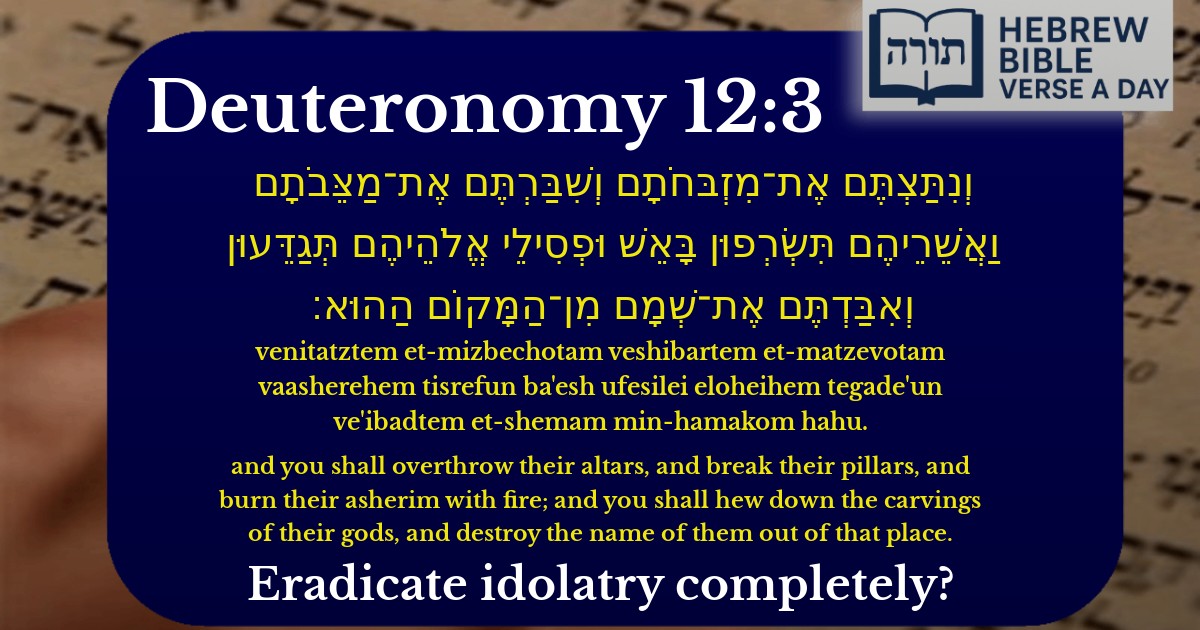

Deuteronomy 12:3 - Eradicate idolatry completely?

Deuteronomy 12:3 - דברים 12:3

Hebrew Text

וְנִתַּצְתֶּם אֶת־מִזְבּחֹתָם וְשִׁבַּרְתֶּם אֶת־מַצֵּבֹתָם וַאֲשֵׁרֵיהֶם תִּשְׂרְפוּן בָּאֵשׁ וּפְסִילֵי אֱלֹהֵיהֶם תְּגַדֵּעוּן וְאִבַּדְתֶּם אֶת־שְׁמָם מִן־הַמָּקוֹם הַהוּא׃

English Translation

and you shall overthrow their altars, and break their pillars, and burn their asherim with fire; and you shall hew down the carvings of their gods, and destroy the name of them out of that place.

Transliteration

Venitatztem et-mizbechotam veshibartem et-matzevotam vaasherehem tisrefun ba'esh ufesilei eloheihem tegade'un ve'ibadtem et-shemam min-hamakom hahu.

Hebrew Leining Text

וְנִתַּצְתֶּ֣ם אֶת־מִזְבְּחֹתָ֗ם וְשִׁבַּרְתֶּם֙ אֶת־מַצֵּ֣בֹתָ֔ם וַאֲשֵֽׁרֵיהֶם֙ תִּשְׂרְפ֣וּן בָּאֵ֔שׁ וּפְסִילֵ֥י אֱלֹֽהֵיהֶ֖ם תְּגַדֵּע֑וּן וְאִבַּדְתֶּ֣ם אֶת־שְׁמָ֔ם מִן־הַמָּק֖וֹם הַהֽוּא׃

🎵 Listen to leining

Parasha Commentary

Destruction of Idolatry in the Land of Israel

The verse (Devarim 12:3) commands Bnei Yisrael to eradicate all forms of idolatry upon entering Eretz Yisrael. Rashi explains that this mitzvah applies specifically within the borders of Eretz Yisrael, as the sanctity of the Land demands the complete removal of avodah zarah (foreign worship). The Rambam (Hilchot Avodat Kochavim 7:1) codifies this as a positive commandment to destroy all idolatrous objects and their accessories.

Specific Methods of Destruction

  • Altars (מִזְבּחֹתָם): The Sifri teaches that these must be demolished completely, not merely rendered unusable. The term "וְנִתַּצְתֶּם" implies total destruction down to the foundation.
  • Pillars (מַצֵּבֹתָם): Rashi notes these were single-stone monuments used in idol worship. The Ramban adds that they were particularly associated with Canaanite practices.
  • Asherim (אֲשֵׁרֵיהֶם): The Talmud (Avodah Zarah 45b) identifies these as trees or wooden poles dedicated to idolatry. Burning them fulfills "תִּשְׂרְפוּן בָּאֵשׁ" to prevent any future use.
  • Carved images (פְּסִילֵי אֱלֹהֵיהֶם): The Mechilta emphasizes that even fragments of idols must be obliterated ("תְּגַדֵּעוּן" - hewn to nothingness) to avoid any residual sanctity in the pieces.

Erasing the Names of Idols

The concluding phrase - "וְאִבַּדְתֶּם אֶת־שְׁמָם" - is expounded by the Sifrei to include destroying any inscriptions or place names associated with idolatry. The Rambam (Hilchot Avodat Kochavim 7:7) rules that this applies even to benign-sounding names if they reference pagan deities, ensuring no memory of avodah zarah remains in the Land.

Spiritual Significance

The Kli Yakar connects this mitzvah to the broader theme of creating a pure space for Divine service. Just as physical idols must be removed, we must eradicate internal "idolatrous" tendencies - whether arrogance, materialism, or other distractions from avodat Hashem. The thoroughness of destruction mirrors the need for complete dedication to Torah values in Eretz Yisrael.

📚 Talmud Citations

This verse is not quoted in the Talmud.

Frequently Asked Questions

Q: What does Deuteronomy 12:3 mean?
A: Deuteronomy 12:3 commands the Jewish people to destroy all forms of idol worship when entering the Land of Israel. This includes breaking altars, smashing sacred pillars, burning Asherah trees (associated with idolatry), and cutting down carved idols. Rashi explains that this commandment ensures the complete eradication of idolatry from the land to prevent any influence on the Jewish people.
Q: Why is destroying idols important in Judaism?
A: Destroying idols is crucial because idolatry (avodah zarah) is one of the most severe sins in Judaism. The Rambam (Maimonides) teaches that removing idolatry protects the Jewish people from spiritual corruption and maintains pure monotheistic belief in Hashem. The Talmud (Avodah Zarah 45b) also discusses the importance of eliminating any objects that could lead to idol worship.
Q: Does this commandment still apply today?
A: While the specific mitzvah to destroy Canaanite idols applied when conquering the Land of Israel, the principle of rejecting and removing idolatrous influences remains relevant. The Shulchan Aruch (Yoreh De'ah 146) rules that Jews must distance themselves from any form of idol worship or practices associated with it, even in modern times.
Q: What is an 'Asherah' mentioned in this verse?
A: An Asherah (plural: Asherim) was a wooden pole or tree worshipped as part of Canaanite idolatry, often associated with fertility cults. The Midrash (Sifrei Devarim) explains that these were objects of pagan worship, and the Torah commands burning them to eliminate any trace of their spiritual impurity.
Q: What can we learn from Deuteronomy 12:3 today?
A: This verse teaches the importance of actively removing negative spiritual influences from our lives. Just as the Israelites were commanded to destroy physical idols, we must 'destroy' modern distractions or ideologies that conflict with Torah values. The Mesillat Yesharim (Path of the Just) emphasizes the need for vigilance in maintaining spiritual purity in all generations.