

Join Our Newsletter To Be Informed When New Videos Are Posted
Hebrew Text
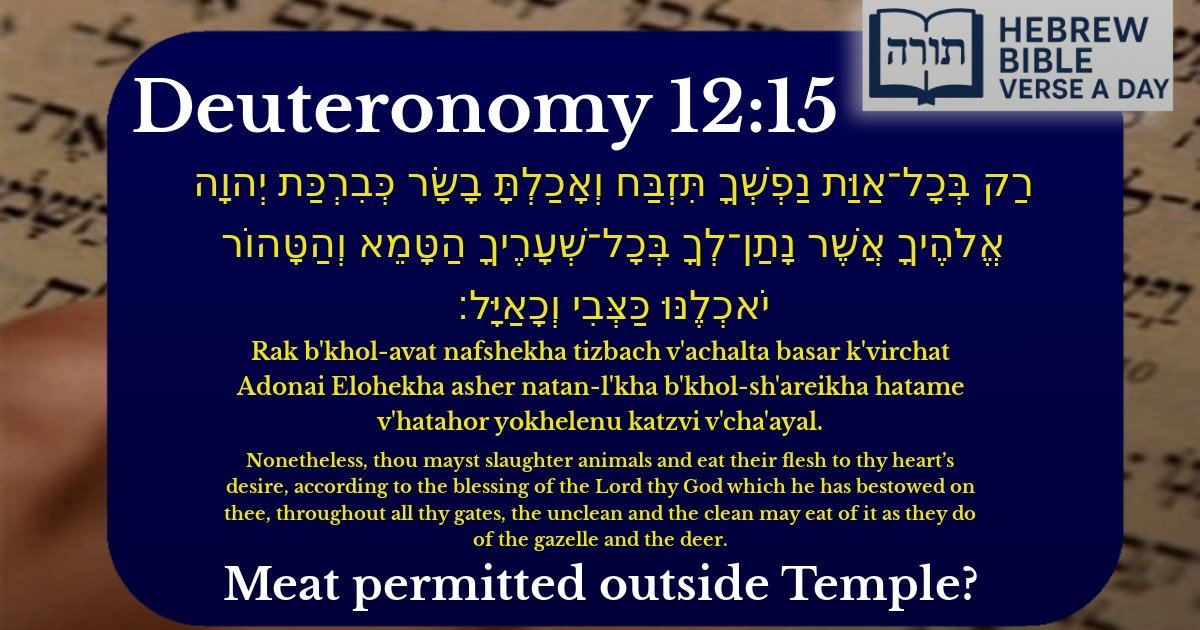
רַק בְּכָל־אַוַּת נַפְשְׁךָ תִּזְבַּח וְאָכַלְתָּ בָשָׂר כְּבִרְכַּת יְהוָה אֱלֹהֶיךָ אֲשֶׁר נָתַן־לְךָ בְּכָל־שְׁעָרֶיךָ הַטָּמֵא וְהַטָּהוֹר יֹאכְלֶנּוּ כַּצְּבִי וְכָאַיָּל׃
English Translation
Nonetheless, thou mayst slaughter animals and eat their flesh to thy heart’s desire, according to the blessing of the Lord thy God which he has bestowed on thee, throughout all thy gates, the unclean and the clean may eat of it as they do of the gazelle and the deer.
Transliteration
Rak b'khol-avat nafshekha tizbach v'achalta basar k'virchat Adonai Elohekha asher natan-l'kha b'khol-sh'areikha hatame v'hatahor yokhelenu katzvi v'cha'ayal.
Hebrew Leining Text
רַק֩ בְּכׇל־אַוַּ֨ת נַפְשְׁךָ֜ תִּזְבַּ֣ח ׀ וְאָכַלְתָּ֣ בָשָׂ֗ר כְּבִרְכַּ֨ת יְהֹוָ֧ה אֱלֹהֶ֛יךָ אֲשֶׁ֥ר נָֽתַן־לְךָ֖ בְּכׇל־שְׁעָרֶ֑יךָ הַטָּמֵ֤א וְהַטָּהוֹר֙ יֹאכְלֶ֔נּוּ כַּצְּבִ֖י וְכָאַיָּֽל׃
🎵 Listen to leining
Parasha Commentary
📚 Talmud Citations
This verse is quoted in the Talmud.
📖 Chullin 17a
The verse is discussed in the context of the laws regarding the permissibility of eating meat and the distinction between clean and unclean animals.
📖 Sanhedrin 56b
The verse is referenced in the discussion of the Noahide laws and the permissibility of eating meat for non-Jews.
Context in Deuteronomy 12:15
The verse appears in Parashat Re'eh, where Moshe instructs Bnei Yisrael regarding the permissibility of eating meat outside the context of sacrificial offerings once they enter Eretz Yisrael. This marks a shift from the wilderness experience, where meat consumption was largely tied to korbanot (sacrifices).
Rashi's Explanation
Rashi (Devarim 12:15) clarifies that this verse permits shechitah chulin (non-sacrificial slaughter) for personal consumption, not limited to festival offerings. He emphasizes that this is permitted "according to the blessing of Hashem"—meaning one should eat meat in moderation, proportionate to one's material blessings.
Rambam's Perspective
In Moreh Nevuchim (3:48), Rambam explains that the Torah initially restricted meat consumption to sacrificial contexts to discourage idolatrous practices. Once settled in Eretz Yisrael, this restriction was relaxed, but the laws of shechitah and tum'ah (ritual impurity) still applied to maintain holiness.
Inclusion of the "Unclean and Clean"
The phrase "הַטָּמֵא וְהַטָּהוֹר" teaches that even those in a state of tum'ah may eat non-sacrificial meat, unlike sacrificial meat which requires taharah (ritual purity). The comparison to gazelle and deer (which are not brought as korbanot) reinforces this distinction (Ibn Ezra).
Halachic Implications
Midrashic Insight
Midrash Tanchuma (Re'eh 7) connects this verse to the broader theme of gratitude: since Hashem grants material abundance, one must acknowledge His blessing by eating with intentionality, not mere craving ("בְּכָל־אַוַּת נַפְשְׁךָ" implies mindful desire, not uncontrolled lust).