

Join Our Newsletter To Be Informed When New Videos Are Posted
Hebrew Text
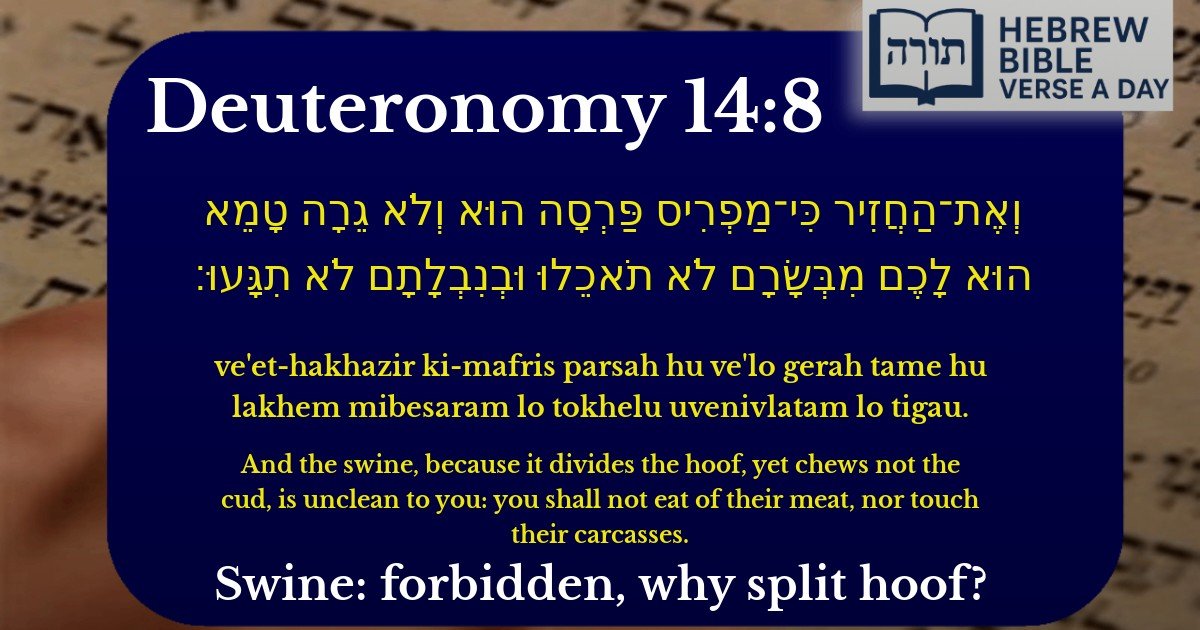
וְאֶת־הַחֲזִיר כִּי־מַפְרִיס פַּרְסָה הוּא וְלֹא גֵרָה טָמֵא הוּא לָכֶם מִבְּשָׂרָם לֹא תֹאכֵלוּ וּבְנִבְלָתָם לֹא תִגָּעוּ׃
English Translation
And the swine, because it divides the hoof, yet chews not the cud, is unclean to you: you shall not eat of their meat, nor touch their carcasses.
Transliteration
Ve'et-hakhazir ki-mafris parsah hu ve'lo gerah tame hu lakhem mibesaram lo tokhelu uvenivlatam lo tigau.
Hebrew Leining Text
וְאֶת־הַ֠חֲזִ֠יר כִּֽי־מַפְרִ֨יס פַּרְסָ֥ה הוּא֙ וְלֹ֣א גֵרָ֔ה טָמֵ֥א ה֖וּא לָכֶ֑ם מִבְּשָׂרָם֙ לֹ֣א תֹאכֵ֔לוּ וּבְנִבְלָתָ֖ם לֹ֥א תִגָּֽעוּ׃ {ס}
🎵 Listen to leining
Parasha Commentary
📚 Talmud Citations
This verse is quoted in the Talmud.
📖 Chullin 59b
The verse is discussed in the context of the laws of kashrut, specifically regarding the signs of a kosher animal and why the pig is considered unclean despite having one of the required signs (split hooves).
📖 Bava Kamma 82b
The verse is referenced in a discussion about the prohibition of raising pigs in the Land of Israel, highlighting the severity of the prohibition against swine.
The verse is cited in the midrashic interpretation of the laws of forbidden foods, emphasizing the pig's unique status as an unclean animal that displays an outward sign of purity (split hooves) but lacks the internal sign (chewing the cud).
Prohibition of the Swine in Jewish Law
The verse (Vayikra 11:7) explicitly prohibits the consumption of swine due to its incomplete kosher signs—it has split hooves (מפריס פרסה) but does not chew its cud (לא גרה). This renders it טמא (unclean) for consumption. The prohibition extends not only to eating its flesh but also to touching its carcass, as stated: "מִבְּשָׂרָם לֹא תֹאכֵלוּ וּבְנִבְלָתָם לֹא תִגָּעוּ".
Rashi's Commentary
Rashi (Vayikra 11:7) emphasizes the deceptive nature of the swine's kosher sign—its split hooves—while lacking the internal characteristic of chewing the cud. He notes that this symbolizes hypocrisy, as the swine presents itself externally as kosher while internally being non-kosher. This serves as a moral lesson against outward displays of righteousness without true internal commitment.
Rambam's Rational Approach
In Moreh Nevuchim (3:48), Rambam suggests that the prohibition of swine, among other non-kosher animals, may be rooted in health concerns, as swine were known to carry diseases in ancient times. However, he also affirms that the ultimate reason for kashrut is divine decree (גזירת הכתוב), transcending human understanding.
Midrashic Interpretations
The Midrash (Vayikra Rabbah 13:5) elaborates on the symbolism of the swine, associating it with the wicked kingdom of Edom (Rome), which, like the swine, displays a facade of civilization while engaging in corruption. This aligns with the Talmudic view (Chullin 17a) that the swine will one day "return its hooves" in the messianic era, symbolizing the ultimate rectification of its deceptive nature.
Halachic Implications