

Join Our Newsletter To Be Informed When New Videos Are Posted
Hebrew Text
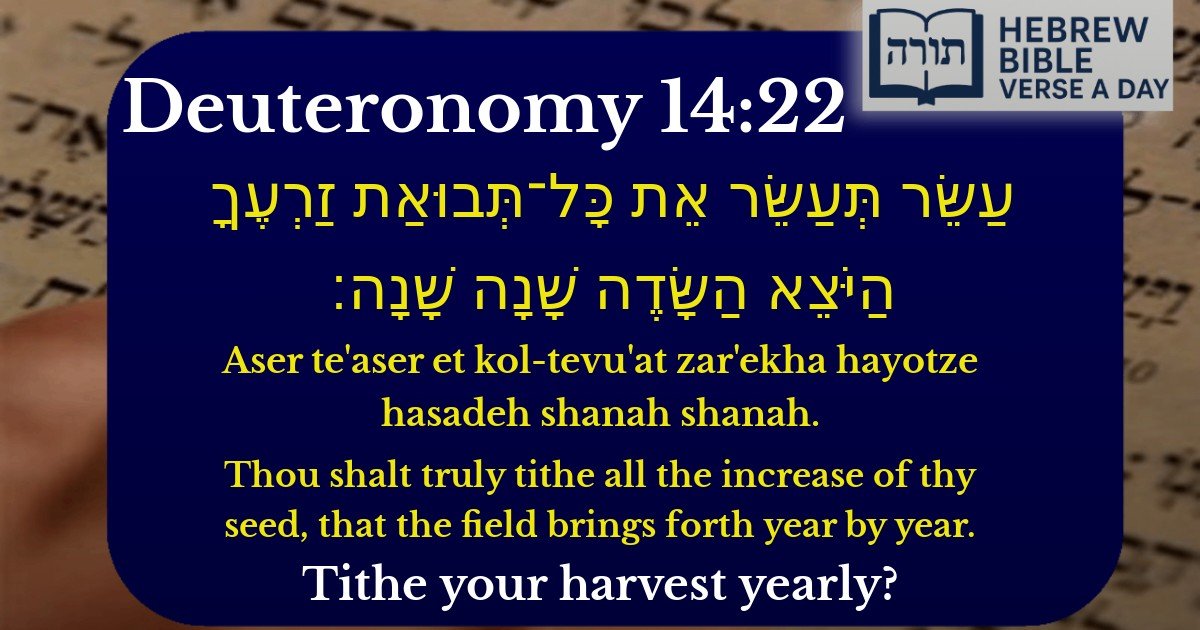
עַשֵּׂר תְּעַשֵּׂר אֵת כָּל־תְּבוּאַת זַרְעֶךָ הַיֹּצֵא הַשָּׂדֶה שָׁנָה שָׁנָה׃
English Translation
Thou shalt truly tithe all the increase of thy seed, that the field brings forth year by year.
Transliteration
Aser te'aser et kol-tevu'at zar'ekha hayotze hasadeh shanah shanah.
Hebrew Leining Text
עַשֵּׂ֣ר תְּעַשֵּׂ֔ר אֵ֖ת כׇּל־תְּבוּאַ֣ת זַרְעֶ֑ךָ הַיֹּצֵ֥א הַשָּׂדֶ֖ה שָׁנָ֥ה שָׁנָֽה׃
🎵 Listen to leining
Parasha Commentary
📚 Talmud Citations
This verse is quoted in the Talmud.
📖 Ta'anit 9a
The verse is cited in the context of discussing the importance of tithing and its benefits, emphasizing the commandment to tithe annually from the produce of the field.
📖 Ketubot 50a
The verse is referenced in a discussion about the laws of tithing and the obligations of landowners to give tithes from their produce.
📖 Sotah 47b
The verse is mentioned in a broader discussion about agricultural laws and the proper fulfillment of tithing commandments.
The Mitzvah of Ma'aser (Tithing)
The verse "עַשֵּׂר תְּעַשֵּׂר אֵת כָּל־תְּבוּאַת זַרְעֶךָ" ("Thou shalt truly tithe all the increase of thy seed") establishes the biblical commandment of separating tithes (ma'aser) from agricultural produce. This mitzvah applies specifically to crops grown in the Land of Israel (Eretz Yisrael) and is one of the foundational obligations for Jewish farmers.
Double Language: "עַשֵּׂר תְּעַשֵּׂר"
Rashi (Devarim 14:22) notes the repetitive phrasing "עַשֵּׂר תְּעַשֵּׂר" ("thou shalt truly tithe") and explains that this emphasizes the requirement to tithe properly—even multiple times if necessary. For example, if one mistakenly tithes from untithed produce (tevel) for untithed produce, they must tithe again to fulfill the obligation correctly.
Types of Tithes
According to the Talmud (Ta'anit 9a) and Rambam (Hilchos Ma'aser 1:1-2), there are two primary tithes mentioned in the Torah:
Yearly Obligation: "שָׁנָה שָׁנָה"
The phrase "שָׁנָה שָׁנָה" ("year by year") teaches that tithing must be done annually and not delayed. The Mishnah (Ma'aserot 1:1) states that produce becomes obligated in tithes once it reaches a certain stage of growth, and one must separate the tithes each year before consuming it.
Midrashic Insight
The Midrash (Sifrei Devarim 105) connects this mitzvah to the broader theme of gratitude to Hashem. By setting aside a portion of one's harvest, a farmer acknowledges that the land and its produce ultimately belong to Hashem, reinforcing humility and trust in Divine providence.