

Join Our Newsletter To Be Informed When New Videos Are Posted
Hebrew Text
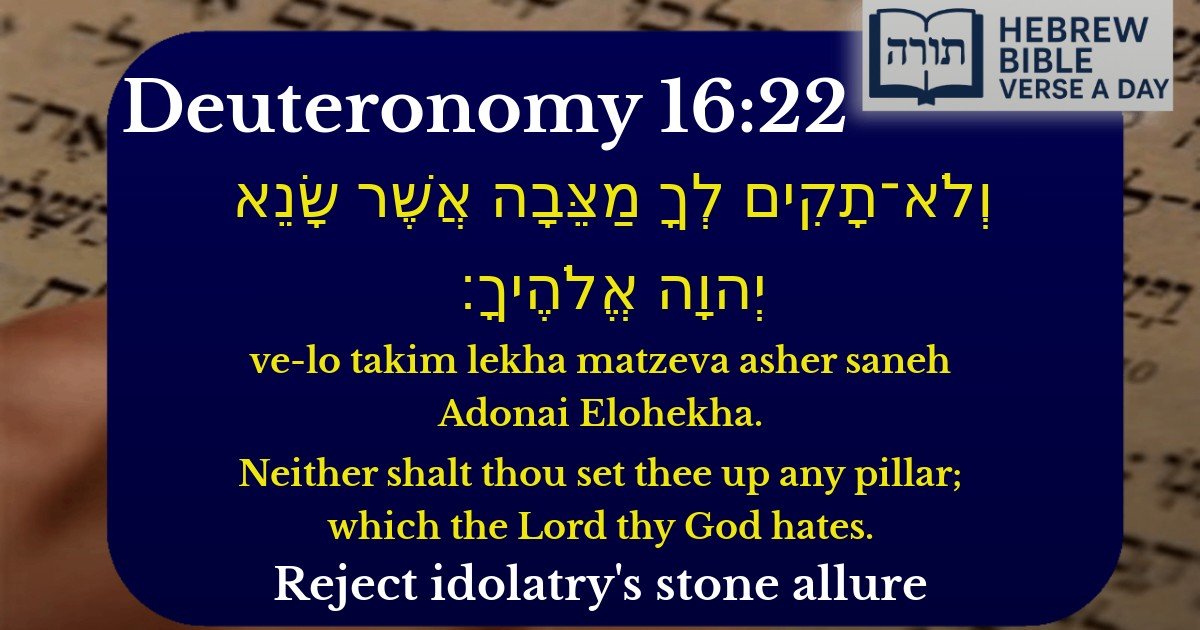
וְלֹא־תָקִים לְךָ מַצֵּבָה אֲשֶׁר שָׂנֵא יְהוָה אֱלֹהֶיךָ׃
English Translation
Neither shalt thou set thee up any pillar; which the Lord thy God hates.
Transliteration
Ve-lo takim lekha matzeva asher saneh Adonai Elohekha.
Hebrew Leining Text
וְלֹֽא־תָקִ֥ים לְךָ֖ מַצֵּבָ֑ה אֲשֶׁ֥ר שָׂנֵ֖א יְהֹוָ֥ה אֱלֹהֶֽיךָ׃ {ס}
🎵 Listen to leining
Parasha Commentary
📚 Talmud Citations
This verse is quoted in the Talmud.
📖 Sotah 15a
The verse is cited in a discussion about the prohibition of erecting pillars, which were associated with idolatrous practices, and how this commandment reflects God's disdain for such objects.
📖 Avodah Zarah 53b
The verse is referenced in the context of discussing idolatrous practices and the specific objects, like pillars, that are abhorrent to God, reinforcing the prohibition against them.
Prohibition of Erecting a Matzeivah (Pillar)
The verse (Devarim 16:22) states: "Neither shalt thou set thee up any pillar; which the Lord thy God hates." This prohibition is understood by Chazal as a specific ban on worshiping Hashem through the erection of a single stone pillar, even if the intent is for divine service.
Rashi's Explanation
Rashi (Devarim 16:22) clarifies that while the Avot (Patriarchs) erected matzeivot (e.g., Yaakov in Bereishit 28:18), this practice became forbidden after the giving of the Torah because it was later associated with idolatrous customs of the Canaanites. Hashem despises it because it became a common form of avodah zarah (idol worship).
Rambam's Perspective
The Rambam (Hilchot Avodat Kochavim 6:6) explains that this prohibition exists even if one intends to worship Hashem through the matzeivah, as it resembles the idolatrous practices of the nations. The Torah demands a distinct mode of worship, centered around the Mizbe'ach (altar) in the Beit HaMikdash.
Talmudic and Midrashic Insights
Halachic Implications
Poskim rule that this prohibition applies in all times, even when the Beit HaMikdash is not standing. The Minchat Chinuch (Mitzvah 429) notes that it includes any form of single-stone worship structure, highlighting the Torah's insistence on proper avodah (service) without foreign influences.