

Join Our Newsletter To Be Informed When New Videos Are Posted
Hebrew Text
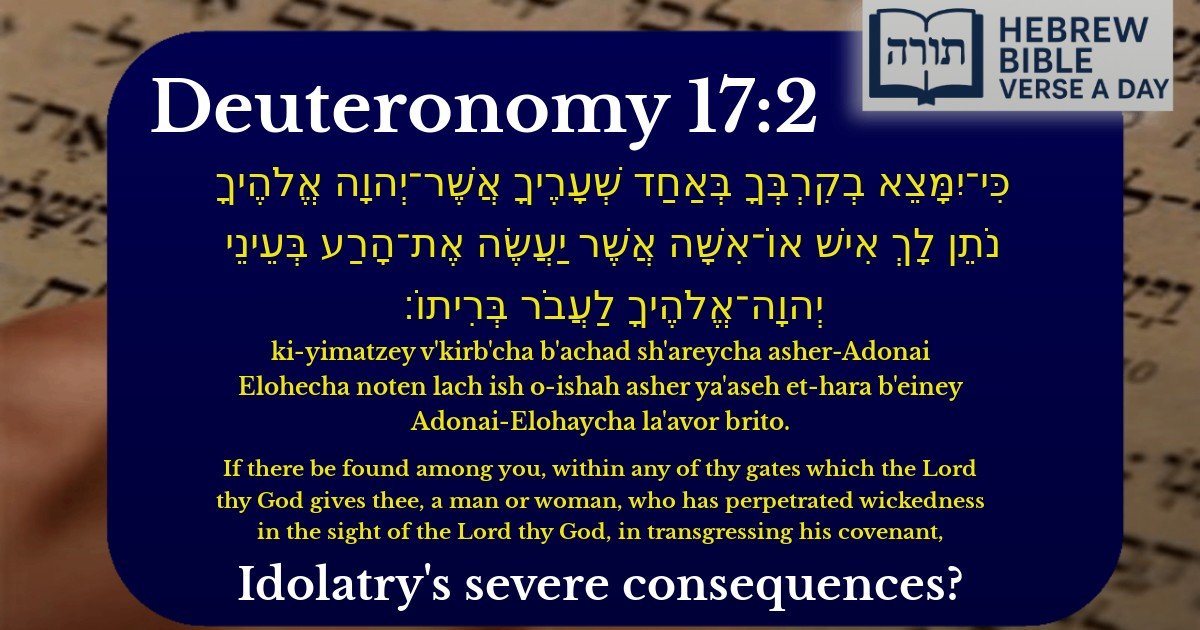
כִּי־יִמָּצֵא בְקִרְבְּךָ בְּאַחַד שְׁעָרֶיךָ אֲשֶׁר־יְהוָה אֱלֹהֶיךָ נֹתֵן לָךְ אִישׁ אוֹ־אִשָּׁה אֲשֶׁר יַעֲשֶׂה אֶת־הָרַע בְּעֵינֵי יְהוָה־אֱלֹהֶיךָ לַעֲבֹר בְּרִיתוֹ׃
English Translation
If there be found among you, within any of thy gates which the Lord thy God gives thee, a man or woman, who has perpetrated wickedness in the sight of the Lord thy God, in transgressing his covenant,
Transliteration
Ki-yimatzey v'kirb'cha b'achad sh'areycha asher-Adonai Elohecha noten lach ish o-ishah asher ya'aseh et-hara b'einey Adonai-Elohaycha la'avor brito.
Hebrew Leining Text
כִּֽי־יִמָּצֵ֤א בְקִרְבְּךָ֙ בְּאַחַ֣ד שְׁעָרֶ֔יךָ אֲשֶׁר־יְהֹוָ֥ה אֱלֹהֶ֖יךָ נֹתֵ֣ן לָ֑ךְ אִ֣ישׁ אוֹ־אִשָּׁ֗ה אֲשֶׁ֨ר יַעֲשֶׂ֧ה אֶת־הָרַ֛ע בְּעֵינֵ֥י יְהֹוָה־אֱלֹהֶ֖יךָ לַעֲבֹ֥ר בְּרִיתֽוֹ׃
🎵 Listen to leining
Parasha Commentary
📚 Talmud Citations
This verse is quoted in the Talmud.
📖 Sanhedrin 43a
The verse is referenced in the context of discussing the laws pertaining to those who lead others astray to idolatry, illustrating the severity of transgressing God's covenant.
📖 Avodah Zarah 36b
This verse is cited in discussions about the prohibition of idolatry and the consequences for those who violate the covenant with God.
Context in Sefer Devarim
This verse (Devarim 17:2) appears in the context of the laws concerning idolatry and those who lead others astray. The Torah warns against individuals who transgress the covenant by engaging in avodah zarah (idolatry) or other severe sins that undermine the foundational relationship between Hashem and Klal Yisrael.
Rashi's Explanation
Rashi explains that the phrase "כִּי־יִמָּצֵא בְקִרְבְּךָ" ("If there be found among you") refers to someone who has been warned by witnesses and still persists in their sinful behavior. The term "בְּאַחַד שְׁעָרֶיךָ" ("within any of thy gates") emphasizes that this law applies in all cities of Eretz Yisrael, not just the central Sanhedrin's location.
Rambam's Perspective
In Hilchot Avodah Zarah (4:1), the Rambam elaborates that this verse pertains to one who serves false deities or entices others to do so. The phrase "לַעֲבֹר בְּרִיתוֹ" ("in transgressing his covenant") refers to the fundamental breach of the covenant at Har Sinai, where Bnei Yisrael accepted the Torah and swore loyalty to Hashem.
Talmudic Interpretation
The Gemara (Sanhedrin 56b) discusses this verse in the context of the Seven Noahide Laws, noting that even non-Jews are prohibited from idolatry. However, the severity of punishment for a Jew who commits this sin is greater because it constitutes a betrayal of the unique covenant between Hashem and Am Yisrael.
Midrashic Insight
The Midrash Tanchuma (Re'eh 5) connects this verse to the broader theme of communal responsibility. It teaches that when an individual sins in this manner, it is not merely a personal failing but a corruption that affects the entire community. Hence, the Torah emphasizes "בְקִרְבְּךָ" ("among you")—highlighting the collective duty to uphold kedushah (holiness) and eradicate evil influences.
Key Halachic Principles