

Join Our Newsletter To Be Informed When New Videos Are Posted
Hebrew Text
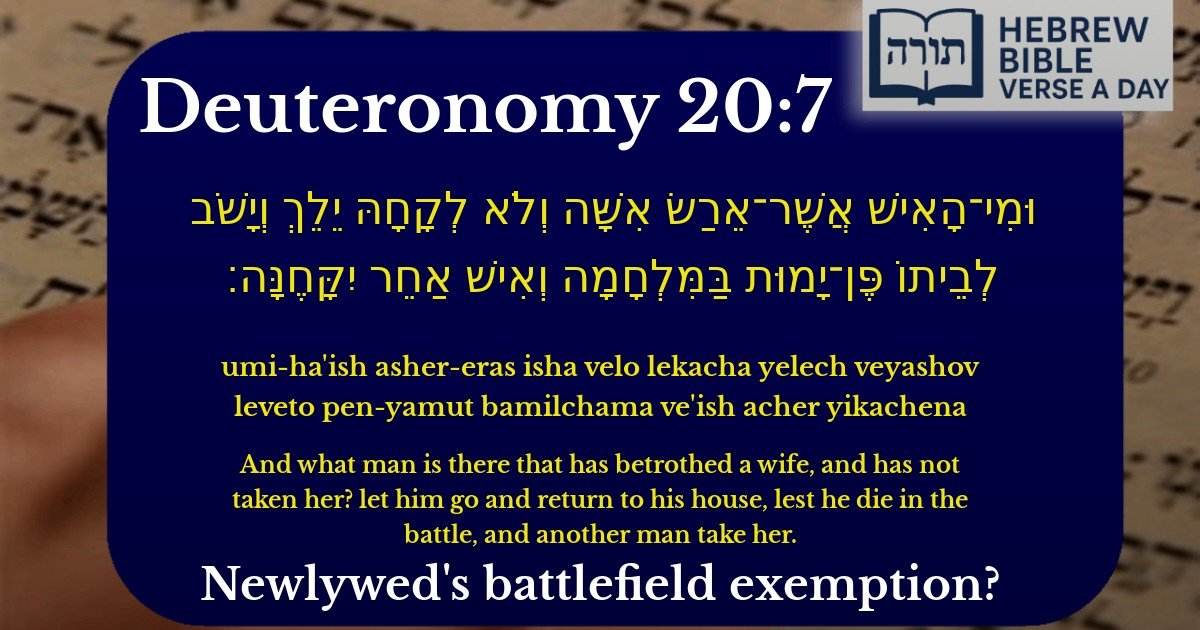
וּמִי־הָאִישׁ אֲשֶׁר־אֵרַשׂ אִשָּׁה וְלֹא לְקָחָהּ יֵלֵךְ וְיָשֹׁב לְבֵיתוֹ פֶּן־יָמוּת בַּמִּלְחָמָה וְאִישׁ אַחֵר יִקָּחֶנָּה׃
English Translation
And what man is there that has betrothed a wife, and has not taken her? let him go and return to his house, lest he die in the battle, and another man take her.
Transliteration
Umi-ha'ish asher-eras isha velo lekacha yelech veyashov leveto pen-yamut bamilchama ve'ish acher yikachena
Hebrew Leining Text
וּמִֽי־הָאִ֞ישׁ אֲשֶׁר־אֵרַ֤שׂ אִשָּׁה֙ וְלֹ֣א לְקָחָ֔הּ יֵלֵ֖ךְ וְיָשֹׁ֣ב לְבֵית֑וֹ פֶּן־יָמוּת֙ בַּמִּלְחָמָ֔ה וְאִ֥ישׁ אַחֵ֖ר יִקָּחֶֽנָּה׃
🎵 Listen to leining
Parasha Commentary
📚 Talmud Citations
This verse is quoted in the Talmud.
📖 Sotah 44a
The verse is cited in the context of discussing exemptions from military service, particularly for those who have betrothed a wife but have not yet taken her.
📖 Kiddushin 29b
The verse is referenced in a discussion about the obligations and exemptions of a man who has betrothed a woman but has not yet consummated the marriage.
Context and Source
This verse appears in Devarim (Deuteronomy) 20:7, as part of the Torah's laws concerning warfare. It is one of four categories of men exempted from military service by a kohen mashuach milchamah (priest anointed for war) before battle. The other exemptions include those who have built a new house, planted a vineyard, or are fearful (Devarim 20:5-8).
Explanation of the Verse
The verse addresses a man who has betrothed a woman (אֵרַשׂ אִשָּׁה) but has not yet completed the marriage by bringing her into his home (nissu'in). The Torah commands that such a man must return home rather than go to war, lest he die in battle and another man marry her. Rashi (Devarim 20:7) explains that this exemption is granted so that the man may first fulfill the mitzvah of peru u'revu (be fruitful and multiply) with his wife.
Halachic Implications
Midrashic Insights
The Midrash Tanchuma (Shoftim 8) connects this verse to the broader theme of divine compassion. Just as Hashem shows mercy by exempting this man from war, so too should we act with compassion in our dealings. Additionally, the Midrash highlights that this law ensures that a man does not neglect his responsibilities to his future wife and family.
Rambam’s Perspective
In Mishneh Torah (Hilchot Melachim 7:10), the Rambam codifies this law and explains that these exemptions are meant to preserve the moral and emotional well-being of soldiers. A man preoccupied with unfinished personal matters—such as an unconsummated marriage—would not be fully focused on battle, potentially endangering himself and others.