

Join Our Newsletter To Be Informed When New Videos Are Posted
Hebrew Text
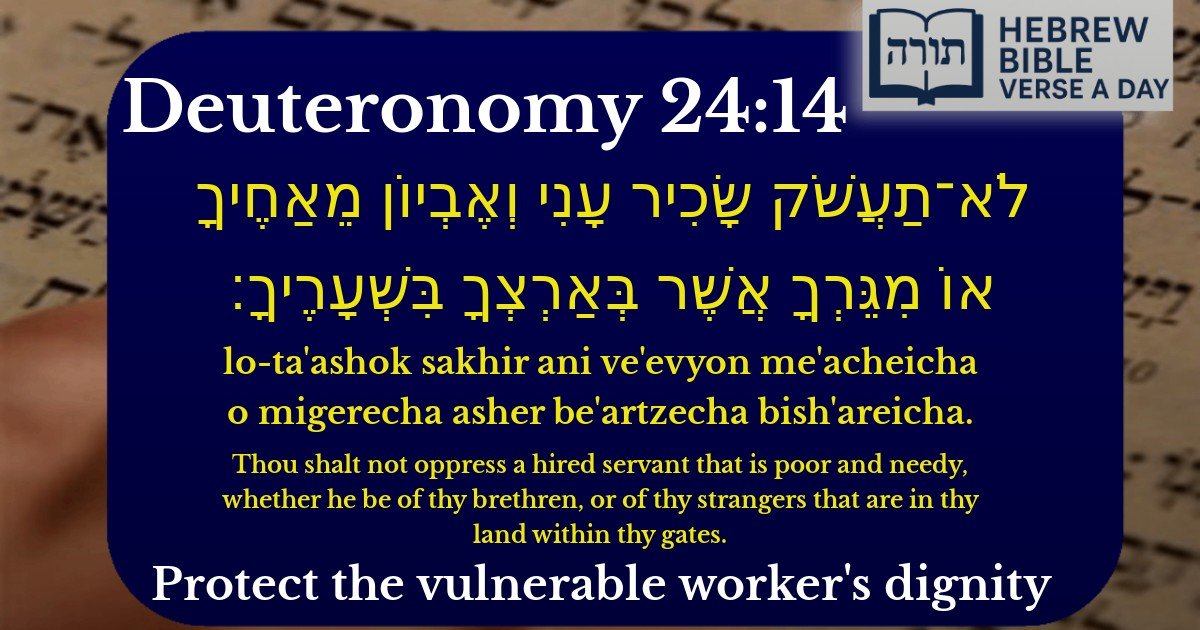
לֹא־תַעֲשֹׁק שָׂכִיר עָנִי וְאֶבְיוֹן מֵאַחֶיךָ אוֹ מִגֵּרְךָ אֲשֶׁר בְּאַרְצְךָ בִּשְׁעָרֶיךָ׃
English Translation
Thou shalt not oppress a hired servant that is poor and needy, whether he be of thy brethren, or of thy strangers that are in thy land within thy gates.
Transliteration
Lo-ta'ashok sakhir ani ve'evyon me'acheicha o migerecha asher be'artzecha bish'areicha.
Hebrew Leining Text
לֹא־תַעֲשֹׁ֥ק שָׂכִ֖יר עָנִ֣י וְאֶבְי֑וֹן מֵאַחֶ֕יךָ א֧וֹ מִגֵּרְךָ֛ אֲשֶׁ֥ר בְּאַרְצְךָ֖ בִּשְׁעָרֶֽיךָ׃
🎵 Listen to leining
Parasha Commentary
📚 Talmud Citations
This verse is quoted in the Talmud.
📖 Bava Metzia 111b
The verse is cited in the context of discussing the prohibition against withholding wages from a worker, emphasizing the ethical treatment of laborers, especially those who are poor and needy.
Prohibition Against Oppressing Workers
The verse (Devarim 24:14) prohibits oppressing a poor or needy hired worker, whether they are from among the Jewish people (מֵאַחֶיךָ) or a stranger (מִגֵּרְךָ) residing in the land. This commandment emphasizes the ethical treatment of laborers, particularly those in vulnerable positions.
Rashi's Explanation
Rashi comments that the phrase "לֹא־תַעֲשֹׁק" ("thou shalt not oppress") refers specifically to withholding wages. He cites the Talmud (Bava Metzia 111a), which states that delaying payment to a worker is akin to "stealing his soul," as the worker depends on timely wages for sustenance. Rashi further explains that the Torah emphasizes this prohibition for both Jewish and non-Jewish workers to teach that ethical treatment extends to all people.
Rambam's Halachic Perspective
Rambam (Hilchot Sechirut 11:2) elaborates on this mitzvah, ruling that one must pay a worker immediately upon completion of their work—whether at the end of the day for a daily worker or at the termination of a task for a project-based worker. He emphasizes that this applies equally to Jews and gerim (resident strangers), reinforcing the universal ethical principle of fair compensation.
Midrashic Insights
The Midrash (Sifrei Devarim 278) connects this verse to the broader theme of tzedek (justice) in interpersonal relationships. It teaches that oppressing a worker violates not only civil law but also spiritual integrity, as it reflects a lack of compassion and fear of Heaven. The inclusion of "אֲשֶׁר בְּאַרְצְךָ" ("that is in thy land") underscores that this obligation applies specifically within Eretz Yisrael, where the standards of justice must be upheld with greater stringency.
Application in Jewish Law