

Join Our Newsletter To Be Informed When New Videos Are Posted
Hebrew Text
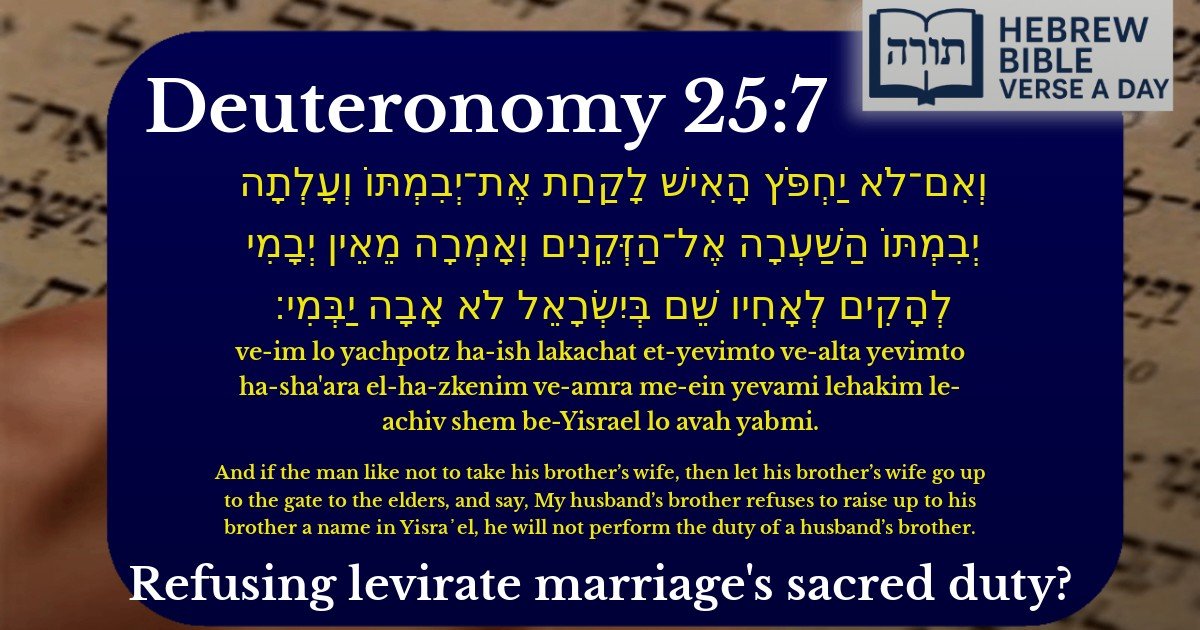
וְאִם־לֹא יַחְפֹּץ הָאִישׁ לָקַחַת אֶת־יְבִמְתּוֹ וְעָלְתָה יְבִמְתּוֹ הַשַּׁעְרָה אֶל־הַזְּקֵנִים וְאָמְרָה מֵאֵין יְבָמִי לְהָקִים לְאָחִיו שֵׁם בְּיִשְׂרָאֵל לֹא אָבָה יַבְּמִי׃
English Translation
And if the man like not to take his brother’s wife, then let his brother’s wife go up to the gate to the elders, and say, My husband’s brother refuses to raise up to his brother a name in Yisra᾽el, he will not perform the duty of a husband’s brother.
Transliteration
Ve-im lo yachpotz ha-ish lakachat et-yevimto ve-alta yevimto ha-sha'ara el-ha-zkenim ve-amra me-ein yevami lehakim le-achiv shem be-Yisrael lo avah yabmi.
Hebrew Leining Text
וְאִם־לֹ֤א יַחְפֹּץ֙ הָאִ֔ישׁ לָקַ֖חַת אֶת־יְבִמְתּ֑וֹ וְעָלְתָה֩ יְבִמְתּ֨וֹ הַשַּׁ֜עְרָה אֶל־הַזְּקֵנִ֗ים וְאָֽמְרָה֙ מֵאֵ֨ן יְבָמִ֜י לְהָקִ֨ים לְאָחִ֥יו שֵׁם֙ בְּיִשְׂרָאֵ֔ל לֹ֥א אָבָ֖ה יַבְּמִֽי׃
🎵 Listen to leining
Parasha Commentary
📚 Talmud Citations
This verse is quoted in the Talmud.
📖 Yevamot 106b
The verse is discussed in the context of the laws of yibbum (levirate marriage) and chalitzah (the ceremony releasing the widow from the obligation to marry her brother-in-law). The Talmud explores the implications of the brother-in-law's refusal to perform yibbum.
📖 Sotah 25b
The verse is referenced in a discussion about the procedures and declarations involved in the chalitzah ceremony, emphasizing the public nature of the refusal.
Context of the Verse
This verse (Devarim 25:7) is part of the Torah's discussion of yibbum (levirate marriage), wherein a man is commanded to marry his deceased brother's widow if the brother died childless. The purpose is to "establish a name" for the deceased brother in Yisrael (see Devarim 25:5-6). If the brother-in-law (yavam) refuses, the Torah prescribes the ceremony of chalitzah (removal of the shoe), as detailed in the subsequent verses.
Explanation of the Procedure
When the yavam refuses to perform yibbum, the widow (yevamah) brings the matter before the elders at the city gate—the traditional place of legal proceedings (Rashi, Devarim 25:7). Her declaration, "מֵאֵין יְבָמִי לְהָקִים לְאָחִיו שֵׁם בְּיִשְׂרָאֵל" ("My husband’s brother refuses to raise up a name for his brother in Yisrael"), emphasizes the moral obligation he neglects. The term "שֵׁם" (name) refers not merely to progeny but to the perpetuation of the deceased brother's legacy within Klal Yisrael (Rambam, Hilchos Yibbum 1:1).
Halachic Implications
Midrashic Insight
The Midrash (Devarim Rabbah 6:3) notes that the phrase "הַשַּׁעְרָה אֶל־הַזְּקֵנִים" ("to the gate, to the elders") teaches that Torah justice must be administered in a dignified, public forum. The elders, as representatives of wisdom and integrity, ensure that the widow's rights are upheld and that the refusal is properly documented.