
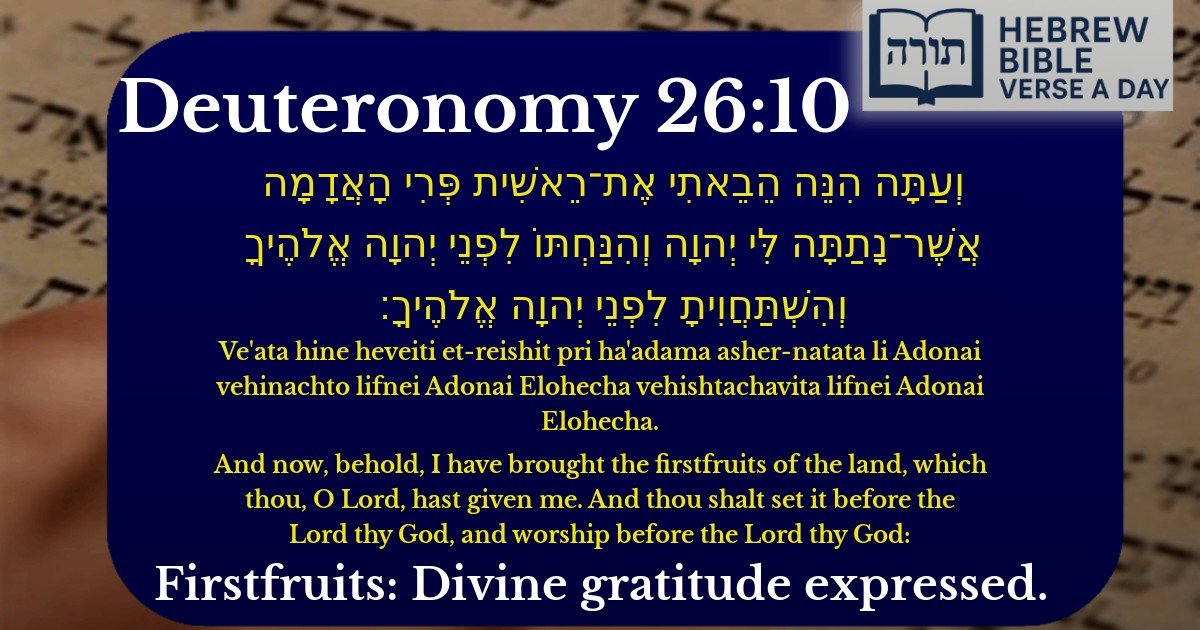

Deuteronomy 26:10 - Firstfruits: Divine gratitude expressed.

Deuteronomy 26:10 - דברים 26:10

Hebrew Text

וְעַתָּה הִנֵּה הֵבֵאתִי אֶת־רֵאשִׁית פְּרִי הָאֲדָמָה אֲשֶׁר־נָתַתָּה לִּי יְהוָה וְהִנַּחְתּוֹ לִפְנֵי יְהוָה אֱלֹהֶיךָ וְהִשְׁתַּחֲוִיתָ לִפְנֵי יְהוָה אֱלֹהֶיךָ׃

English Translation

And now, behold, I have brought the firstfruits of the land, which thou, O Lord, hast given me. And thou shalt set it before the Lord thy God, and worship before the Lord thy God:

Transliteration

Ve'ata hine heveiti et-reishit pri ha'adama asher-natata li Adonai vehinachto lifnei Adonai Elohecha vehishtachavita lifnei Adonai Elohecha.

Hebrew Leining Text

וְעַתָּ֗ה הִנֵּ֤ה הֵבֵ֙אתִי֙ אֶת־רֵאשִׁית֙ פְּרִ֣י הָאֲדָמָ֔ה אֲשֶׁר־נָתַ֥תָּה לִּ֖י יְהֹוָ֑ה וְהִנַּחְתּ֗וֹ לִפְנֵי֙ יְהֹוָ֣ה אֱלֹהֶ֔יךָ וְהִֽשְׁתַּחֲוִ֔יתָ לִפְנֵ֖י יְהֹוָ֥ה אֱלֹהֶֽיךָ׃

🎵 Listen to leining

Parasha Commentary

The Mitzvah of Bikkurim (Firstfruits)

The verse describes the mitzvah of bringing bikkurim (firstfruits) to the Beit HaMikdash, as detailed in Devarim 26:1-11. Rashi explains that this mitzvah applies to the seven species for which Eretz Yisrael is praised (Devarim 8:8). The farmer acknowledges Hashem's kindness by bringing the first ripened fruits, demonstrating that all blessings come from Him.

Gratitude and Humility

The Rambam (Hilchot Bikkurim 3:1) emphasizes that this mitzvah instills humility and gratitude. By declaring "which You, Hashem, have given me," the farmer recognizes that the land and its produce are divine gifts. The Sifri notes that this declaration counteracts arrogance, reminding us that success stems from Hashem's benevolence.

The Ceremony in the Beit HaMikdash

  • The fruits were placed before the Mizbe'ach (altar) as a symbolic offering to Hashem (Mishnah Bikkurim 3:6).
  • The worshiper bows in submission, as the verse states, "and worship before Hashem your God," reflecting total devotion (Kli Yakar).
  • The Talmud Yerushalmi (Bikkurim 3:3) describes how the Kohen would wave the basket of firstfruits in a special procedure.

Spiritual Significance

The Or HaChaim teaches that bikkurim represent the concept of dedicating the "first" and best to Hashem, just as we sanctify the firstborn and the first of our time (Shabbat). The Midrash Tanchuma connects this mitzvah to the broader idea that acknowledging Hashem's role in our material success brings divine blessing to all our endeavors.

📚 Talmud Citations

This verse is quoted in the Talmud.

📖 Bikkurim 3a
The verse is discussed in the context of the laws of bringing firstfruits to the Temple and the declaration made when presenting them.
📖 Sotah 32a
The verse is referenced in a discussion about the recitation of biblical passages in Hebrew and the importance of understanding the text.

Frequently Asked Questions

Q: What are the 'firstfruits' mentioned in Deuteronomy 26:10?
A: The 'firstfruits' (ביכורים / Bikkurim) refer to the first and choicest produce that ripens in one's field. According to Jewish law (Halacha), farmers in Israel were required to bring these firstfruits to the Temple in Jerusalem as an offering to Hashem, expressing gratitude for the land's bounty. This mitzvah is detailed in the Talmud (Bikkurim 1-3) and Rambam's Mishneh Torah (Hilchos Bikkurim).
Q: Why is bringing the firstfruits important in Judaism?
A: Bringing the firstfruits is a fundamental mitzvah that teaches humility and gratitude. By offering the very first produce to Hashem, we acknowledge that everything comes from Him (Rashi on Deuteronomy 26:10). The Mishnah (Bikkurim 3:1) describes the joyous procession to Jerusalem, showing how this act strengthens our connection to the Land of Israel and our dependence on Hashem's blessings.
Q: What is the significance of bowing down (השתחוויה) when bringing the firstfruits?
A: Bowing down symbolizes complete submission and gratitude to Hashem. The Talmud (Sotah 48a) explains that this physical act of humility reinforces the spiritual message of the firstfruits offering—recognizing that all blessings come from Hashem. Rambam (Hilchos Bikkurim 3:12) notes that this bowing was done in the Temple courtyard as part of the thanksgiving ceremony.
Q: Do we still bring firstfruits today without the Temple?
A: Since the destruction of the Temple, the mitzvah of bringing firstfruits in their biblical form cannot be fulfilled. However, the Sefer HaChinuch (Mitzvah 606) explains that the underlying lessons—gratitude, recognizing Hashem's ownership of the land, and supporting Torah scholars—remain relevant. Some have customs to symbolically separate firstfruits or donate them to charity or Torah institutions.
Q: What can we learn from the wording 'which You, Hashem, have given me' in this verse?
A: This phrase teaches that even when we work the land, we must remember that the produce is ultimately a gift from Hashem (Ramban on Deuteronomy 26:10). The Midrash (Sifrei Devarim 299) emphasizes that saying these words while bringing the firstfruits prevents arrogance, reminding us that our success depends on Divine blessing, not just our efforts.