

Join Our Newsletter To Be Informed When New Videos Are Posted
Hebrew Text
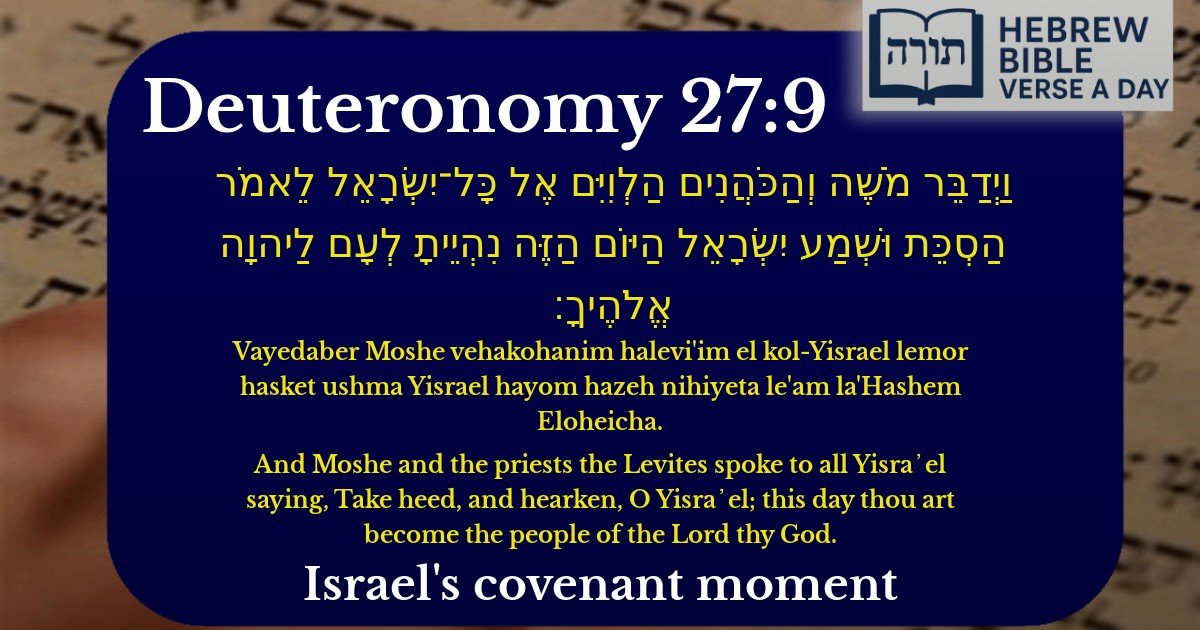
וַיְדַבֵּר מֹשֶׁה וְהַכֹּהֲנִים הַלְוִיִּם אֶל כָּל־יִשְׂרָאֵל לֵאמֹר הַסְכֵּת וּשְׁמַע יִשְׂרָאֵל הַיּוֹם הַזֶּה נִהְיֵיתָ לְעָם לַיהוָה אֱלֹהֶיךָ׃
English Translation
And Moshe and the priests the Levites spoke to all Yisra᾽el saying, Take heed, and hearken, O Yisra᾽el; this day thou art become the people of the Lord thy God.
Transliteration
Vayedaber Moshe vehakohanim halevi'im el kol-Yisrael lemor hasket ushma Yisrael hayom hazeh nihiyeta le'am la'Hashem Eloheicha.
Hebrew Leining Text
וַיְדַבֵּ֤ר מֹשֶׁה֙ וְהַכֹּהֲנִ֣ים הַלְוִיִּ֔ם אֶ֥ל כׇּל־יִשְׂרָאֵ֖ל לֵאמֹ֑ר הַסְכֵּ֤ת ׀ וּשְׁמַע֙ יִשְׂרָאֵ֔ל הַיּ֤וֹם הַזֶּה֙ נִהְיֵ֣יתָֽ לְעָ֔ם לַיהֹוָ֖ה אֱלֹהֶֽיךָ׃
🎵 Listen to leining
Parasha Commentary
📚 Talmud Citations
This verse is quoted in the Talmud.
📖 Berakhot 63b
The verse is referenced in a discussion about the importance of listening and heeding the words of Torah, emphasizing the covenantal relationship between God and Israel.
📖 Sotah 37a
The verse is cited in the context of the blessings and curses at Mount Gerizim and Mount Ebal, illustrating the moment when Israel became God's people.
The Context of the Verse
This verse appears in Devarim 27:9, where Moshe, along with the Kohanim and Levi'im, addresses Klal Yisrael as they prepare to enter Eretz Yisrael. Rashi explains that this proclamation emphasizes the covenant between Hashem and the Jewish people, reinforcing their unique status as Am Hashem (the people of God). The phrase "הַסְכֵּת וּשְׁמַע" ("Take heed and hearken") underscores the need for attentive listening and internalizing the Torah's teachings.
The Role of Moshe and the Kohanim
The verse highlights the joint leadership of Moshe and the Kohanim in transmitting the Torah. The Kli Yakar notes that Moshe represents the Torah Shebichtav (Written Torah), while the Kohanim and Levi'im symbolize the Torah Sheba'al Peh (Oral Torah). Their unified message signifies the inseparable nature of both aspects of Torah.
"הַיּוֹם הַזֶּה נִהְיֵיתָ לְעָם לַיהוָה אֱלֹהֶיךָ"
The declaration "This day you have become the people of Hashem your God" is interpreted in multiple ways:
The Call to "Hasket u’Shema"
The phrase "Hasket u’Shema" (be silent and listen) appears only twice in Tanach—here and in Devarim 6:4 (Shema Yisrael). The Meshech Chochmah explains that silence is a prerequisite for true understanding. Just as kabbalas haTorah at Har Sinai required stillness ("kol gadol v’lo yasaf"), so too must Klal Yisrael approach Torah study and mitzvah observance with humility and focus.
The Significance of "Today"
The emphasis on "הַיּוֹם הַזֶּה" (this day) is expounded upon in the Midrash Tanchuma, which teaches that Torah should always feel fresh, as if given today. The Alshich adds that this teaches that every generation must personally accept the Torah anew, ensuring its eternal relevance.