

Join Our Newsletter To Be Informed When New Videos Are Posted
Hebrew Text
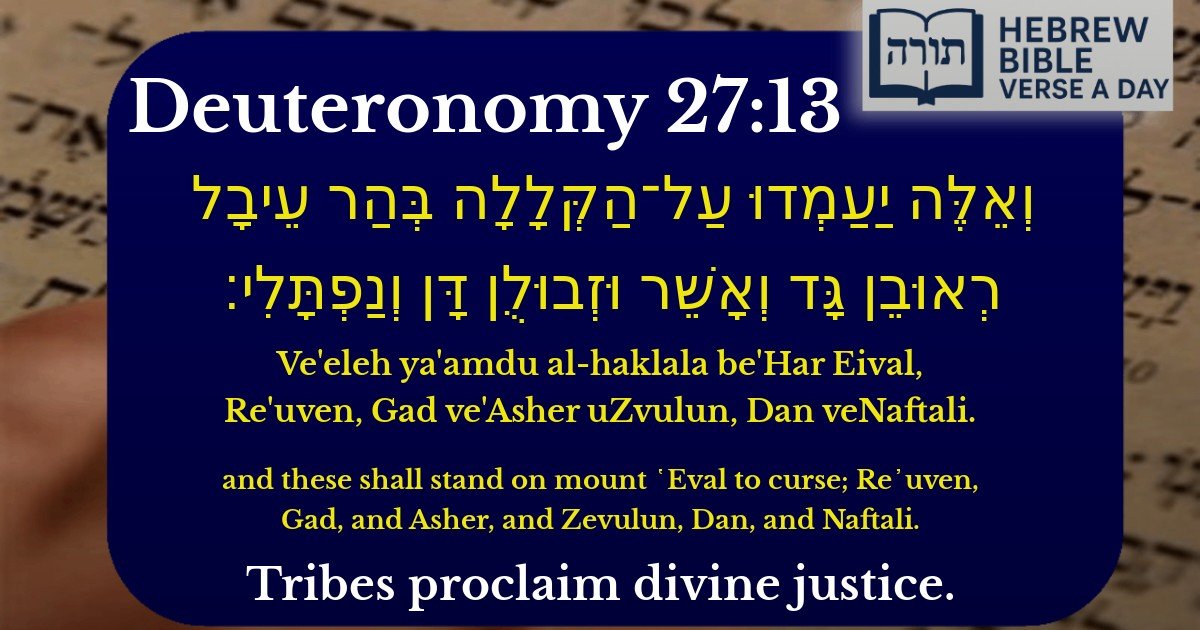
וְאֵלֶּה יַעַמְדוּ עַל־הַקְּלָלָה בְּהַר עֵיבָל רְאוּבֵן גָּד וְאָשֵׁר וּזְבוּלֻן דָּן וְנַפְתָּלִי׃
English Translation
and these shall stand on mount ῾Eval to curse; Re᾽uven, Gad, and Asher, and Zevulun, Dan, and Naftali.
Transliteration
Ve'eleh ya'amdu al-haklala be'Har Eival, Re'uven, Gad ve'Asher uZvulun, Dan veNaftali.
Hebrew Leining Text
וְאֵ֛לֶּה יַֽעַמְד֥וּ עַל־הַקְּלָלָ֖ה בְּהַ֣ר עֵיבָ֑ל רְאוּבֵן֙ גָּ֣ד וְאָשֵׁ֔ר וּזְבוּלֻ֖ן דָּ֥ן וְנַפְתָּלִֽי׃
🎵 Listen to leining
Parasha Commentary
📚 Talmud Citations
This verse is quoted in the Talmud.
📖 Sotah 37a
The verse is cited in the discussion about the tribes standing on Mount Ebal to pronounce the curses, as part of the broader discussion on the blessings and curses in Deuteronomy.
Context in the Torah
The verse (Devarim 27:13) describes the division of the tribes of Israel upon entering Eretz Yisrael, with six tribes standing on Har Eival to proclaim the curses for violating the Torah's commandments. This follows the mitzvah of Hakhel (Devarim 27:11-26), where blessings and curses were declared upon the nation.
Rashi's Explanation
Rashi (Devarim 27:13) notes that the tribes designated to stand on Har Eival were descendants of the maidservants (Bilhah and Zilpah) as well as Reuven and Zevulun. He explains that Reuven, though a son of Leah, was included here due to his sin with Bilhah (Bereishit 35:22), which diminished his status. Zevulun, though a full son of Leah, was paired with Dan (son of Bilhah) because Zevulun supported Dan's Torah study through commerce (Midrash Tanchuma, Vayechi 11).
Symbolism of Har Eival
The Maharal (Gur Aryeh, Devarim 27:13) explains that Har Eival, the "mountain of curses," represents the potential for sin and its consequences. The tribes standing there symbolize the need for vigilance against transgression. Their presence demonstrates that even those of lesser stature (descendants of maidservants) or those who stumbled (like Reuven) have a role in upholding the Torah's warnings.
Order of the Tribes
Midrashic Insight
The Midrash (Sifrei Devarim 27:13) teaches that the curses were proclaimed by the Levi'im to emphasize that Torah accountability applies to all—even the most learned. The tribes on Har Eival, though not the primary bearers of Torah leadership (like Yehudah or Levi), were equally responsible for heeding its warnings.
Rambam's Perspective
In Hilchos Melachim (9:3), Rambam cites this verse as proof that the entire nation—regardless of tribe or status—must participate in the covenant of blessings and curses. This underscores the unity of Klal Yisrael in accepting Torah obligations.