
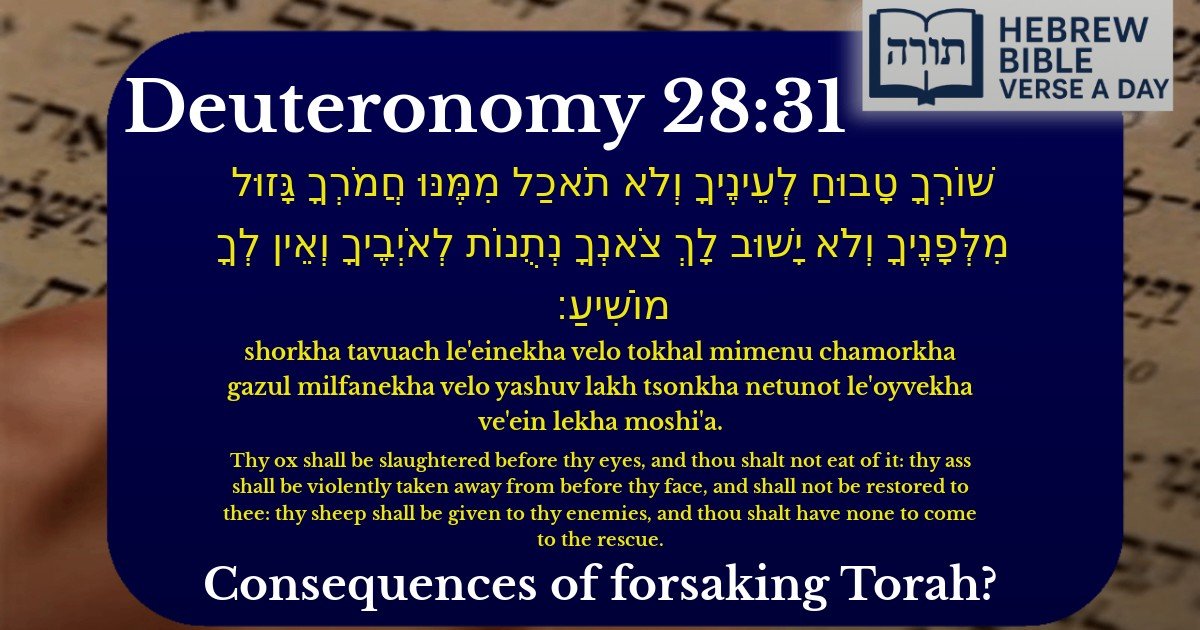

Deuteronomy 28:31 - Consequences of forsaking Torah?

Deuteronomy 28:31 - דברים 28:31

Hebrew Text

שׁוֹרְךָ טָבוּחַ לְעֵינֶיךָ וְלֹא תֹאכַל מִמֶּנּוּ חֲמֹרְךָ גָּזוּל מִלְּפָנֶיךָ וְלֹא יָשׁוּב לָךְ צֹאנְךָ נְתֻנוֹת לְאֹיְבֶיךָ וְאֵין לְךָ מוֹשִׁיעַ׃

English Translation

Thy ox shall be slaughtered before thy eyes, and thou shalt not eat of it: thy ass shall be violently taken away from before thy face, and shall not be restored to thee: thy sheep shall be given to thy enemies, and thou shalt have none to come to the rescue.

Transliteration

Shorkha tavuach le'einekha velo tokhal mimenu chamorkha gazul milfanekha velo yashuv lakh tsonkha netunot le'oyvekha ve'ein lekha moshi'a.

Hebrew Leining Text

שׁוֹרְךָ֞ טָב֣וּחַ לְעֵינֶ֗יךָ וְלֹ֣א תֹאכַל֮ מִמֶּ֒נּוּ֒ חֲמֹֽרְךָ֙ גָּז֣וּל מִלְּפָנֶ֔יךָ וְלֹ֥א יָשׁ֖וּב לָ֑ךְ צֹֽאנְךָ֙ נְתֻנ֣וֹת לְאֹיְבֶ֔יךָ וְאֵ֥ין לְךָ֖ מוֹשִֽׁיעַ׃

🎵 Listen to leining

Parasha Commentary

Context and Source

The verse appears in Devarim (Deuteronomy) 28:31 as part of the Tochacha (Rebuke), a series of curses that will befall the Jewish people if they fail to observe the Torah's commandments. The Ramban (Nachmanides) explains that these punishments are measure-for-measure consequences for abandoning the covenant with Hashem.

Interpretation of the Verse

Rashi comments that this verse describes the suffering of exile, where a person will witness their possessions being taken or destroyed without recourse. The three scenarios—slaughtered ox, stolen donkey, and sheep given to enemies—symbolize different forms of loss:

  • "Thy ox shall be slaughtered before thy eyes, and thou shalt not eat of it" - Rashi explains this refers to a situation where one's animal is ritually slaughtered (shechita), but due to persecution or exile, the owner cannot benefit from it.
  • "Thy ass shall be violently taken away... and shall not be restored to thee" - The donkey, a beast of burden, represents livelihood. The Sforno notes that even when stolen in plain sight, justice will not prevail to return it.
  • "Thy sheep shall be given to thy enemies, and thou shalt have none to come to the rescue" - The Ibn Ezra interprets this as a complete loss of property, where enemies seize flocks without resistance, emphasizing helplessness.

Measure-for-Measure Justice

The Midrash Tanchuma (Ki Tavo 4) connects these punishments to specific sins: neglecting tithes (ma'aser) leads to loss of livestock, as the verse states, "You shall not eat of it"—just as one withheld tithes from their produce. The Rambam (Hilchot Teshuva 9:1) further explains that suffering in exile serves as a wake-up call for repentance.

Spiritual Implications

The Kli Yakar (Devarim 28:31) emphasizes that these curses are not merely physical but reflect a deeper spiritual breakdown—when the Jewish people stray from Torah, their blessings are reversed. The inability to eat from one's ox alludes to losing the privilege of partaking in sanctified offerings, while the stolen donkey and sheep signify the loss of divine protection.

📚 Talmud Citations

This verse is not quoted in the Talmud.

Frequently Asked Questions

Q: What does Deuteronomy 28:31 mean?
A: Deuteronomy 28:31 is part of the 'Tochecha' (rebuke), where Moshe warns the Jewish people of the consequences they will face if they do not follow Hashem's commandments. This verse describes the suffering of losing livestock (ox, donkey, sheep) to enemies without any means of recovery, symbolizing loss and helplessness as a result of straying from Torah observance.
Q: Why is this verse important in Judaism?
A: This verse is important because it emphasizes the principle of reward and punishment in Jewish thought. The Torah teaches that observing mitzvot brings blessings, while neglecting them leads to hardship. Rashi explains that these consequences are meant to inspire repentance and return to Hashem.
Q: How does this verse apply to us today?
A: While we may not experience these exact punishments today, the message remains relevant: our actions have consequences. The Rambam (Hilchos Teshuvah) teaches that hardships can serve as reminders to examine our deeds and strengthen our commitment to Torah and mitzvot.
Q: What lesson can we learn from this verse?
A: The verse teaches that material possessions are ultimately under Hashem's control. The Talmud (Berachos 5a) explains that suffering can be a 'wake-up call' to improve our ways. Losing livestock—a key source of livelihood—shows how quickly blessings can be lost when we distance ourselves from Torah values.
Q: Why does the verse mention ox, donkey, and sheep specifically?
A: Rashi notes that these animals represent essential aspects of livelihood in ancient times: the ox for plowing, the donkey for transport, and sheep for wool and food. Their loss signifies total economic devastation. The Midrash (Sifri) connects this to the idea that neglecting Torah causes the loss of both spiritual and physical sustenance.