

Join Our Newsletter To Be Informed When New Videos Are Posted
Hebrew Text
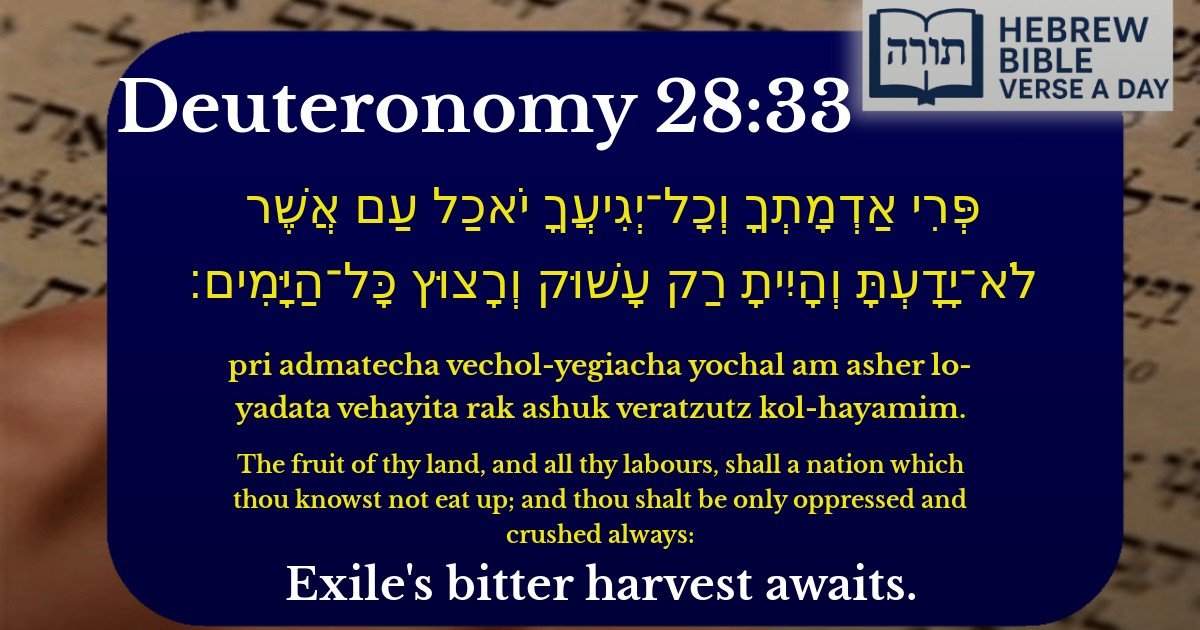
פְּרִי אַדְמָתְךָ וְכָל־יְגִיעֲךָ יֹאכַל עַם אֲשֶׁר לֹא־יָדָעְתָּ וְהָיִיתָ רַק עָשׁוּק וְרָצוּץ כָּל־הַיָּמִים׃
English Translation
The fruit of thy land, and all thy labours, shall a nation which thou knowst not eat up; and thou shalt be only oppressed and crushed always:
Transliteration
Pri admatecha vechol-yegiacha yochal am asher lo-yadata vehayita rak ashuk veratzutz kol-hayamim.
Hebrew Leining Text
פְּרִ֤י אַדְמָֽתְךָ֙ וְכׇל־יְגִ֣יעֲךָ֔ יֹאכַ֥ל עַ֖ם אֲשֶׁ֣ר לֹא־יָדָ֑עְתָּ וְהָיִ֗יתָ רַ֛ק עָשׁ֥וּק וְרָצ֖וּץ כׇּל־הַיָּמִֽים׃
🎵 Listen to leining
Parasha Commentary
📚 Talmud Citations
This verse is quoted in the Talmud.
📖 Megillah 14a
The verse is referenced in the context of discussing the suffering and oppression of the Jewish people, illustrating the consequences of turning away from God's commandments.
📖 Sanhedrin 104b
The verse is cited in a discussion about the punishments that befall the Jewish people when they do not adhere to the Torah, emphasizing the theme of divine retribution.
Context in Devarim (Deuteronomy)
This verse (Devarim 28:33) appears in the Tochacha (Rebuke), a section detailing the consequences of failing to observe the Torah's commandments. The curses describe exile, subjugation, and suffering as divine retribution for abandoning the covenant.
Rashi's Explanation
Rashi interprets "a nation which you did not know" as referring to foreign invaders who will plunder the produce of the land. He emphasizes that this is a punishment for neglecting Torah study and mitzvot, leading to the loss of divine protection. The phrase "oppressed and crushed always" signifies relentless suffering without respite, as the Jewish people fall under the dominion of cruel rulers.
Ibn Ezra's Insight
Ibn Ezra notes that the phrase "fruit of thy land and all thy labours" implies total confiscation—not only crops but also manufactured goods. The invaders will consume everything, leaving Bnei Yisrael destitute. The term "always" (kol ha-yamim) suggests prolonged exile, a theme recurring in prophetic warnings.
Midrashic Interpretation (Sifri)
The Midrash (Sifri Devarim 28:33) links this verse to the destruction of the First and Second Temples, where foreign empires (Babylon and Rome) seized Eretz Yisrael's bounty. It underscores that exile is not merely physical displacement but also spiritual alienation—being ruled by those who do not recognize Hashem's sovereignty.
Rambam's Perspective (Hilchot Ta'anit)
Rambam (Maimonides) cites such verses in Hilchot Ta'anit to explain that suffering in exile is meant to awaken repentance. The loss of land and labor to outsiders serves as a divine reminder to return to Torah observance, as material prosperity in Eretz Yisrael is contingent upon mitzvah fulfillment.
Chassidic Commentary (Sefat Emet)
The Sefat Emet highlights the irony in "a nation you did not know"—those unaware of Hashem's dominion will control the land meant for His service. This inversion (where the righteous suffer under the wicked) is a temporary state, ultimately rectified through teshuvah and geulah (redemption).
Halachic Implications (Chofetz Chaim)
The Chofetz Chaim warns that this verse underscores the severity of sinat chinam (baseless hatred), a key factor in the Temple's destruction. Only through unity and Torah adherence can the curses be reversed, as promised later in the parsha (Devarim 30:1-3).