

Join Our Newsletter To Be Informed When New Videos Are Posted
Hebrew Text
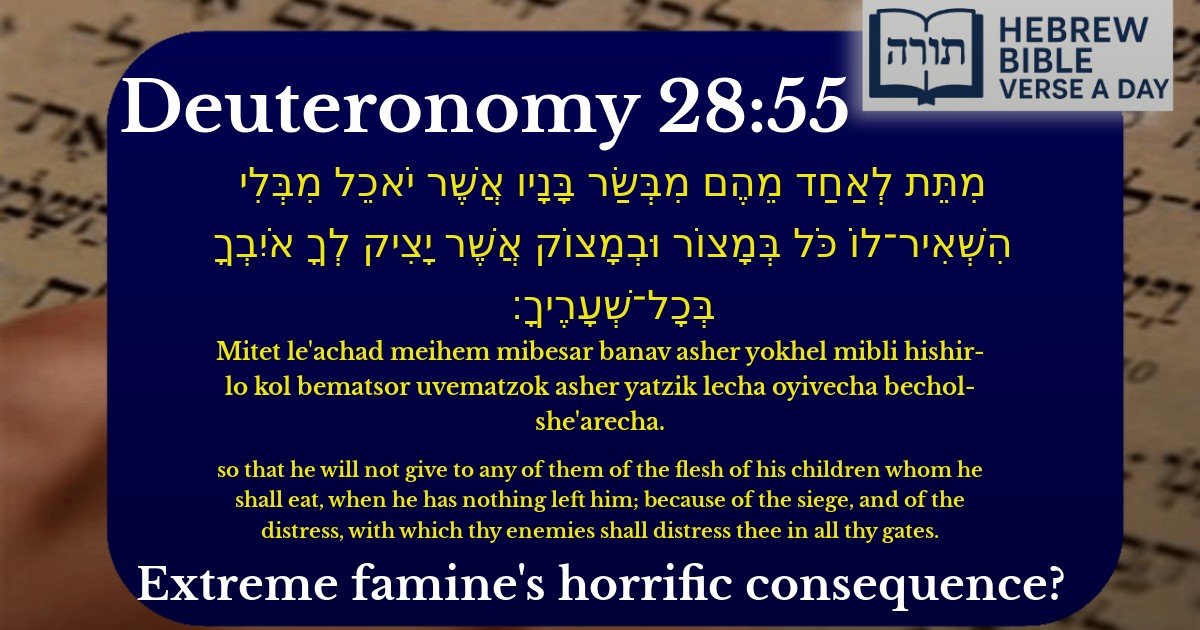
מִתֵּת לְאַחַד מֵהֶם מִבְּשַׂר בָּנָיו אֲשֶׁר יֹאכֵל מִבְּלִי הִשְׁאִיר־לוֹ כֹּל בְּמָצוֹר וּבְמָצוֹק אֲשֶׁר יָצִיק לְךָ אֹיִבְךָ בְּכָל־שְׁעָרֶיךָ׃
English Translation
so that he will not give to any of them of the flesh of his children whom he shall eat, when he has nothing left him; because of the siege, and of the distress, with which thy enemies shall distress thee in all thy gates.
Transliteration
Mitet le'achad meihem mibesar banav asher yokhel mibli hishir-lo kol bematsor uvematzok asher yatzik lecha oyivecha bechol-she'arecha.
Hebrew Leining Text
מִתֵּ֣ת ׀ לְאַחַ֣ד מֵהֶ֗ם מִבְּשַׂ֤ר בָּנָיו֙ אֲשֶׁ֣ר יֹאכֵ֔ל מִבְּלִ֥י הִשְׁאִֽיר־ל֖וֹ כֹּ֑ל בְּמָצוֹר֙ וּבְמָצ֔וֹק אֲשֶׁ֨ר יָצִ֥יק לְךָ֛ אֹיִבְךָ֖ בְּכׇל־שְׁעָרֶֽיךָ׃
🎵 Listen to leining
Parasha Commentary
📚 Talmud Citations
This verse is quoted in the Talmud.
📖 Gittin 56b
The verse is referenced in the context of discussing the severe famine during the siege of Jerusalem, illustrating the extreme conditions where people resorted to eating their own children.
📖 Sanhedrin 96b
The verse is cited in a discussion about the punishments and sufferings that come upon a city under siege, emphasizing the dire consequences of such situations.
Context in Devarim (Deuteronomy)
This verse appears in Devarim 28:55 as part of the Tochacha (the rebuke), where Moshe warns Bnei Yisrael of the severe consequences that will befall them if they abandon the Torah. The imagery describes the horrors of siege warfare, where desperation leads to unthinkable acts, such as consuming one's own children due to starvation.
Rashi's Explanation
Rashi (Devarim 28:55) explains that the phrase "מִתֵּת לְאַחַד מֵהֶם" ("so that he will not give to any of them") refers to a person refusing to share even a morsel of his child's flesh with his own family members during extreme famine. Rashi emphasizes the cruelty that arises from desperation, where even basic familial compassion is abandoned.
Ibn Ezra's Insight
Ibn Ezra notes that the phrase "בְּכָל־שְׁעָרֶיךָ" ("in all your gates") refers to the cities of Israel, indicating that this suffering will be widespread, affecting every fortified city under siege. The distress will be so severe that even the most basic human instincts—protecting one's children—will be overridden by starvation.
Midrashic Interpretation
The Sifrei (Devarim 303) connects this verse to the historical suffering during the siege of Yerushalayim before the Churban Bayis Rishon (Destruction of the First Temple). It describes how the horrors of famine led to acts of desperation, fulfilling this prophetic warning. The Midrash underscores that such tragedies occur when the Jewish people stray from Torah observance.
Halachic and Ethical Implications