
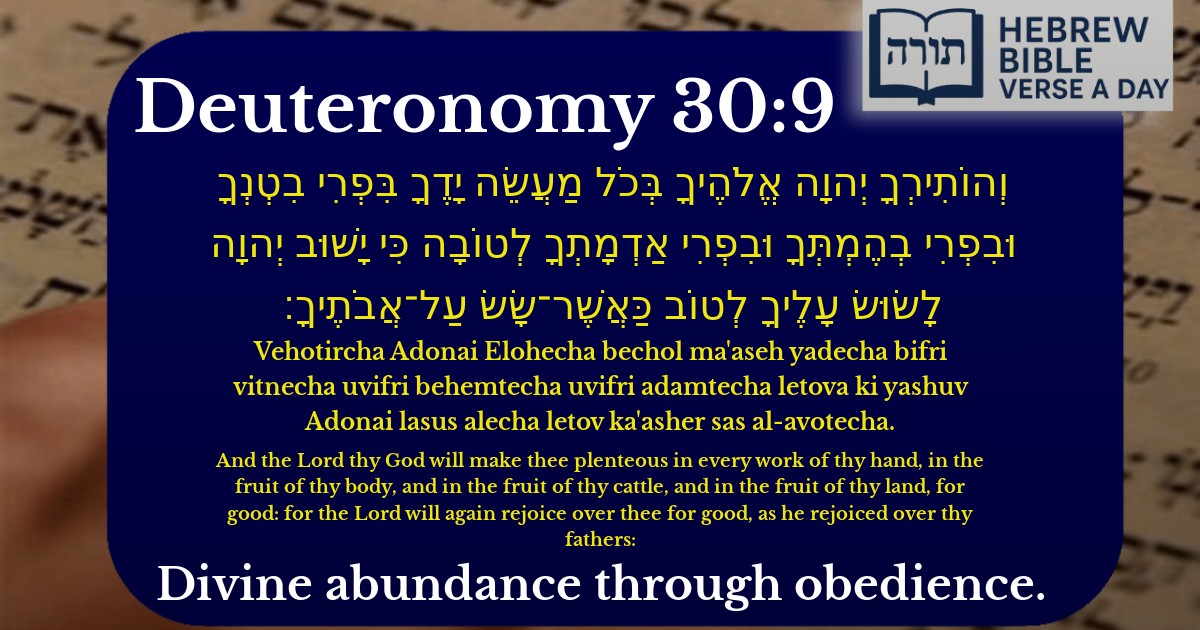

Deuteronomy 30:9 - Divine abundance through obedience.

Deuteronomy 30:9 - דברים 30:9

Hebrew Text

וְהוֹתִירְךָ יְהוָה אֱלֹהֶיךָ בְּכֹל מַעֲשֵׂה יָדֶךָ בִּפְרִי בִטְנְךָ וּבִפְרִי בְהֶמְתְּךָ וּבִפְרִי אַדְמָתְךָ לְטוֹבָה כִּי יָשׁוּב יְהוָה לָשׂוּשׂ עָלֶיךָ לְטוֹב כַּאֲשֶׁר־שָׂשׂ עַל־אֲבֹתֶיךָ׃

English Translation

And the Lord thy God will make thee plenteous in every work of thy hand, in the fruit of thy body, and in the fruit of thy cattle, and in the fruit of thy land, for good: for the Lord will again rejoice over thee for good, as he rejoiced over thy fathers:

Transliteration

Vehotircha Adonai Elohecha bechol ma'aseh yadecha bifri vitnecha uvifri behemtecha uvifri adamtecha letova ki yashuv Adonai lasus alecha letov ka'asher sas al-avotecha.

Hebrew Leining Text

וְהוֹתִֽירְךָ֩ יְהֹוָ֨ה אֱלֹהֶ֜יךָ בְּכֹ֣ל ׀ מַעֲשֵׂ֣ה יָדֶ֗ךָ בִּפְרִ֨י בִטְנְךָ֜ וּבִפְרִ֧י בְהֶמְתְּךָ֛ וּבִפְרִ֥י אַדְמָתְךָ֖ לְטֹבָ֑ה כִּ֣י ׀ יָשׁ֣וּב יְהֹוָ֗ה לָשׂ֤וּשׂ עָלֶ֙יךָ֙ לְט֔וֹב כַּאֲשֶׁר־שָׂ֖שׂ עַל־אֲבֹתֶֽיךָ׃

🎵 Listen to leining

Parasha Commentary

Overview of the Verse

The verse (Devarim 30:9) is part of Moshe's final address to Bnei Yisrael, detailing the blessings that will follow their repentance and return to Hashem. It emphasizes Hashem's abundant blessings in all aspects of life—personal, agricultural, and material—as a reward for their renewed commitment to Torah and mitzvot.

Key Themes and Interpretations

  • Divine Abundance ("וְהוֹתִירְךָ"): Rashi explains that "וְהוֹתִירְךָ" means Hashem will grant surplus beyond one's needs, ensuring prosperity in all endeavors. This aligns with the Talmudic principle (Beitzah 16a) that parnassah (sustenance) is predetermined on Rosh Hashanah, but tzedakah and merit can increase one's portion.
  • Fruit of the Womb, Livestock, and Land: The threefold blessing—children, animals, and crops—reflects the totality of livelihood in an agrarian society. Ramban notes that these correspond to physical, economic, and spiritual fulfillment, as all are interdependent in serving Hashem.

Hashem's Joy in His People

The phrase "כִּי יָשׁוּב יְהוָה לָשׂוּשׂ עָלֶיךָ" ("for the Lord will again rejoice over thee") is interpreted by the Sifrei as a return to the covenantal relationship akin to the joy Hashem had during Matan Torah (the giving of the Torah). The Midrash Tanchuma (Nitzavim 1) adds that this joy mirrors a father's delight in a repentant child, emphasizing the reciprocal love between Hashem and Klal Yisrael.

Historical Context and Future Redemption

Malbim connects this verse to the broader theme of teshuva (repentance) in Devarim 30. The blessings are contingent on Bnei Yisrael's return to Torah, echoing the cyclical pattern of sin, exile, and redemption. The reference to "as He rejoiced over your fathers" alludes to the eras of Avraham, Yitzchak, and Yaakov, when divine providence was manifestly evident.

Practical Implications

  • Gratitude and Responsibility: The Kli Yakar stresses that material success must inspire gratitude and heightened avodas Hashem, not complacency.
  • Collective and Individual Reward: The Ohr HaChaim highlights that the verse addresses both the nation ("ךָ" in plural) and the individual ("יָדֶךָ" in singular), teaching that communal repentance brings collective blessings.

📚 Talmud Citations

This verse is quoted in the Talmud.

📖 Berakhot 40a
The verse is referenced in a discussion about the blessings of the land and God's providence over Israel.
📖 Ta'anit 4a
The verse is cited in the context of discussing God's rejoicing over Israel's repentance and the resulting blessings.

Frequently Asked Questions

Q: What does Deuteronomy 30:9 mean?
A: Deuteronomy 30:9 is a promise from Hashem that if the Jewish people follow His commandments, He will bless them abundantly—with success in their work, many children, healthy livestock, and fertile land. Rashi explains that this blessing comes when the people return to Hashem with all their heart (based on the previous verses). The verse emphasizes that Hashem will rejoice over His people just as He rejoiced over their ancestors when they were faithful.
Q: Why is Deuteronomy 30:9 important?
A: This verse is important because it highlights the reciprocal relationship between the Jewish people and Hashem. The Rambam (Maimonides) teaches in Hilchot Teshuvah that sincere repentance brings divine favor. The promise of material and spiritual blessings reinforces the idea that keeping Torah and mitzvot leads to prosperity and Hashem’s closeness, just as it did for our forefathers.
Q: What can we learn from Deuteronomy 30:9 today?
A: We learn that Hashem’s blessings are tied to our actions. The Sforno explains that 'the fruit of your hand' refers to our efforts in Torah study and mitzvot, showing that spiritual dedication brings material success. Today, this teaches us that observing Torah with sincerity invites Hashem’s kindness, both individually and communally.
Q: How does 'the fruit of your body' apply in Jewish tradition?
A: In Jewish tradition, 'the fruit of your body' refers to having children who follow the Torah. The Talmud (Berachot 10a) connects this to the idea that righteous descendants are the greatest blessing. Rashi adds that this includes children who live according to Hashem’s will, ensuring the continuity of Jewish values.
Q: What does it mean that 'Hashem will rejoice over you'?
A: The Midrash (Sifrei Devarim) explains that Hashem’s 'rejoicing' means He will show favor and closeness to the Jewish people, just as He did during the times of the Avot (Patriarchs). The Ramban (Nachmanides) teaches that this joy reflects a restored relationship, where Hashem delights in His people’s faithfulness, bringing peace and prosperity.