
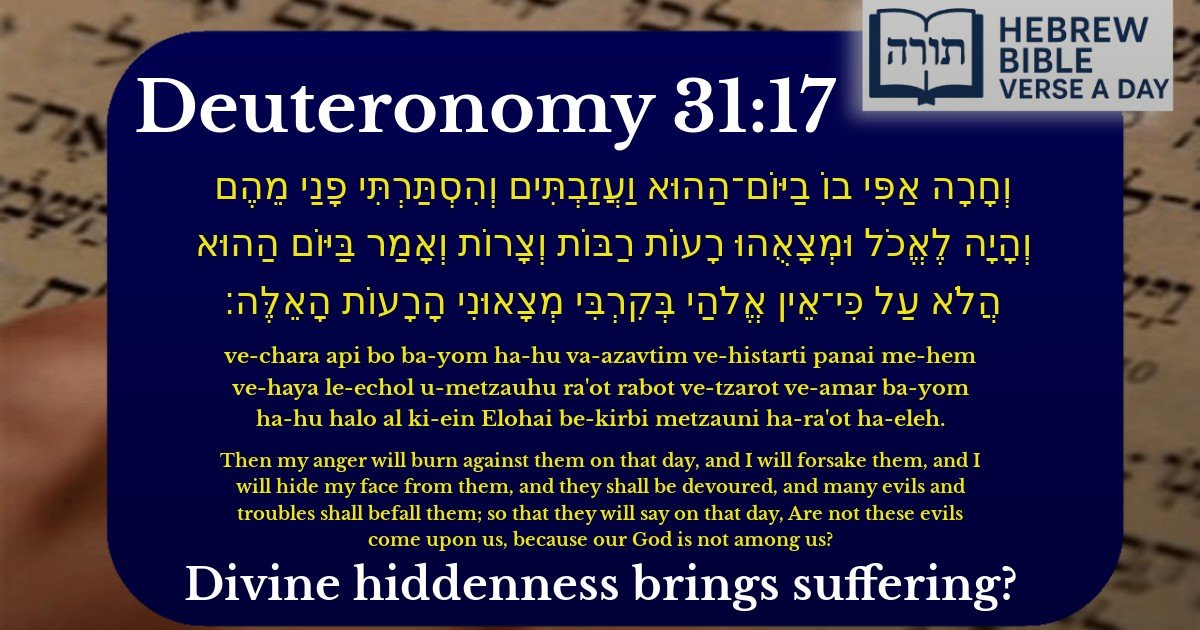

Deuteronomy 31:17 - Divine hiddenness brings suffering?

Deuteronomy 31:17 - דברים 31:17

Hebrew Text

וְחָרָה אַפִּי בוֹ בַיּוֹם־הַהוּא וַעֲזַבְתִּים וְהִסְתַּרְתִּי פָנַי מֵהֶם וְהָיָה לֶאֱכֹל וּמְצָאֻהוּ רָעוֹת רַבּוֹת וְצָרוֹת וְאָמַר בַּיּוֹם הַהוּא הֲלֹא עַל כִּי־אֵין אֱלֹהַי בְּקִרְבִּי מְצָאוּנִי הָרָעוֹת הָאֵלֶּה׃

English Translation

Then my anger will burn against them on that day, and I will forsake them, and I will hide my face from them, and they shall be devoured, and many evils and troubles shall befall them; so that they will say on that day, Are not these evils come upon us, because our God is not among us?

Transliteration

Ve-chara api bo ba-yom ha-hu va-azavtim ve-histarti panai me-hem ve-haya le-echol u-metzauhu ra'ot rabot ve-tzarot ve-amar ba-yom ha-hu halo al ki-ein Elohai be-kirbi metzauni ha-ra'ot ha-eleh.

Hebrew Leining Text

וְחָרָ֣ה אַפִּ֣י ב֣וֹ בַיּוֹם־הַ֠ה֠וּא וַעֲזַבְתִּ֞ים וְהִסְתַּרְתִּ֨י פָנַ֤י מֵהֶם֙ וְהָיָ֣ה לֶאֱכֹ֔ל וּמְצָאֻ֛הוּ רָע֥וֹת רַבּ֖וֹת וְצָר֑וֹת וְאָמַר֙ בַּיּ֣וֹם הַה֔וּא הֲלֹ֗א עַ֣ל כִּי־אֵ֤ין אֱלֹהַי֙ בְּקִרְבִּ֔י מְצָא֖וּנִי הָרָע֥וֹת הָאֵֽלֶּה׃

🎵 Listen to leining

Parasha Commentary

Context in the Torah

This verse appears in Devarim (Deuteronomy) 31:17 as part of Parshat Vayelech, where Moshe warns Bnei Yisrael of the consequences of turning away from Hashem after his passing. It is part of the broader theme of hester panim (the hiding of Hashem's face), a recurring concept in the Torah regarding divine retribution for abandoning the covenant.

Rashi's Explanation

Rashi (Devarim 31:17) explains that "I will hide My face from them" refers to Hashem withdrawing His providence, making it seem as though He is no longer overseeing their welfare. This leads to a chain of misfortunes ("many evils and troubles"), causing Bnei Yisrael to mistakenly believe that these calamities are random rather than divine retribution. Only later ("on that day") will they recognize their suffering stems from abandoning Hashem.

Rambam on Divine Providence

Rambam (Hilchot Ta'anit 1:1-3) elaborates that suffering is a wake-up call for teshuvah (repentance). When troubles arise, one must introspect and recognize them as divine messages. The verse underscores this idea—Bnei Yisrael initially fail to connect their suffering to their spiritual state but eventually acknowledge, "because our God is not among us."

Midrashic Interpretation

The Sifrei (Devarim 31:17) compares hester panim to a father who temporarily turns away from his child to prompt reflection. The "evils" mentioned are not arbitrary but serve to lead the people back to Hashem. The Midrash emphasizes that even in concealment, Hashem's presence is not entirely absent—He awaits their return.

Theological Implications

  • Free Will and Consequences: The verse highlights the principle that suffering follows from human choices, not divine caprice (Rambam, Moreh Nevuchim 3:36).
  • Recognition Through Adversity: The eventual admission ("Are not these evils come upon us...") reflects the Torah's view that hardship can catalyze spiritual awakening (Malbim).
  • Teshuvah as the Goal: The hidden face is not permanent; it is a means to inspire repentance (Ramban, Devarim 31:17).

📚 Talmud Citations

This verse is not quoted in the Talmud.

Frequently Asked Questions

Q: What does it mean when the verse says 'I will hide my face from them'?
A: The phrase 'I will hide my face from them' (הִסְתַּרְתִּי פָנַי מֵהֶם) refers to a state where Hashem withdraws His direct providence and protection from the Jewish people as a consequence of their sins. According to Rashi, this means that Hashem will no longer openly intervene on their behalf, making them vulnerable to troubles and hardships. It is a form of divine discipline meant to lead them to repentance.
Q: Why does the verse mention that 'many evils and troubles shall befall them'?
A: The Torah warns that when the Jewish people abandon Hashem's commandments, they will face 'many evils and troubles' as a natural consequence of their actions. The Rambam explains in Hilchot Teshuvah that suffering can serve as a wake-up call to return to Hashem. These hardships are not arbitrary but are meant to inspire introspection and teshuvah (repentance).
Q: What does it mean when the people say, 'because our God is not among us'?
A: When the people acknowledge, 'because our God is not among us,' they recognize that their suffering stems from distancing themselves from Hashem. The Midrash (Sifrei Devarim) explains that this realization is the first step toward teshuvah. It shows that even in times of punishment, there is an opportunity for spiritual awakening and renewal of their relationship with Hashem.
Q: How does this verse apply to us today?
A: This verse reminds us that our connection to Hashem directly impacts our lives. When we follow His commandments, we merit His protection and blessings. However, if we stray, we may experience hardships that prompt us to return. The Talmud (Berachot 5a) teaches that suffering can be a sign of divine love, pushing us to grow closer to Hashem. The lesson is timeless—maintaining a strong bond with Hashem brings spiritual and material well-being.
Q: Why does the verse mention Hashem's anger burning 'on that day'?
A: The phrase 'on that day' refers to a future time when the consequences of the Jewish people's actions will become evident. Rashi explains that Hashem's 'anger' is not like human anger but represents the strict justice of divine retribution. The timing ('on that day') emphasizes that consequences may not be immediate but will certainly come if there is no repentance.