

Join Our Newsletter To Be Informed When New Videos Are Posted
Hebrew Text
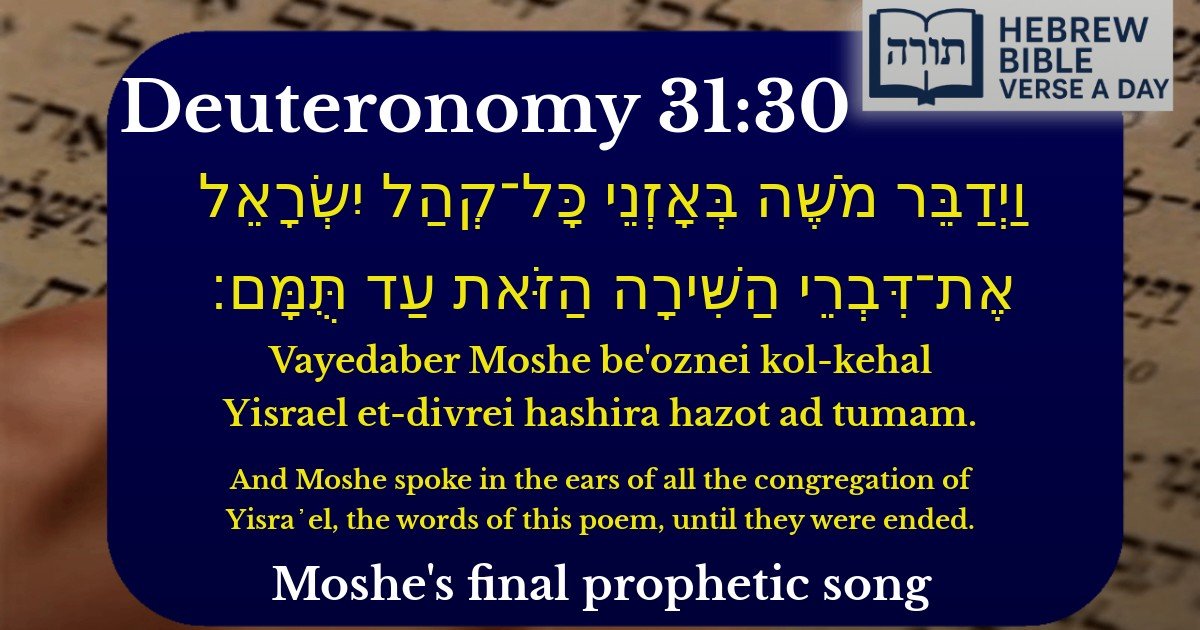
וַיְדַבֵּר מֹשֶׁה בְּאָזְנֵי כָּל־קְהַל יִשְׂרָאֵל אֶת־דִּבְרֵי הַשִּׁירָה הַזֹּאת עַד תֻּמָּם׃
English Translation
And Moshe spoke in the ears of all the congregation of Yisra᾽el, the words of this poem, until they were ended.
Transliteration
Vayedaber Moshe be'oznei kol-kehal Yisrael et-divrei hashira hazot ad tumam.
Hebrew Leining Text
וַיְדַבֵּ֣ר מֹשֶׁ֗ה בְּאׇזְנֵי֙ כׇּל־קְהַ֣ל יִשְׂרָאֵ֔ל אֶת־דִּבְרֵ֥י הַשִּׁירָ֖ה הַזֹּ֑את עַ֖ד תֻּמָּֽם׃ {פ}
🎵 Listen to leining
Parasha Commentary
📚 Talmud Citations
This verse is quoted in the Talmud.
📖 Sanhedrin 101b
The verse is referenced in a discussion about the importance of Moses' final words to the Israelites and the significance of the Song (Ha'azinu) as a testimony.
📖 Sotah 35a
The verse is cited in the context of discussing the public proclamation of the Torah and the role of Moses in conveying God's message to the entire congregation.
Context of the Verse
The verse appears in Devarim 31:30, introducing Shirat Ha'azinu (the Song of Ha'azinu), which Moshe Rabbeinu delivers to Bnei Yisrael before his passing. This poem serves as both a prophetic warning and a testimony for future generations.
Meaning of "בְּאָזְנֵי כָּל־קְהַל יִשְׂרָאֵל" (In the Ears of All the Congregation of Yisra᾽el)
Rashi explains that Moshe gathered all of Klal Yisrael—young and old, men and women—to ensure the message reached every individual (Devarim 31:12). The Ibn Ezra adds that this emphasizes the song's national significance, binding the entire people to its words.
The Nature of "הַשִּׁירָה הַזֹּאת" (This Poem)
The Sifrei (Devarim 306) teaches that this song was divinely inspired and written as a testimony. The Ramban notes that its poetic form makes it memorable, ensuring its transmission through generations. The Malbim highlights its dual role: a warning against straying from Torah and a promise of eventual redemption.
"עַד תֻּמָּם" (Until They Were Ended)
The Ohr HaChaim interprets this phrase as indicating Moshe’s complete delivery without interruption, ensuring clarity. The Kli Yakar suggests it implies the song’s words would remain eternally relevant, never "ending" in their impact.
Key Lessons from the Verse