

Join Our Newsletter To Be Informed When New Videos Are Posted
Hebrew Text
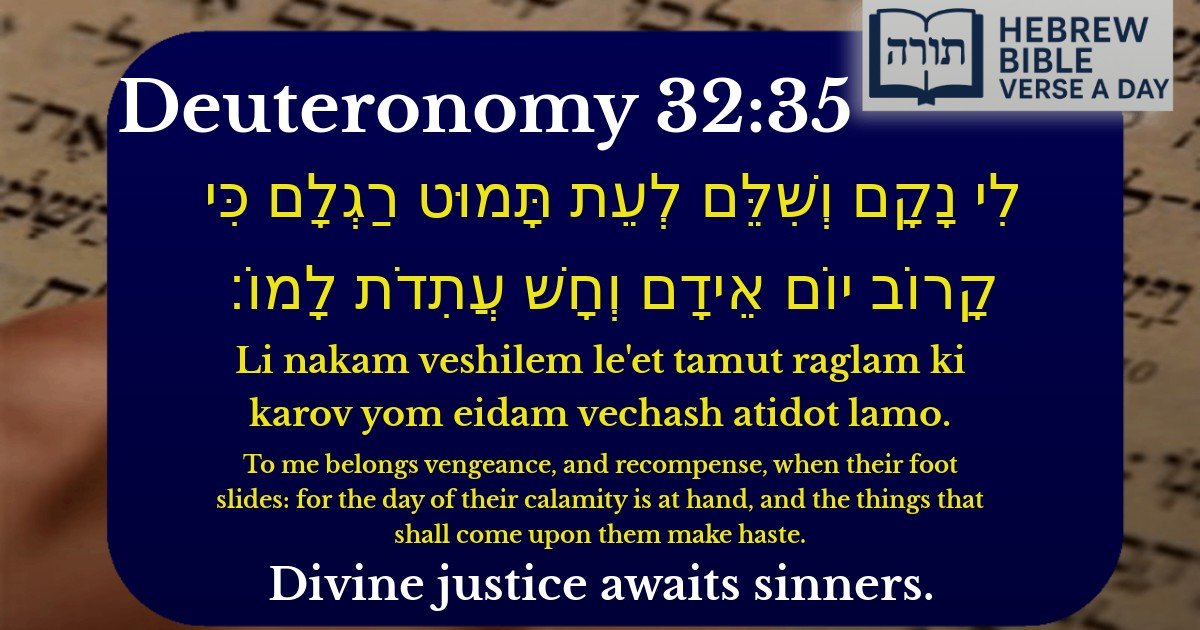
לִי נָקָם וְשִׁלֵּם לְעֵת תָּמוּט רַגְלָם כִּי קָרוֹב יוֹם אֵידָם וְחָשׁ עֲתִדֹת לָמוֹ׃
English Translation
To me belongs vengeance, and recompense, when their foot slides: for the day of their calamity is at hand, and the things that shall come upon them make haste.
Transliteration
Li nakam veshilem le'et tamut raglam ki karov yom eidam vechash atidot lamo.
Hebrew Leining Text
לִ֤י נָקָם֙ וְשִׁלֵּ֔ם לְעֵ֖ת תָּמ֣וּט רַגְלָ֑ם כִּ֤י קָרוֹב֙ י֣וֹם אֵידָ֔ם וְחָ֖שׁ עֲתִדֹ֥ת לָֽמוֹ׃
🎵 Listen to leining
Parasha Commentary
📚 Talmud Citations
This verse is not quoted in the Talmud.
Context in Devarim (Deuteronomy) 32:35
This verse appears in Shirat Ha'azinu (Devarim 32), a prophetic song delivered by Moshe before his passing. The song warns of Israel's future straying from Hashem and the consequences, while also affirming divine justice and ultimate redemption.
Rashi's Explanation
Rashi interprets "לִי נָקָם וְשִׁלֵּם" ("To me belongs vengeance, and recompense") as emphasizing that retribution is solely Hashem's domain. He cites the Midrash (Sifrei 32:35) to explain that human beings should not seek personal vengeance, as it is reserved for Hashem to exact justice in His time.
Ibn Ezra's Insight
Ibn Ezra notes that "לְעֵת תָּמוּט רַגְלָם" ("when their foot slides") refers to the moment when Israel's enemies stumble due to their own wickedness. He connects this to the principle of middah k'neged middah (measure for measure), where those who cause others to falter will themselves experience downfall.
Rambam on Divine Justice
In Hilchot Teshuvah, Rambam discusses how divine retribution is precise and inevitable. The phrase "כִּי קָרוֹב יוֹם אֵידָם" ("for the day of their calamity is at hand") reflects the idea that while punishment may seem delayed, it is predetermined and will come swiftly when the time arrives.
Midrashic Interpretation
The Midrash Tanchuma (Ha'azinu 4) elaborates that this verse reassures Israel during exile: though enemies may seem victorious, their downfall is imminent. "וְחָשׁ עֲתִדֹת לָמוֹ" ("and the things that shall come upon them make haste") implies that divine justice cannot be postponed indefinitely.
Practical Lessons