

Join Our Newsletter To Be Informed When New Videos Are Posted
Hebrew Text
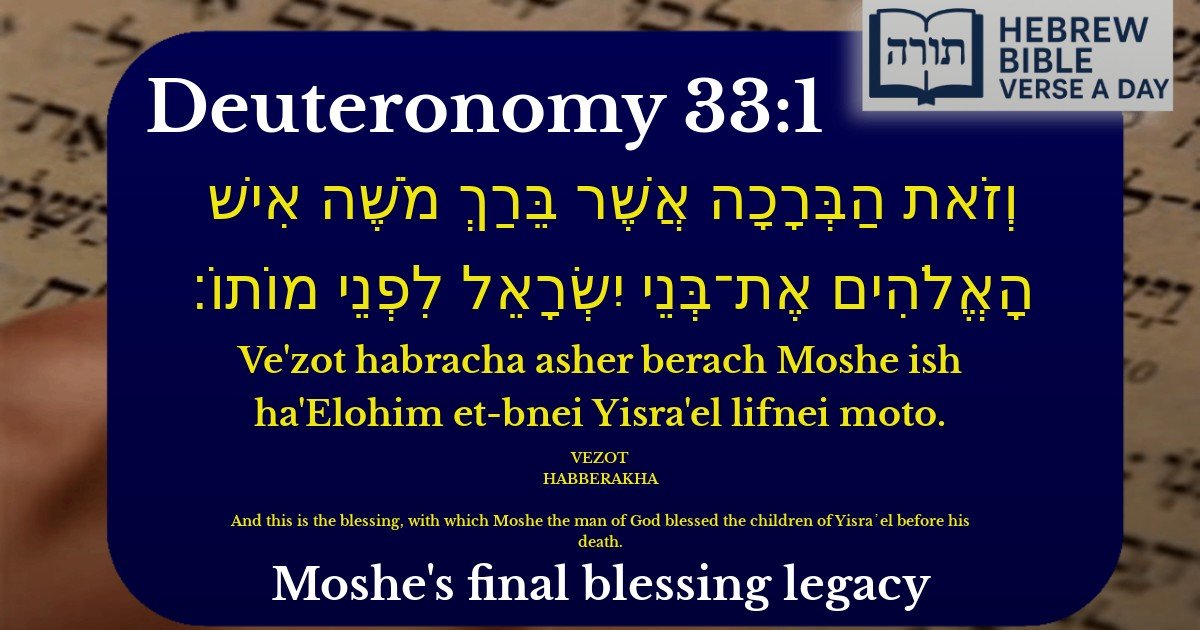
וְזֹאת הַבְּרָכָה אֲשֶׁר בֵּרַךְ מֹשֶׁה אִישׁ הָאֱלֹהִים אֶת־בְּנֵי יִשְׂרָאֵל לִפְנֵי מוֹתוֹ׃
English Translation
VEZOT
HABBERAKHA
And this is the blessing, with which Moshe the man of God blessed the children of Yisra᾽el before his death.
Transliteration
Ve'zot habracha asher berach Moshe ish ha'Elohim et-bnei Yisra'el lifnei moto.
Hebrew Leining Text
וְזֹ֣את הַבְּרָכָ֗ה אֲשֶׁ֨ר בֵּרַ֥ךְ מֹשֶׁ֛ה אִ֥ישׁ הָאֱלֹהִ֖ים אֶת־בְּנֵ֣י יִשְׂרָאֵ֑ל לִפְנֵ֖י מוֹתֽוֹ׃
🎵 Listen to leining
Parasha Commentary
📚 Talmud Citations
This verse is quoted in the Talmud.
📖 Sotah 13b
The verse is referenced in the context of discussing Moses' final blessings to the Israelites before his death.
📖 Megillah 31b
Mentioned in relation to the reading of the Torah portion 'Vezot Haberakha' on Simchat Torah.
Introduction to the Verse
The verse introduces the final blessings that Moshe Rabbeinu bestowed upon Bnei Yisrael before his passing. It is significant that Moshe is referred to as "אִישׁ הָאֱלֹהִים" ("the man of God"), a title emphasizing his unique prophetic stature and closeness to Hashem.
Rashi's Commentary
Rashi (Devarim 33:1) explains that the phrase "וְזֹאת הַבְּרָכָה" ("And this is the blessing") parallels the opening of Sefer Vayikra ("וַיִּקְרָא אֶל מֹשֶׁה"), where Moshe is called to receive the Torah. Just as the Torah was given through Moshe, so too were these blessings transmitted through him. Rashi also notes that Moshe blessed each tribe individually, reflecting their unique roles and destinies.
Rambam's Perspective
In Moreh Nevuchim (3:54), Rambam discusses the prophetic nature of Moshe's blessings. Unlike other prophets who received visions, Moshe's blessings were direct communications from Hashem, underscoring his unparalleled level of prophecy ("פֶּה אֶל פֶּה אֲדַבֶּר בּוֹ", Bamidbar 12:8).
Midrashic Insights
The Significance of "אִישׁ הָאֱלֹהִים"
The title "אִישׁ הָאֱלֹהִים" appears only twice in the Torah—here and in reference to Moshe in Tehillim 90:1. The Sforno (Devarim 33:1) explains that it signifies Moshe's complete dedication to divine service, making him the ideal conduit for these eternal blessings. The Malbim adds that this title contrasts with Moshe's earlier title of "עֶבֶד ה'" (servant of Hashem), highlighting his elevated status at life's end.
Halachic Implications
The Sefer HaChinuch (Mitzvah 512) derives from this verse the importance of blessing others, especially before significant transitions. Just as Moshe blessed Bnei Yisrael before his passing, so too should one seek to leave a spiritual legacy through words of Torah and bracha.