

Join Our Newsletter To Be Informed When New Videos Are Posted
Hebrew Text
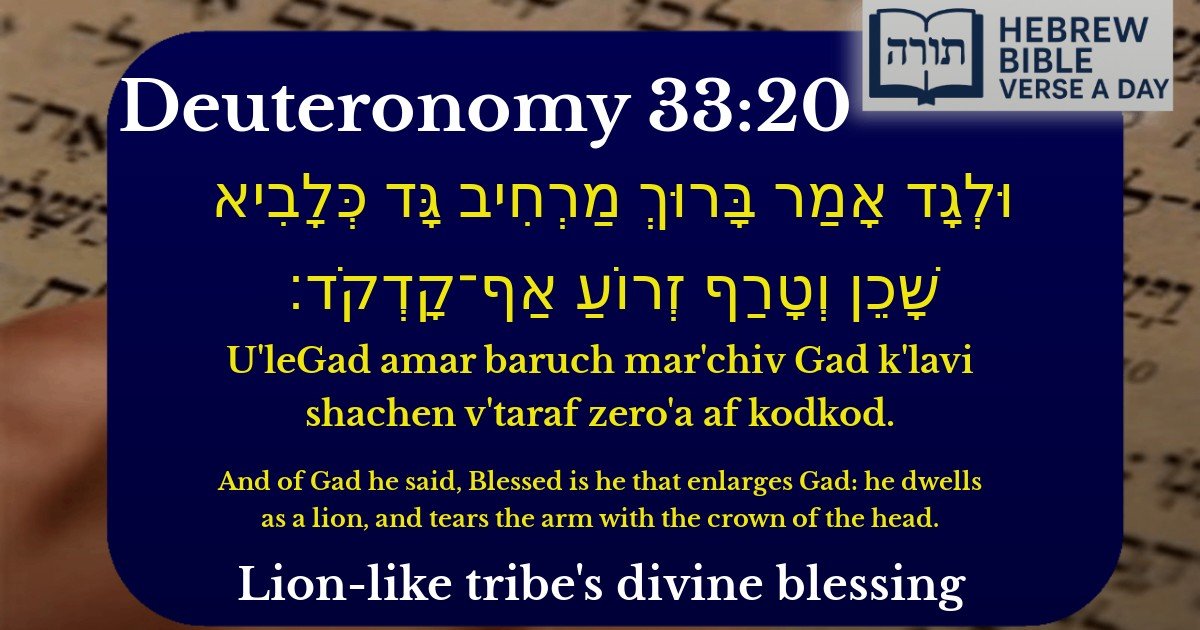
וּלְגָד אָמַר בָּרוּךְ מַרְחִיב גָּד כְּלָבִיא שָׁכֵן וְטָרַף זְרוֹעַ אַף־קָדְקֹד׃
English Translation
And of Gad he said, Blessed is he that enlarges Gad: he dwells as a lion, and tears the arm with the crown of the head.
Transliteration
U'leGad amar baruch mar'chiv Gad k'lavi shachen v'taraf zero'a af kodkod.
Hebrew Leining Text
וּלְגָ֣ד אָמַ֔ר בָּר֖וּךְ מַרְחִ֣יב גָּ֑ד כְּלָבִ֣יא שָׁכֵ֔ן וְטָרַ֥ף זְר֖וֹעַ אַף־קׇדְקֹֽד׃
🎵 Listen to leining
Parasha Commentary
📚 Talmud Citations
This verse is not quoted in the Talmud.
Overview of the Verse
The verse (Devarim 33:20) is part of Moshe Rabbeinu's final blessings to the tribes of Israel before his passing. Here, Moshe blesses the tribe of Gad, emphasizing their strength, territorial expansion, and martial prowess. The imagery of a lion and the tearing of limbs symbolize Gad's military might and role in defending Israel.
Rashi's Commentary
Rashi explains that "Blessed is he that enlarges Gad" refers to Hashem, who will expand Gad's territory. The phrase "he dwells as a lion" alludes to Gad's inheritance east of the Jordan, a region prone to attacks, requiring them to be as fearless as lions in battle. "Tears the arm with the crown of the head" signifies their ability to strike enemies decisively, cutting through both limbs and heads—a metaphor for total victory.
Ibn Ezra's Interpretation
Ibn Ezra connects Gad's blessing to their historical role as warriors. He notes that Gad's descendants were known for their bravery, as seen in Divrei HaYamim (1 Chronicles 12:8), where Gadite warriors are described as "mighty men of valor." The "tearing of the arm" symbolizes their ability to dismantle enemy forces completely.
Midrashic Insights
Rambam's Perspective
While Rambam does not comment directly on this verse, his principles in Hilchot Melachim (Laws of Kings) align with the idea that a Jewish army must be both courageous and morally upright. Gad's blessing thus serves as a model for balancing military strength with spiritual integrity.
Symbolism of the Lion
The lion, a recurring motif in Tanach (e.g., Bereishit 49:9), represents leadership, fearlessness, and divine protection. Gad's comparison to a lion underscores their divinely ordained role as defenders of Israel.
Practical Lessons