Frequently Asked Questions
Q: What is the significance of the locations mentioned in Deuteronomy 11:30?
A: The verse mentions key locations like the Yarden (Jordan River), Gilgal, and the terebinths of Moreh. These places were significant in Jewish history, particularly during the Israelites' journey into the Land of Israel. Rashi explains that these locations were well-known landmarks that helped the Israelites orient themselves as they prepared to enter the land promised to them by Hashem.
Q: Why does the verse mention 'the land of the Kena῾ani'?
A: The mention of 'the land of the Kena῾ani' (Canaanites) serves as a reminder of the nations that inhabited the land before the Israelites. According to Rambam, this emphasizes the divine promise that the land would be given to the Israelites, provided they followed Hashem's commandments. It also highlights the moral responsibility to establish a just society in contrast to the practices of the Canaanites.
Q: What is the importance of the 'terebinths of Moreh' in this verse?
A: The 'terebinths of Moreh' (אֵלוֹנֵי מֹרֶה) are significant because they were a well-known landmark associated with Avraham Avinu (Abraham). Rashi notes that this location was where Avraham first built an altar to Hashem (Genesis 12:6). Mentioning it here connects the Israelites' entry into the land with the legacy of their forefathers, reinforcing their spiritual and historical ties to the land.
Q: How does this verse relate to the broader context of Deuteronomy 11?
A: Deuteronomy 11 emphasizes the blessings of following Hashem's commandments and the consequences of straying from them. This verse, which describes the physical land, serves as a tangible reminder of the covenant between Hashem and the Jewish people. The Talmud (Sotah 37a) teaches that the land itself responds to the moral and spiritual state of its inhabitants, making the location a central part of the divine promise.
Q: What lesson can we learn from Deuteronomy 11:30 today?
A: This verse teaches the importance of remembering our history and spiritual roots. Just as the Israelites were reminded of their connection to the land and their forefathers, we too must recognize the significance of our heritage. The Midrash (Devarim Rabbah) explains that landmarks like these serve as eternal reminders of Hashem's promises and our responsibilities as Jews, encouraging us to live with purpose and faithfulness.

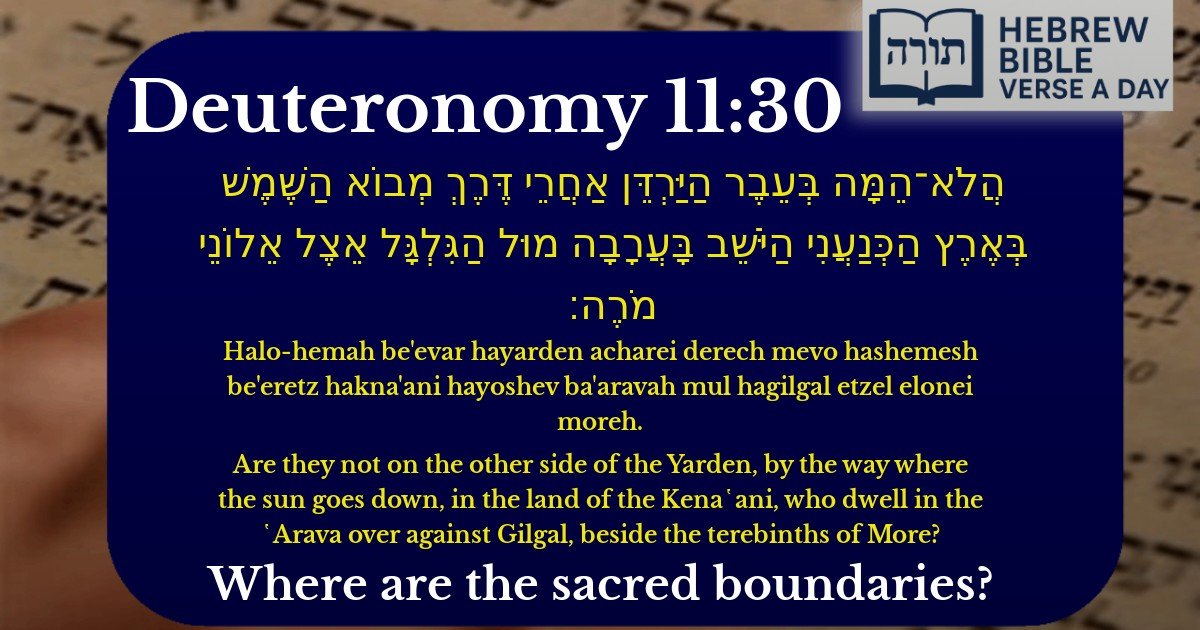

Geographical Context
The verse describes a location "on the other side of the Yarden" (הֲלֹא־הֵמָּה בְּעֵבֶר הַיַּרְדֵּן), referring to the eastern side of the Jordan River. Rashi (Devarim 11:30) explains that this area was inhabited by the Kena'ani (Canaanites), specifically those dwelling in the Arava (עֲרָבָה), a plain or valley region. The mention of "Gilgal" and "Elonei Moreh" (the terebinths of Moreh) situates this near significant biblical landmarks associated with Avraham Avinu and later Israelite history.
Elonei Moreh: Connection to Avraham
The "Elonei Moreh" (אֵלוֹנֵי מֹרֶה) is identified by the Midrash (Bereishit Rabbah 39:8) as the place where Avraham first stopped upon entering Eretz Yisrael (Bereishit 12:6). Ramban (Bereishit 12:6) notes that this location was chosen because it was a site of divine revelation, where Avraham built an altar to Hashem. The repetition of this place in Devarim reinforces its spiritual significance as a landmark of covenantal promise.
Symbolism of the "Way Where the Sun Goes Down"
The phrase "by the way where the sun goes down" (אַחֲרֵי דֶּרֶרְךְ מְבוֹא הַשֶּׁמֶשׁ) is interpreted by the Sifrei (Devarim 49) as referring to the western direction, symbolizing the setting of the sun—a metaphor for the decline of idolatry and the rise of monotheism in the land. The Kena'ani dwelling there represent the spiritual challenges Bnei Yisrael would face in conquering and sanctifying the land.
Gilgal and Its Significance
Gilgal (הַגִּלְגָּל) is later the site where Yehoshua circumcised Bnei Yisrael upon entering Eretz Yisrael (Yehoshua 5:9). The Talmud (Sotah 34b) connects this location to the "rolling away" (גִּלְגּוּל) of the shame of Egypt, marking a transition to spiritual renewal. The verse thus hints at future events tied to this region.
Summary of Key Themes