

Join Our Newsletter To Be Informed When New Videos Are Posted
Hebrew Text
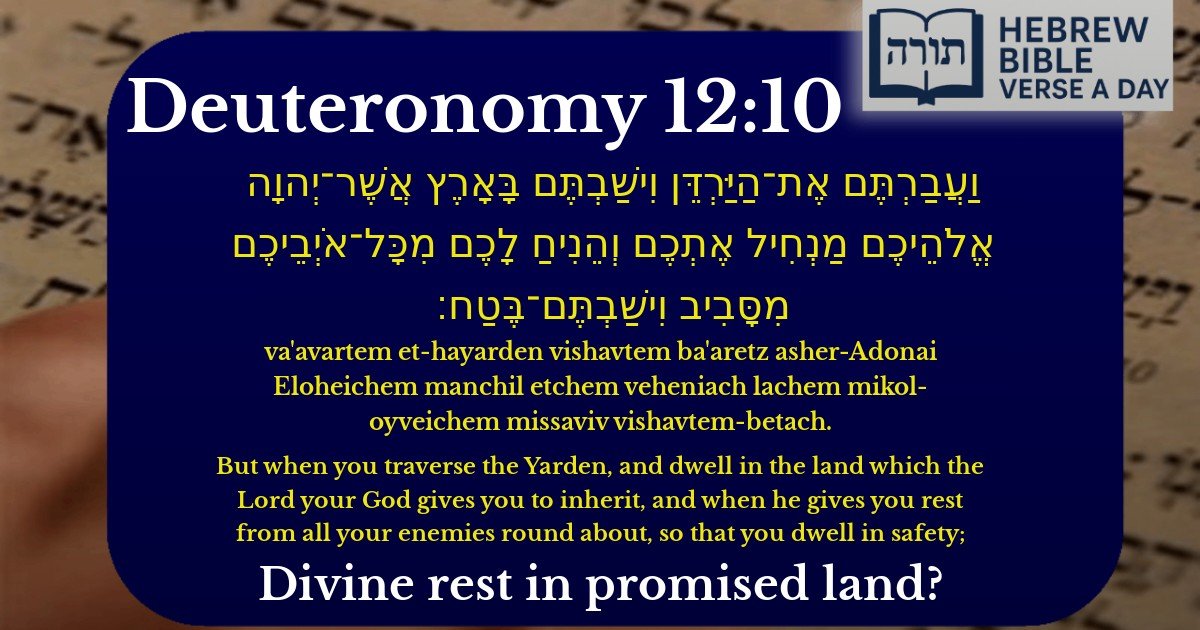
וַעֲבַרְתֶּם אֶת־הַיַּרְדֵּן וִישַׁבְתֶּם בָּאָרֶץ אֲשֶׁר־יְהוָה אֱלֹהֵיכֶם מַנְחִיל אֶתְכֶם וְהֵנִיחַ לָכֶם מִכָּל־אֹיְבֵיכֶם מִסָּבִיב וִישַׁבְתֶּם־בֶּטַח׃
English Translation
But when you traverse the Yarden, and dwell in the land which the Lord your God gives you to inherit, and when he gives you rest from all your enemies round about, so that you dwell in safety;
Transliteration
Va'avartem et-hayarden vishavtem ba'aretz asher-Adonai Eloheichem manchil etchem veheniach lachem mikol-oyveichem missaviv vishavtem-betach.
Hebrew Leining Text
וַעֲבַרְתֶּם֮ אֶת־הַיַּרְדֵּן֒ וִֽישַׁבְתֶּ֣ם בָּאָ֔רֶץ אֲשֶׁר־יְהֹוָ֥ה אֱלֹהֵיכֶ֖ם מַנְחִ֣יל אֶתְכֶ֑ם וְהֵנִ֨יחַ לָכֶ֧ם מִכׇּל־אֹיְבֵיכֶ֛ם מִסָּבִ֖יב וִֽישַׁבְתֶּם־בֶּֽטַח׃
🎵 Listen to leining
Parasha Commentary
📚 Talmud Citations
This verse is not quoted in the Talmud.
Context in Sefer Devarim
The verse (Devarim 12:10) appears in Moshe Rabbeinu's address to Bnei Yisrael as they prepare to enter Eretz Yisrael. It follows the commandments regarding centralized worship in the place Hashem will choose (Devarim 12:5-7) and precedes laws of proper sacrificial service. Rashi notes that this passage emphasizes that full mitzvah observance—particularly those tied to the Land—can only be fulfilled after settling securely in Eretz Yisrael.
Crossing the Yarden
The phrase "וַעֲבַרְתֶּם אֶת־הַיַּרְדֵּן" ("you shall traverse the Yarden") carries symbolic weight. The Sforno explains that crossing the river represents a complete transition from the wilderness generation to a new era of nationhood. The Talmud (Sotah 34a) connects this to the miraculous splitting of the Yarden under Yehoshua's leadership, demonstrating Divine approval of their entry.
Divine Inheritance of the Land
The term "מַנְחִיל" ("gives to inherit") is significant. Ramban emphasizes that Eretz Yisrael is not merely conquered territory but a Divine inheritance, as stated in Vayikra 20:24. The Midrash Tanchuma (Kedoshim 8) compares this to a father bequeathing a cherished possession to his children, underscoring the eternal covenant between Hashem and Am Yisrael.
Rest from Enemies
The promise "וְהֵנִיחַ לָכֶם מִכָּל־אֹיְבֵיכֶם" ("He will give you rest from all your enemies") echoes the condition for building the Beit HaMikdash (Shmuel II 7:1). The Kli Yakar notes this foreshadows the eras of David and Shlomo when temporary peace allowed for Temple construction. However, the Talmud (Berachot 3b) teaches that complete "menuchah" (rest) will only come in the Messianic era.
Dwelling in Security
The concluding phrase "וִישַׁבְתֶּם־בֶּטַח" ("you shall dwell in safety") is interpreted by Malbim as having two dimensions:
Halachic Implications
The Rambam (Hilchot Melachim 5:1) derives from this verse that many agricultural mitzvot (terumot, ma'aserot, etc.) only apply after the Land is fully conquered and apportioned to the tribes. This reflects the principle that Torah laws are designed for a nation living securely in their homeland.