Frequently Asked Questions
Q: What does the verse 'At the end of every seven years thou shalt make a release' mean?
A: This verse refers to the mitzvah (commandment) of Shemitah (the Sabbatical year), which occurs every seven years. During Shemitah, all agricultural work in the Land of Israel must cease, and loans between Jews are forgiven (Deuteronomy 15:1-2). Rashi explains that this 'release' (shemittah) applies to monetary debts, meaning creditors must relinquish claims on loans at the end of the seventh year.
Q: Why is the Shemitah year important in Judaism?
A: Shemitah is important because it demonstrates trust in Hashem (G-d) by letting the land rest and forgiving debts. The Rambam (Hilchot Shemitah v’Yovel 1:1) teaches that Shemitah reminds us that the Land of Israel belongs to Hashem, and we are merely temporary dwellers. It also emphasizes kindness and social justice by relieving debtors of financial burdens.
Q: Does the Shemitah law still apply today?
A: Yes, Shemitah still applies today, but with some differences. While agricultural laws (letting the land rest) apply biblically only in the Land of Israel, the cancellation of debts (prosbul) was adjusted by Hillel the Elder (Talmud, Gittin 36a) to prevent lenders from refusing loans before Shemitah. Today, many farmers in Israel observe Shemitah, and halachic authorities provide guidance on modern financial applications.
Q: What can we learn from the Shemitah commandment?
A: Shemitah teaches us emunah (faith) in Hashem’s providence, as farmers must trust that He will provide despite not working the land. It also reinforces chessed (kindness) by helping the poor (who may gather produce) and forgiving debts. The Midrash (Sifrei Devarim) highlights that Shemitah fosters humility, reminding us that material wealth is temporary.

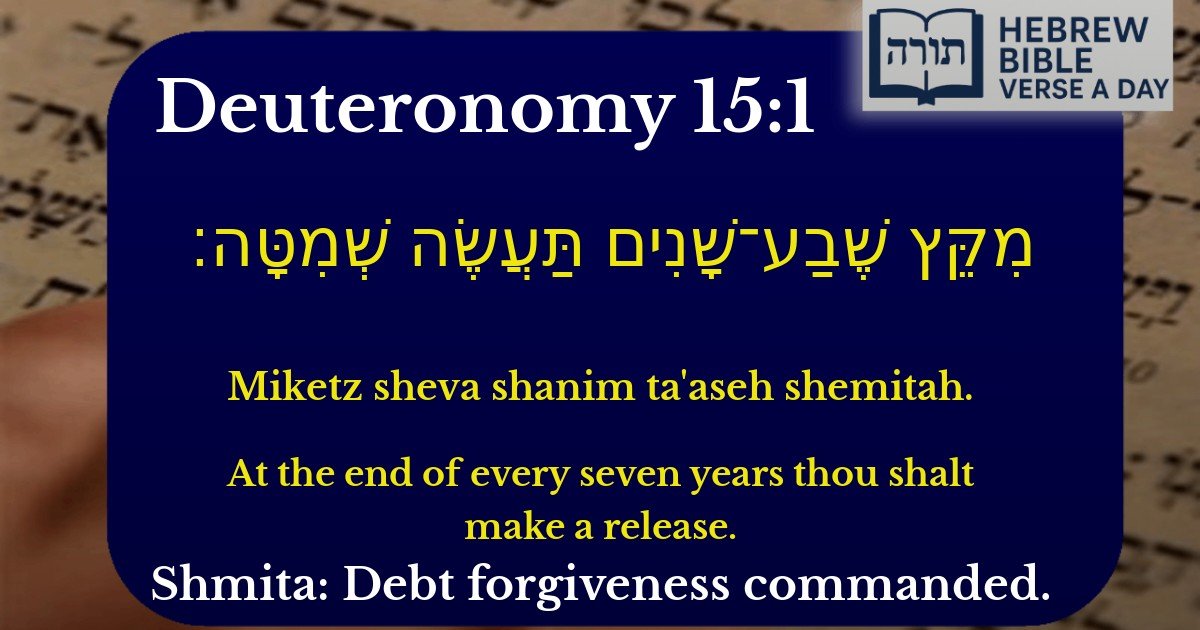

The Shemitah (Sabbatical Year) Commandment
The verse "מִקֵּץ שֶׁבַע־שָׁנִים תַּעֲשֶׂה שְׁמִטָּה" (Devarim 15:1) establishes the mitzvah of Shemitah, the sabbatical year observed every seven years in Eretz Yisrael. This commandment encompasses several key halachic and philosophical dimensions in Jewish tradition.
Rashi's Explanation
Rashi (Devarim 15:1) clarifies that the phrase "מִקֵּץ שֶׁבַע־שָׁנִים" refers to the completion of six full years, with the Shemitah year beginning at Rosh Hashanah of the seventh year. He emphasizes that this mitzvah applies specifically to agricultural lands within the borders of Eretz Yisrael.
Halachic Dimensions from Rambam
In Hilchot Shemitah V'Yovel (1:1-2), the Rambam outlines the primary obligations of Shemitah:
Philosophical Significance
The Sefer HaChinuch (Mitzvah 84) explains that Shemitah serves multiple spiritual purposes:
Midrashic Insights
The Sifrei (Devarim 111) connects Shemitah to the broader concept of Shabbat, noting that just as the weekly Shabbat commemorates Creation, the Sabbatical year reinforces our dependence on the Creator. The Midrash Tanchuma (Re'eh 18) teaches that proper observance of Shemitah brings blessing to the land.
Contemporary Application
While full Shemitah observance applies only when most Jews live in Eretz Yisrael, the Heter Mechirah (sale of land to non-Jews) remains a subject of halachic debate among contemporary poskim. The mitzvah of shemitat kesafim (loan release) continues to be observed through the Pruzbul mechanism established by Hillel.