

Join Our Newsletter To Be Informed When New Videos Are Posted
Hebrew Text
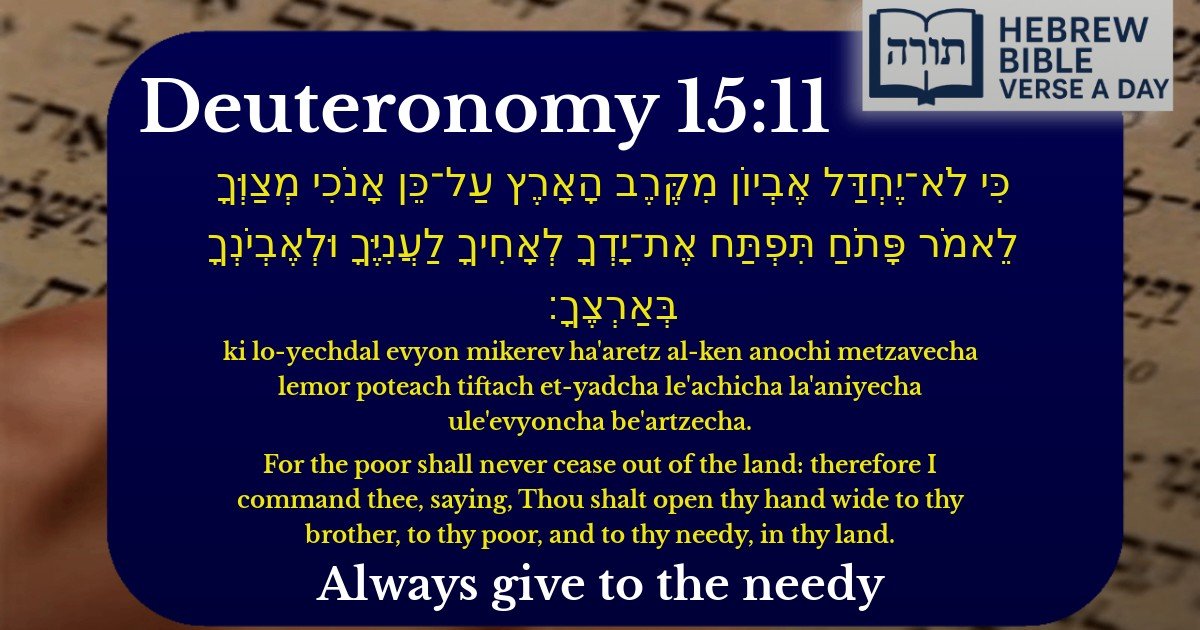
כִּי לֹא־יֶחְדַּל אֶבְיוֹן מִקֶּרֶב הָאָרֶץ עַל־כֵּן אָנֹכִי מְצַוְּךָ לֵאמֹר פָּתֹחַ תִּפְתַּח אֶת־יָדְךָ לְאָחִיךָ לַעֲנִיֶּךָ וּלְאֶבְיֹנְךָ בְּאַרְצֶךָ׃
English Translation
For the poor shall never cease out of the land: therefore I command thee, saying, Thou shalt open thy hand wide to thy brother, to thy poor, and to thy needy, in thy land.
Transliteration
Ki lo-yechdal evyon mikerev ha'aretz al-ken anochi metzavecha lemor poteach tiftach et-yadcha le'achicha la'aniyecha ule'evyoncha be'artzecha.
Hebrew Leining Text
כִּ֛י לֹא־יֶחְדַּ֥ל אֶבְי֖וֹן מִקֶּ֣רֶב הָאָ֑רֶץ עַל־כֵּ֞ן אָנֹכִ֤י מְצַוְּךָ֙ לֵאמֹ֔ר פָּ֠תֹ֠חַ תִּפְתַּ֨ח אֶת־יָדְךָ֜ לְאָחִ֧יךָ לַעֲנִיֶּ֛ךָ וּלְאֶבְיֹנְךָ֖ בְּאַרְצֶֽךָ׃ {ס}
🎵 Listen to leining
Parasha Commentary
📚 Talmud Citations
This verse is quoted in the Talmud.
📖 Ketubot 67b
The verse is cited in a discussion about the obligation to give charity and the importance of supporting the poor.
📖 Sotah 14a
The verse is referenced in the context of discussing the mitzvah of giving charity and the perpetual presence of the poor in society.
The Perpetual Presence of the Poor
The verse states, "כִּי לֹא־יֶחְדַּל אֶבְיוֹן מִקֶּרֶב הָאָרֶץ" ("For the poor shall never cease out of the land"). Rashi explains that this is not merely a prediction but a reality embedded in the divine plan—there will always be needy individuals to provide opportunities for others to perform tzedakah (charity). The Rambam (Hilchot Matnot Aniyim 10:1) elaborates that this ensures the mitzvah of giving remains perpetually relevant, allowing each generation to fulfill this essential commandment.
The Command to Open Your Hand
The phrase "פָּתֹחַ תִּפְתַּח אֶת־יָדְךָ" ("You shall open your hand wide") is emphatic, using a doubled verb form. The Sifrei (Devarim 116) teaches that this repetition underscores the obligation to give generously and repeatedly, not just once. The Talmud (Ketubot 67b) further clarifies that one must give according to the needs of the poor—whether food, clothing, or other necessities—and not just a minimal amount.
Identifying the Recipients
The verse specifies three categories of recipients:
The Ethical and Spiritual Dimensions
The Sefer HaChinuch (Mitzvah 479) highlights that this mitzvah cultivates compassion and reinforces the principle that wealth is a divine trust, to be shared with those less fortunate. The Midrash (Vayikra Rabbah 34:8) compares withholding charity to idolatry, stressing its severity. Conversely, the Rambam (Hilchot Matnot Aniyim 10:2) teaches that giving joyfully elevates the act into a higher spiritual merit.