

Join Our Newsletter To Be Informed When New Videos Are Posted
Hebrew Text
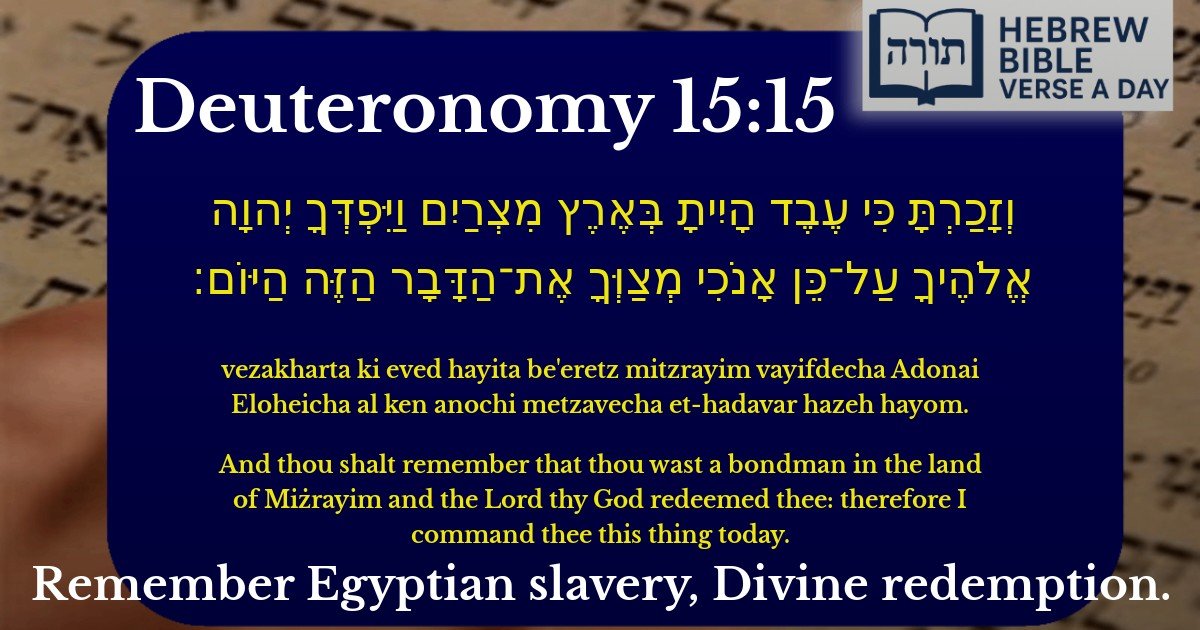
וְזָכַרְתָּ כִּי עֶבֶד הָיִיתָ בְּאֶרֶץ מִצְרַיִם וַיִּפְדְּךָ יְהוָה אֱלֹהֶיךָ עַל־כֵּן אָנֹכִי מְצַוְּךָ אֶת־הַדָּבָר הַזֶּה הַיּוֹם׃
English Translation
And thou shalt remember that thou wast a bondman in the land of Miżrayim and the Lord thy God redeemed thee: therefore I command thee this thing today.
Transliteration
Vezakharta ki eved hayita be'eretz mitzrayim vayifdecha Adonai Eloheicha al ken anochi metzavecha et-hadavar hazeh hayom.
Hebrew Leining Text
וְזָכַרְתָּ֗ כִּ֣י עֶ֤בֶד הָיִ֙יתָ֙ בְּאֶ֣רֶץ מִצְרַ֔יִם וַֽיִּפְדְּךָ֖ יְהֹוָ֣ה אֱלֹהֶ֑יךָ עַל־כֵּ֞ן אָנֹכִ֧י מְצַוְּךָ֛ אֶת־הַדָּבָ֥ר הַזֶּ֖ה הַיּֽוֹם׃
🎵 Listen to leining
Parasha Commentary
📚 Talmud Citations
This verse is quoted in the Talmud.
📖 Berakhot 13b
The verse is referenced in the context of discussing the obligation to remember the Exodus from Egypt during the recitation of the Shema.
📖 Pesachim 116b
The verse is cited in the discussion about the requirement to mention the Exodus during the Passover Seder.
📖 Kiddushin 22b
The verse is used in a discussion about the laws of Hebrew slaves and the moral imperative to treat them kindly, remembering Israel's own experience as slaves in Egypt.
Context and Meaning
The verse (Devarim 24:18) emphasizes the moral obligation to remember our enslavement in Egypt and Hashem's redemption, which serves as the foundation for numerous mitzvot, particularly those related to kindness and justice. Rashi explains that this remembrance is meant to inspire empathy and ethical behavior, especially toward the vulnerable, as we were once in their position.
Connection to Mitzvot
Rambam (Hilchot Matnot Aniyim 10:2) derives from this verse the obligation to treat others with compassion, particularly in matters of charity and fair treatment of workers. The Talmud (Bava Metzia 10b) links this remembrance to the mitzvah of paying wages on time, as we experienced oppression in Egypt and must not replicate such injustice.
Spiritual and Ethical Lessons
Halachic Implications
The Sefer HaChinuch (Mitzvah 482) connects this verse to the prohibition against oppressing the stranger, as we know "the soul of the stranger" from our own experience. The Ramban adds that this remembrance is a recurring theme in Torah to instill yirat Shamayim (fear of Heaven) and moral vigilance in all interpersonal mitzvot.