

Deuteronomy 15:2 - Debts erased every seven years?

Deuteronomy 15:2 - דברים 15:2

Hebrew Text

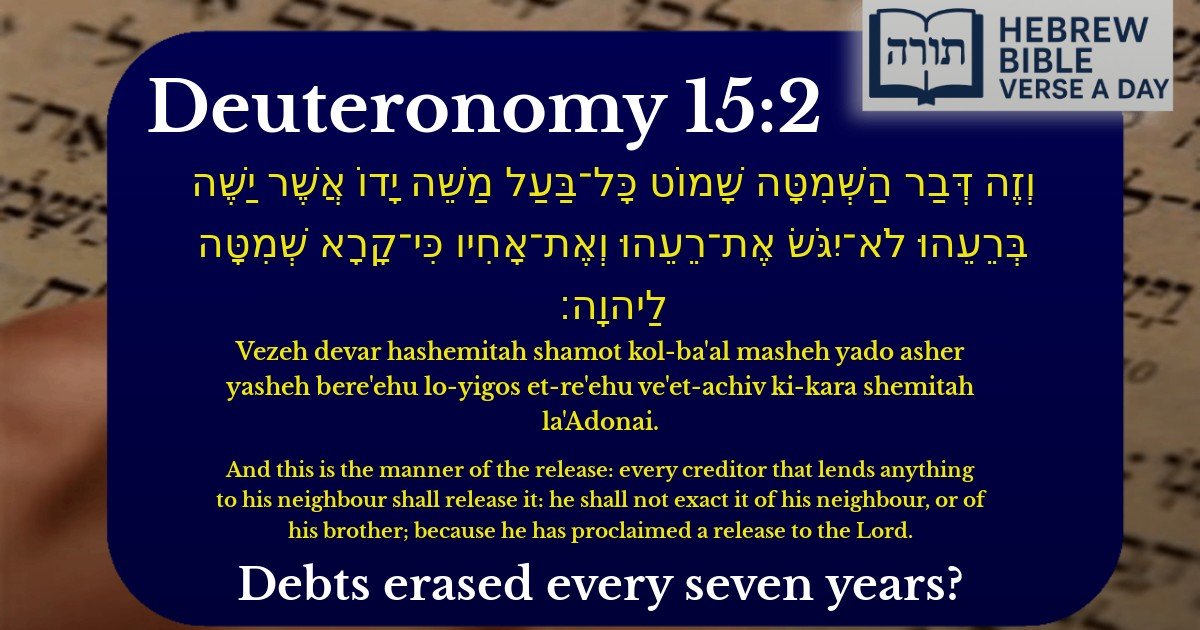
וְזֶה דְּבַר הַשְּׁמִטָּה שָׁמוֹט כָּל־בַּעַל מַשֵּׁה יָדוֹ אֲשֶׁר יַשֶּׁה בְּרֵעֵהוּ לֹא־יִגֹּשׂ אֶת־רֵעֵהוּ וְאֶת־אָחִיו כִּי־קָרָא שְׁמִטָּה לַיהוָה׃

English Translation

And this is the manner of the release: every creditor that lends anything to his neighbour shall release it: he shall not exact it of his neighbour, or of his brother; because he has proclaimed a release to the Lord.

Transliteration

Vezeh devar hashemitah shamot kol-ba'al masheh yado asher yasheh bere'ehu lo-yigos et-re'ehu ve'et-achiv ki-kara shemitah la'Adonai.

Hebrew Leining Text

וְזֶה֮ דְּבַ֣ר הַשְּׁמִטָּה֒ שָׁמ֗וֹט כׇּל־בַּ֙עַל֙ מַשֵּׁ֣ה יָד֔וֹ אֲשֶׁ֥ר יַשֶּׁ֖ה בְּרֵעֵ֑הוּ לֹֽא־יִגֹּ֤שׂ אֶת־רֵעֵ֙הוּ֙ וְאֶת־אָחִ֔יו כִּֽי־קָרָ֥א שְׁמִטָּ֖ה לַיהֹוָֽה׃

🎵 Listen to leining

Parasha Commentary

The Mitzvah of Shemitat Kesafim (Debt Release)

The verse (Devarim 15:2) introduces the mitzvah of shemitat kesafim, the biblical obligation to release all outstanding loans at the end of the Shemitah (Sabbatical) year. This mitzvah applies only in Eretz Yisrael when the majority of Jews reside there (Rambam, Hilchot Shemitah v'Yovel 9:2-3). The Torah emphasizes that this release is "to Hashem," indicating it is a sacred act of obedience to Divine command rather than mere financial policy.

Key Halachic Principles

  • Lo Yigos ("He shall not exact"): The creditor is forbidden from any collection attempt, including verbal pressure (Rashi). The Ramban explains this includes even subtle reminders that might cause the debtor distress.
  • B'Re'ehu v'Achiv ("His neighbor or brother"): The prohibition applies equally to loans given to Jews and converts (Sifrei), demonstrating the unity of Klal Yisrael in fulfilling mitzvot.
  • Proclamation to Hashem: The Beis HaLevi teaches that public declaration of Shemitah in the Beit HaMikdash (as described in Mishnah Shevi'it 10:2-4) transforms this from a private transaction into a national spiritual commitment.

Moral and Spiritual Dimensions

The Sefer HaChinuch (Mitzvah 477) explains that Shemitat Kesafim trains us in bitachon (trust in Hashem), as creditors relinquish substantial sums while believing in Divine providence. The Kli Yakar emphasizes how this mitzvah uproots the trait of miserliness, as one must release what is rightfully his according to human law but not according to Torah law.

Historical Context

The Talmud (Gittin 36a) records that Hillel instituted the Pruzbul to circumvent Shemitat Kesafim when he saw people refusing loans due to fear of loss. This demonstrates the Torah's concern for both lenders (through Pruzbul) and borrowers (through the original mitzvah), balancing chesed with practical economic wisdom.

📚 Talmud Citations

This verse is quoted in the Talmud.

📖 Gittin 36a
The verse is discussed in the context of the laws of the Sabbatical year (Shemittah), particularly regarding the release of debts.
📖 Shevi'it 10:2
The Mishnah references this verse in discussing the proclamation of the release of debts during the Sabbatical year.
📖 Rosh Hashanah 6b
The verse is cited in a discussion about the timing and declaration of the Sabbatical year.

Frequently Asked Questions

Q: What does the verse about the 'release' (shemittah) in Deuteronomy 15:2 mean?
A: This verse refers to the mitzvah (commandment) of 'shemittat kesafim'—the cancellation of debts during the Sabbatical (Shemittah) year. Every seventh year, loans between Jews are forgiven, as the Torah commands lenders not to demand repayment from their fellow Jews. Rashi explains that this applies only when the Shemittah year takes full effect (when the Yovel/Jubilee cycle is observed).
Q: Why is the Shemittah year important in Judaism?
A: The Shemittah year teaches trust in Hashem (God) and compassion for others. By forgiving debts, we emulate divine kindness and recognize that all wealth ultimately comes from Hashem. The Rambam (Hilchot Shemittah v’Yovel 9:1) emphasizes that this mitzvah strengthens unity and relieves financial burdens, ensuring no Jew remains trapped in debt indefinitely.
Q: Does the debt cancellation of Shemittah still apply today?
A: According to Halacha (Jewish law), the biblical obligation of debt cancellation only applies when the Yovel (Jubilee) is in effect, which requires all tribes of Israel to reside in their ancestral land. Today, the Rabbis instituted a legal workaround called 'Prosbul' (documented by Hillel the Elder, Talmud Gittin 36a) to allow loans to continue while upholding the spirit of the mitzvah.
Q: What lesson can we learn from the Shemittah debt release?
A: The Midrash (Sifrei Devarim 113) teaches that Shemittah reminds us that material possessions are temporary, and true generosity reflects faith in Hashem’s providence. By releasing debts, we practice chessed (kindness) and avoid causing hardship to others, fulfilling the Torah’s ideal of 'Love your neighbor as yourself' (Leviticus 19:18).
Q: Who is included in the command 'do not demand repayment from your brother'?
A: The Talmud (Bava Metzia 62a) clarifies that 'your brother' refers specifically to fellow Jews, as the mitzvah of Shemittah applies only between Jewish lenders and borrowers. However, the Torah encourages ethical behavior toward all people, and many poskim (halachic decisors) advise treating non-Jewish debtors with fairness as well.