

Join Our Newsletter To Be Informed When New Videos Are Posted
Hebrew Text
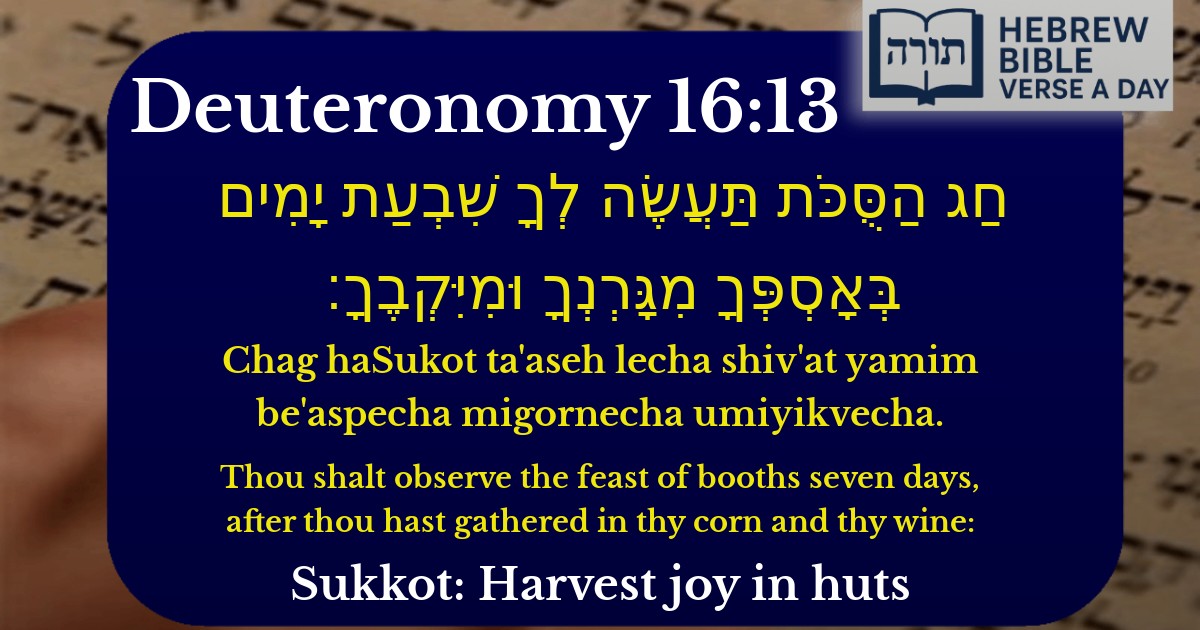
חַג הַסֻּכֹּת תַּעֲשֶׂה לְךָ שִׁבְעַת יָמִים בְּאָסְפְּךָ מִגָּרְנְךָ וּמִיִּקְבֶךָ׃
English Translation
Thou shalt observe the feast of booths seven days, after thou hast gathered in thy corn and thy wine:
Transliteration
Chag haSukot ta'aseh lecha shiv'at yamim be'aspecha migornecha umiyikvecha.
Hebrew Leining Text
חַ֧ג הַסֻּכֹּ֛ת תַּעֲשֶׂ֥ה לְךָ֖ שִׁבְעַ֣ת יָמִ֑ים בְּאׇ֨סְפְּךָ֔ מִֽגׇּרְנְךָ֖ וּמִיִּקְבֶֽךָ׃
🎵 Listen to leining
Parasha Commentary
📚 Talmud Citations
This verse is quoted in the Talmud.
📖 Sukkah 11b
The verse is discussed in the context of the mitzvah of dwelling in a sukkah and the timing of the festival in relation to the harvest.
📖 Rosh Hashanah 13a
The verse is referenced in a discussion about the timing of the harvest and its relation to the festival of Sukkot.
The Mitzvah of Sukkot
The verse commands the observance of the festival of Sukkot for seven days, specifically after the gathering of the harvest. This timing is significant, as Rashi explains (Devarim 16:13) that Sukkot is set during the harvest season when one's granaries and wine cellars are full. This serves as a reminder that our material blessings come from Hashem, preventing arrogance and fostering gratitude.
Agricultural Context and Spiritual Meaning
Rambam (Hilchot Yom Tov 6:20) emphasizes that Sukkot follows the harvest to teach that even when one is surrounded by abundance, one must leave the comfort of a permanent home and dwell in a temporary sukkah. This act demonstrates trust in Hashem's providence, as the sukkah symbolizes the divine protection experienced during the Exodus and in the wilderness.
Symbolism of the Sukkah
Connection to Simcha (Joy)
The Talmud (Sukkah 48a) teaches that Sukkot is called "the time of our joy" (זמן שמחתנו) because it follows the harvest, when people naturally feel joyous. The mitzvah channels this physical joy into spiritual rejoicing through the observance of the festival's commandments, including dwelling in the sukkah and taking the four species (arba minim).