

Join Our Newsletter To Be Informed When New Videos Are Posted
Hebrew Text
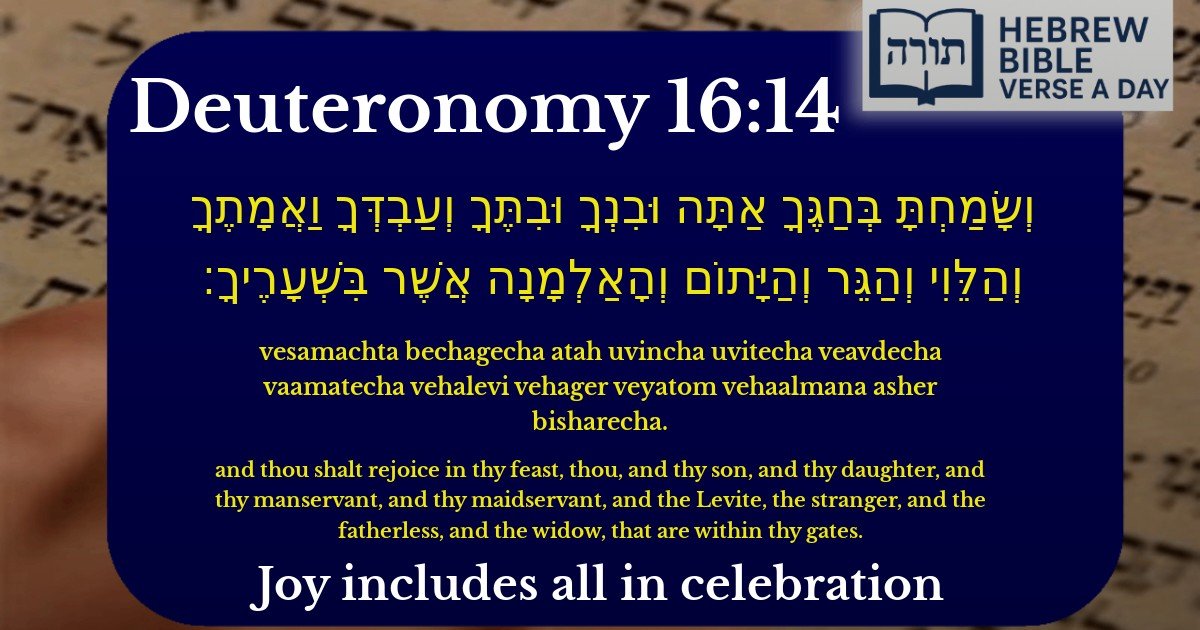
וְשָׂמַחְתָּ בְּחַגֶּךָ אַתָּה וּבִנְךָ וּבִתֶּךָ וְעַבְדְּךָ וַאֲמָתֶךָ וְהַלֵּוִי וְהַגֵּר וְהַיָּתוֹם וְהָאַלְמָנָה אֲשֶׁר בִּשְׁעָרֶיךָ׃
English Translation
and thou shalt rejoice in thy feast, thou, and thy son, and thy daughter, and thy manservant, and thy maidservant, and the Levite, the stranger, and the fatherless, and the widow, that are within thy gates.
Transliteration
Vesamachta bechagecha atah uvincha uvitecha veavdecha vaamatecha vehalevi vehager veyatom vehaalmana asher bisharecha.
Hebrew Leining Text
וְשָׂמַחְתָּ֖ בְּחַגֶּ֑ךָ אַתָּ֨ה וּבִנְךָ֤ וּבִתֶּ֙ךָ֙ וְעַבְדְּךָ֣ וַאֲמָתֶ֔ךָ וְהַלֵּוִ֗י וְהַגֵּ֛ר וְהַיָּת֥וֹם וְהָאַלְמָנָ֖ה אֲשֶׁ֥ר בִּשְׁעָרֶֽיךָ׃
🎵 Listen to leining
Parasha Commentary
📚 Talmud Citations
This verse is quoted in the Talmud.
📖 Pesachim 109a
The verse is cited in the context of discussing the obligation to rejoice on the festivals, emphasizing the inclusion of all members of the household and community in the celebration.
📖 Chagigah 7b
The verse is referenced in a discussion about the mitzvah of rejoicing on the festivals, particularly focusing on the inclusion of the Levite, stranger, orphan, and widow.
The Mitzvah of Simcha on the Festivals
The verse (Devarim 16:14) commands us to rejoice during the festivals (Chag). Rashi explains that this refers specifically to the mitzvah of simcha (joy) on the festivals of Pesach, Shavuot, and Sukkot. The Rambam (Hilchot Yom Tov 6:17-18) elaborates that this joy includes eating meat, drinking wine, and wearing new clothes, as these bring happiness to a person.
Inclusion of All Members of Society
The Torah enumerates specific groups who must participate in this rejoicing:
Social Responsibility During Festivals
The Talmud (Pesachim 109a) derives from this verse that one must include the poor and less fortunate in their festival meals. The Rambam (Hilchot Yom Tov 6:18) rules that one who locks his doors and eats alone without feeding the poor has not fulfilled the mitzvah of simchat Yom Tov, but rather only his own stomach's joy.
The Deeper Meaning of Simcha
The Seforno explains that true simcha comes from recognizing our spiritual elevation during the festivals. The inclusion of all societal members reflects that our joy is complete only when shared with others, especially those who might otherwise be excluded. This mirrors the divine attribute of chessed (kindness) that we are commanded to emulate.