

Join Our Newsletter To Be Informed When New Videos Are Posted
Hebrew Text
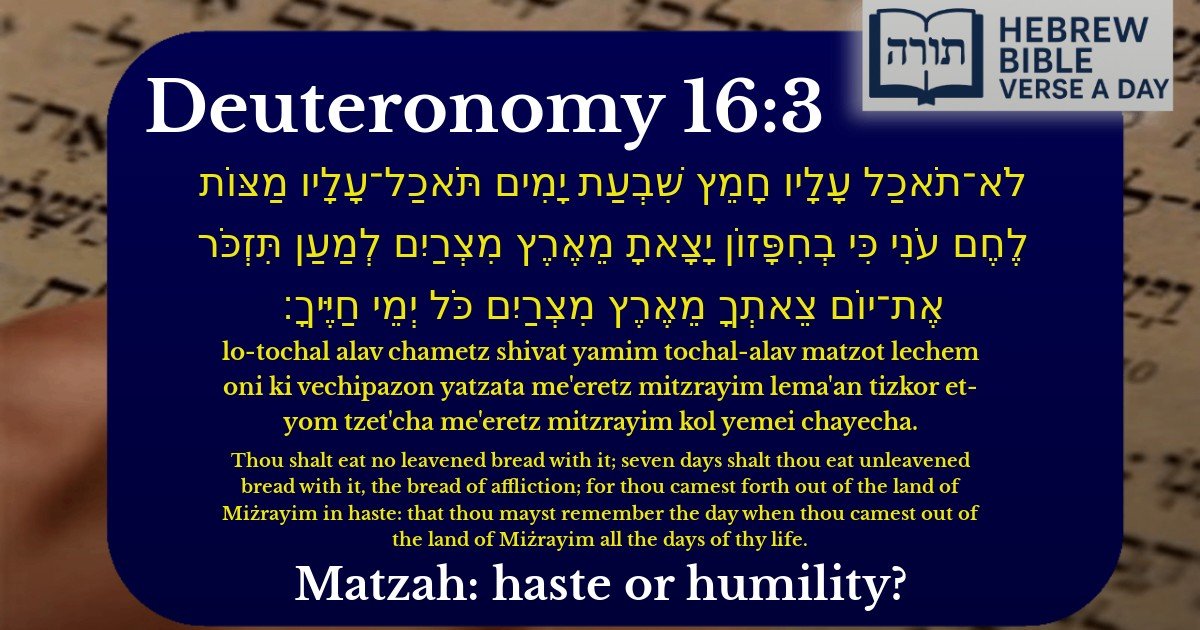
לֹא־תֹאכַל עָלָיו חָמֵץ שִׁבְעַת יָמִים תֹּאכַל־עָלָיו מַצּוֹת לֶחֶם עֹנִי כִּי בְחִפָּזוֹן יָצָאתָ מֵאֶרֶץ מִצְרַיִם לְמַעַן תִּזְכֹּר אֶת־יוֹם צֵאתְךָ מֵאֶרֶץ מִצְרַיִם כֹּל יְמֵי חַיֶּיךָ׃
English Translation
Thou shalt eat no leavened bread with it; seven days shalt thou eat unleavened bread with it, the bread of affliction; for thou camest forth out of the land of Miżrayim in haste: that thou mayst remember the day when thou camest out of the land of Miżrayim all the days of thy life.
Transliteration
Lo-tochal alav chametz shivat yamim tochal-alav matzot lechem oni ki vechipazon yatzata me'eretz mitzrayim lema'an tizkor et-yom tzet'cha me'eretz mitzrayim kol yemei chayecha.
Hebrew Leining Text
לֹא־תֹאכַ֤ל עָלָיו֙ חָמֵ֔ץ שִׁבְעַ֥ת יָמִ֛ים תֹּֽאכַל־עָלָ֥יו מַצּ֖וֹת לֶ֣חֶם עֹ֑נִי כִּ֣י בְחִפָּז֗וֹן יָצָ֙אתָ֙ מֵאֶ֣רֶץ מִצְרַ֔יִם לְמַ֣עַן תִּזְכֹּ֗ר אֶת־י֤וֹם צֵֽאתְךָ֙ מֵאֶ֣רֶץ מִצְרַ֔יִם כֹּ֖ל יְמֵ֥י חַיֶּֽיךָ׃
🎵 Listen to leining
Parasha Commentary
📚 Talmud Citations
This verse is quoted in the Talmud.
📖 Pesachim 116b
The verse is discussed in the context of the obligation to eat matzah during Passover and the prohibition of eating chametz. The Talmud explores the reasons behind these commandments, linking them to the Exodus from Egypt.
📖 Berakhot 37b
The verse is referenced in a discussion about the types of bread that can be used for the mitzvah of matzah and the significance of 'lechem oni' (bread of affliction).
Prohibition of Chametz and Mitzvah of Matzah
The verse (Devarim 16:3) commands us to abstain from chametz (leavened bread) and eat matzah (unleavened bread) for seven days during Pesach. Rashi explains that the phrase "לֶחֶם עֹנִי" ("bread of affliction") refers to matzah, which recalls the suffering of our ancestors in Mitzrayim (Egypt) and their hurried departure. The Rambam (Hilchot Chametz U'Matzah 6:1) emphasizes that eating matzah on the first night of Pesach is a Torah obligation, while abstaining from chametz is a separate prohibition.
Remembering Yetziat Mitzrayim (The Exodus)
The verse connects matzah to the haste of the Exodus ("כִּי בְחִפָּזוֹן יָצָאתָ"). The Talmud (Pesachim 116b) teaches that this remembrance is not merely historical but an ongoing obligation "כֹּל יְמֵי חַיֶּיךָ" ("all the days of your life"). The Sifrei (Devarim 130) elaborates that this includes recalling the Exodus both day and night, as reflected in the daily recitation of Shema.
Symbolism of Matzah
Practical Halachic Implications
The Shulchan Aruch (Orach Chaim 471:1) rules that one must verbally articulate the connection between matzah and the Exodus during the Seder, fulfilling "לְמַעַן תִּזְכֹּר" ("that you may remember"). The Mishnah Berurah (471:4) adds that this remembrance should inspire gratitude to Hashem for our freedom.