

Join Our Newsletter To Be Informed When New Videos Are Posted
Hebrew Text
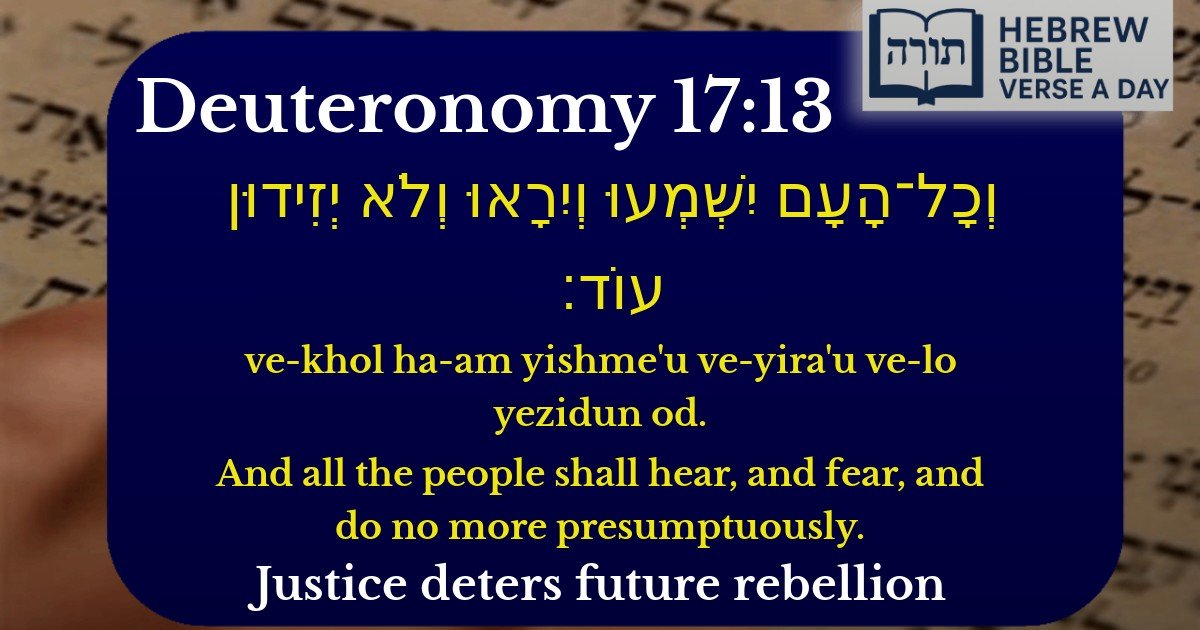
וְכָל־הָעָם יִשְׁמְעוּ וְיִרָאוּ וְלֹא יְזִידוּן עוֹד׃
English Translation
And all the people shall hear, and fear, and do no more presumptuously.
Transliteration
Ve-khol ha-am yishme'u ve-yira'u ve-lo yezidun od.
Hebrew Leining Text
וְכׇל־הָעָ֖ם יִשְׁמְע֣וּ וְיִרָ֑אוּ וְלֹ֥א יְזִיד֖וּן עֽוֹד׃ {ס}
🎵 Listen to leining
Parasha Commentary
📚 Talmud Citations
This verse is quoted in the Talmud.
📖 Sanhedrin 43b
The verse is cited in the context of discussing the deterrent effect of public executions, emphasizing that witnessing punishment instills fear and prevents further transgressions.
📖 Makkot 7a
Referenced in a discussion about the purpose of corporal punishment, illustrating how public awareness of consequences leads to fear and deterrence from sin.
Context and Source
The verse "וְכָל־הָעָם יִשְׁמְעוּ וְיִרָאוּ וְלֹא יְזִידוּן עוֹד" (Devarim 17:13) appears in the context of the laws concerning the rebellious elder (Zaken Mamre) and the authority of the Sanhedrin. The Torah mandates that a rebellious elder who defies the rulings of the High Court must be put to death, so that "all the people shall hear, and fear, and do no more presumptuously."
Meaning of the Verse
Rashi explains that the purpose of this severe punishment is to instill yir'ah (fear/awe) in the people, ensuring they respect the authority of the Sanhedrin and do not act with zadon (presumption or willful defiance). The Rambam (Hilchot Mamrim 3:4) elaborates that this law upholds the unity of Torah interpretation, preventing fragmentation of halachic authority.
Key Themes
Halachic Implications
The Rambam (Hilchot Sanhedrin 14:12) derives from this verse that capital punishment serves not only as retribution but also as a deterrent. The Sefer HaChinuch (Mitzvah 497) adds that this law reinforces societal order by ensuring that no individual undermines the unified transmission of Torah.
Moral Lesson
Beyond its legal application, the verse teaches the importance of kabbalat ol malchut shamayim (accepting the yoke of Heaven) and submission to Torah authority. The Midrash (Tanchuma Shoftim 2) compares this to a ship with many passengers—if one drills a hole, all suffer, highlighting the communal responsibility to uphold divine law.