Frequently Asked Questions
Q: What does 'innocent blood' mean in Deuteronomy 19:10?
A: In Deuteronomy 19:10, 'innocent blood' refers to the wrongful killing of a person who did not deserve the death penalty according to Torah law. The Torah emphasizes the gravity of taking an innocent life, as it defiles the land (Rashi on Deuteronomy 19:10). The verse warns against allowing such injustices to occur in the land of Israel, which God has given as an inheritance.
Q: Why is it important not to shed innocent blood in the land of Israel?
A: The Torah teaches that shedding innocent blood brings guilt upon the entire nation and defiles the land (Deuteronomy 19:10, Rashi). The land of Israel is holy, and God holds the people accountable for maintaining justice. The Talmud (Makkot 7a) discusses the severe consequences of wrongful executions, emphasizing the need for fair courts and proper legal procedures to prevent such tragedies.
Q: What practical lesson can we learn from Deuteronomy 19:10 today?
A: Deuteronomy 19:10 teaches the importance of justice and protecting innocent lives. Even today, we must ensure that legal systems operate fairly and avoid wrongful convictions. The Rambam (Hilchot Rotzeach 4:9) explains that society must establish reliable courts and thorough investigations to prevent innocent bloodshed. This verse reminds us of our collective responsibility to uphold righteousness.
Q: What does 'blood be upon thee' mean in this verse?
A: The phrase 'blood be upon thee' means that the guilt for shedding innocent blood rests on the entire community if they fail to prevent it (Rashi on Deuteronomy 19:10). The Talmud (Sanhedrin 37a) explains that every person is responsible for ensuring justice, as neglecting this duty brings collective accountability. The verse underscores the moral obligation to protect life and pursue justice.
Q: How does this verse relate to the cities of refuge mentioned in Deuteronomy 19?
A: Deuteronomy 19 discusses cities of refuge for accidental killers to prevent revenge killings. Verse 10 warns against allowing innocent bloodshed, which would happen if intentional murderers escape justice or if accidental killers are wrongly punished. The cities of refuge help maintain balance—protecting the unintentional killer while ensuring true murderers face justice (Rambam, Hilchot Rotzeach 8:4).

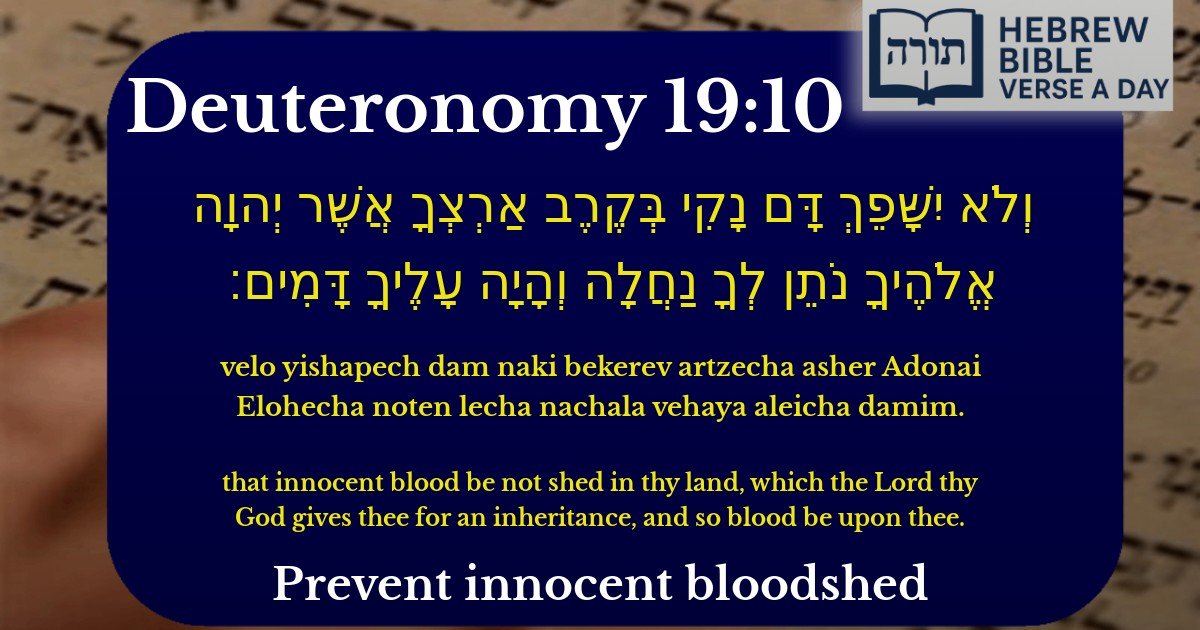

Prohibition of Shedding Innocent Blood
The verse (Devarim 19:10) warns against the shedding of innocent blood in the land of Israel, emphasizing the severe spiritual consequences of such an act. Rashi explains that the phrase "וְהָיָה עָלֶיךָ דָּמִים" ("and so blood be upon thee") implies collective responsibility—the entire nation bears guilt if innocent blood is shed due to negligence in establishing proper courts and justice systems.
Inheritance of the Land and Moral Responsibility
The Rambam (Hilchot Rotzeach 8:4) derives from this verse that maintaining justice is a prerequisite for retaining possession of Eretz Yisrael. The land is given as a נַחֲלָה (inheritance) conditional upon upholding righteousness. The Talmud (Makkot 7a) further states that failure to bring murderers to justice defiles the land and can lead to exile.
Collective Accountability
The Midrash Tanchuma (Mishpatim 8) teaches that when innocent blood is shed, it is as if the entire community shares in the transgression. This is why the verse states "עָלֶיךָ דָּמִים"—the bloodguilt rests upon the people collectively for failing to prevent the crime.