Frequently Asked Questions
Q: What does Deuteronomy 19:16 mean?
A: Deuteronomy 19:16 discusses the case of a false witness (עֵד־חָמָס) who testifies wrongly against another person. According to Rashi, this refers to someone who intentionally lies in court to harm another individual. The Torah takes false testimony very seriously because it can lead to grave injustices.
Q: Why is the law about false witnesses important in Judaism?
A: False testimony undermines justice, which is a foundational principle in Judaism. The Talmud (Makkot 1:1) explains that false witnesses are punished with the penalty they intended to bring upon the innocent person (מדה כנגד מדה). This teaches how severe it is to distort the truth in a court of law.
Q: What can we learn from Deuteronomy 19:16 today?
A: This verse teaches the importance of honesty and integrity, especially when speaking about others. The Rambam (Hilchot Edut 17:1) emphasizes that even outside of court, spreading falsehoods is forbidden. We must be careful with our words to avoid causing harm.
Q: How does Jewish law deal with false witnesses?
A: The Torah (Deuteronomy 19:19) states that false witnesses receive the punishment they intended for the accused. The Talmud (Sanhedrin 11a) elaborates on the legal process, requiring thorough cross-examination to prevent wrongful convictions. This ensures justice is upheld.
Q: Does this verse apply to everyday speech, not just court testimony?
A: Yes. While the verse specifically addresses court testimony, the Midrash (Sifrei Devarim 190) and later halachic authorities (like the Chofetz Chaim) extend the principle to all forms of false speech, including gossip and slander (לשון הרע). Guarding our speech is a key ethical obligation in Judaism.

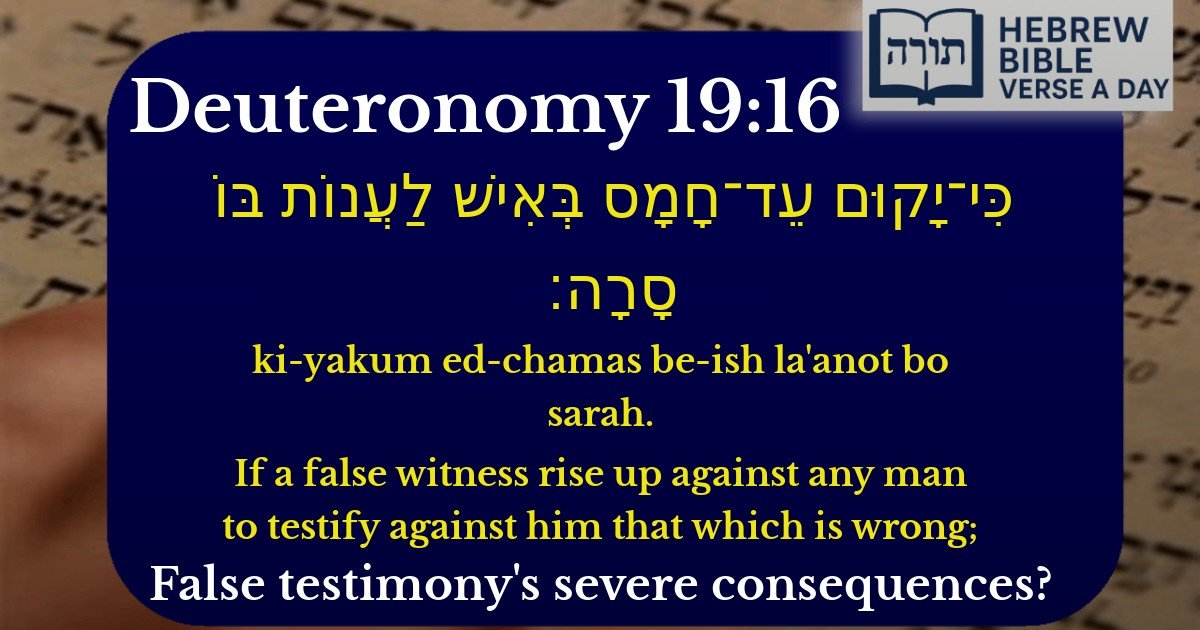

Context in the Torah
The verse (Devarim 19:16) discusses the laws pertaining to עֵד חָמָס ("eid chamas" – a malicious witness), who testifies falsely against another person. This is part of a broader section in Parashat Shoftim detailing the judicial procedures for handling false testimony.
Rashi's Explanation
Rashi (Devarim 19:16) explains that "כִּי־יָקוּם עֵד־חָמָס" refers to a witness who intentionally conspires to testify falsely against another. The term "חָמָס" (violence) indicates that such testimony is an act of moral corruption, as it seeks to harm an innocent person through deceit.
Rambam's Legal Perspective
In Hilchot Edut (Laws of Testimony 18:1), the Rambam (Maimonides) elaborates that a false witness is subject to the principle of "מידה כנגד מידה" (measure for measure). If convicted, the false witness receives the punishment they sought to impose on the innocent party (Devarim 19:19). This underscores the severity of corrupting justice.
Talmudic Analysis (Makkot 1:1)
The Mishnah in Makkot discusses the conditions under which false witnesses are punished:
Midrashic Insight (Sifrei Devarim 190)
The Sifrei emphasizes that the Torah uses the term "לַעֲנוֹת בּוֹ סָרָה" ("to testify against him falsely") to highlight that false testimony is not merely a legal violation but a rebellion ("סָרָה") against divine justice. It corrupts the very foundation of societal trust.
Moral Implications
The Sefer HaChinuch (Mitzvah 79) teaches that this law instills fear in potential false witnesses, ensuring the integrity of the judicial system. A society that tolerates deceit in testimony cannot uphold justice, a core value in Torah law.