

Join Our Newsletter To Be Informed When New Videos Are Posted
Hebrew Text
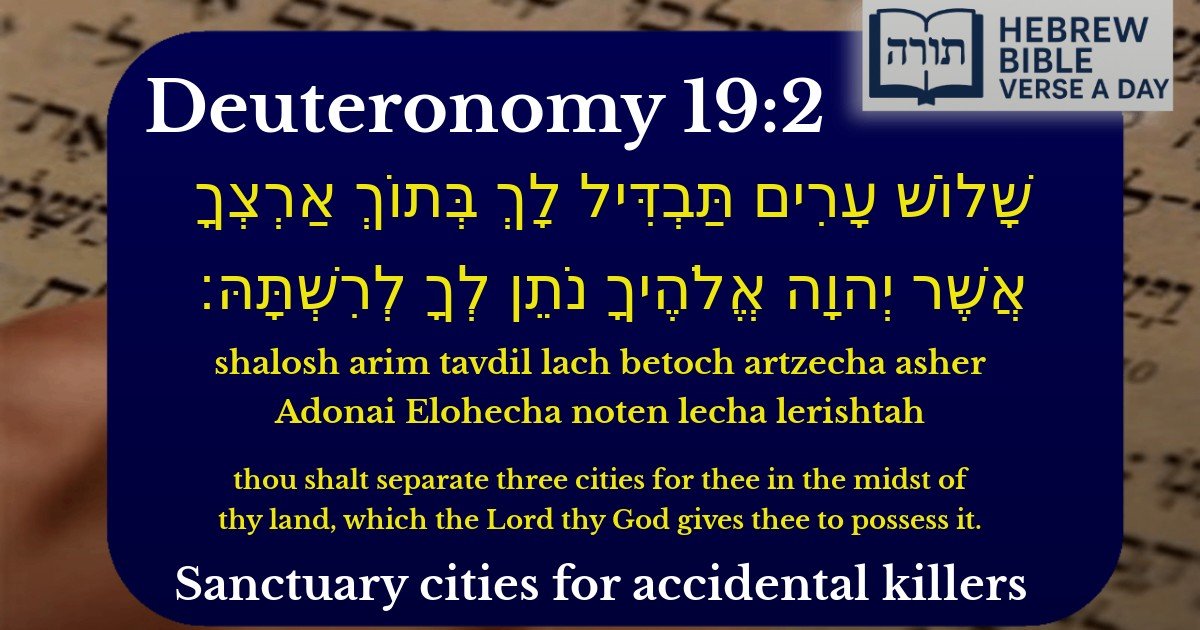
שָׁלוֹשׁ עָרִים תַּבְדִּיל לָךְ בְּתוֹךְ אַרְצְךָ אֲשֶׁר יְהוָה אֱלֹהֶיךָ נֹתֵן לְךָ לְרִשְׁתָּהּ׃
English Translation
thou shalt separate three cities for thee in the midst of thy land, which the Lord thy God gives thee to possess it.
Transliteration
Shalosh arim tavdil lach betoch artzecha asher Adonai Elohecha noten lecha lerishtah
Hebrew Leining Text
שָׁל֥וֹשׁ עָרִ֖ים תַּבְדִּ֣יל לָ֑ךְ בְּת֣וֹךְ אַרְצְךָ֔ אֲשֶׁר֙ יְהֹוָ֣ה אֱלֹהֶ֔יךָ נֹתֵ֥ן לְךָ֖ לְרִשְׁתָּֽהּ׃
🎵 Listen to leining
Parasha Commentary
📚 Talmud Citations
This verse is quoted in the Talmud.
📖 Makkot 9b
The verse is discussed in the context of the laws regarding the cities of refuge, particularly how the cities are to be designated and their purpose.
📖 Sotah 8b
The verse is referenced in a discussion about the allocation and sanctity of the cities of refuge.
Command to Establish Cities of Refuge
The verse (Devarim 19:2) commands the Jewish people to designate three cities of refuge (arei miklat) in the Land of Israel. These cities served as safe havens for individuals who committed accidental manslaughter, protecting them from avenging relatives (see Bamidbar 35:9-34).
Rashi's Explanation
Rashi (Devarim 19:2) notes that this commandment applies only after the conquest and division of the Land of Israel. He emphasizes that the cities must be prepared in advance, demonstrating the importance of being proactive in matters of justice and protection.
Rambam's Legal Perspective
In Hilchot Rotzeach U'Shmirat Nefesh (8:4), the Rambam elaborates on the requirements for these cities:
Symbolic Interpretation
The Midrash (Sifrei Devarim 181) suggests that the three cities correspond to the three Patriarchs (Avraham, Yitzchak, and Yaakov), teaching that their merit provides refuge for the Jewish people. Others connect them to the three parts of Torah (Torah, Nevi'im, and Ketuvim) which provide spiritual refuge.
Historical Context
The Talmud (Makkot 9b) explains that initially only three cities were established in the time of Yehoshua (east of the Jordan River), with three more to be added later when the Jewish territory expanded. This demonstrates the progressive nature of implementing Torah law based on historical circumstances.