

Join Our Newsletter To Be Informed When New Videos Are Posted
Hebrew Text
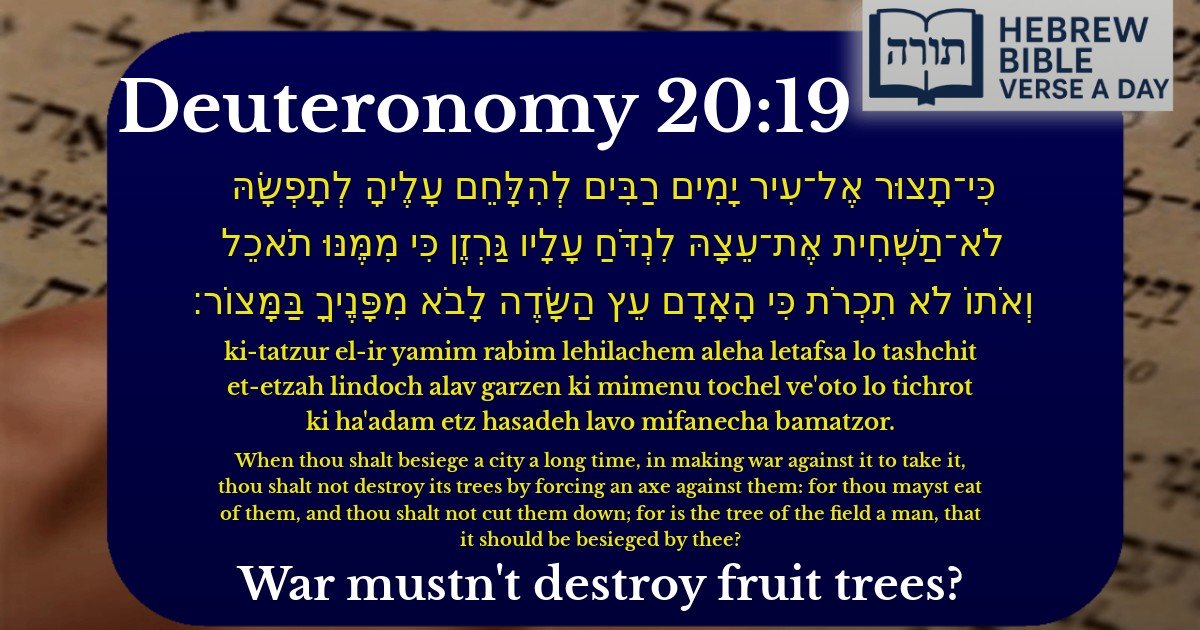
כִּי־תָצוּר אֶל־עִיר יָמִים רַבִּים לְהִלָּחֵם עָלֶיהָ לְתָפְשָׂהּ לֹא־תַשְׁחִית אֶת־עֵצָהּ לִנְדֹּחַ עָלָיו גַּרְזֶן כִּי מִמֶּנּוּ תֹאכֵל וְאֹתוֹ לֹא תִכְרֹת כִּי הָאָדָם עֵץ הַשָּׂדֶה לָבֹא מִפָּנֶיךָ בַּמָּצוֹר׃
English Translation
When thou shalt besiege a city a long time, in making war against it to take it, thou shalt not destroy its trees by forcing an axe against them: for thou mayst eat of them, and thou shalt not cut them down; for is the tree of the field a man, that it should be besieged by thee?
Transliteration
Ki-tatzur el-ir yamim rabim lehilachem aleha letafsa lo tashchit et-etzah lindoch alav garzen ki mimenu tochel ve'oto lo tichrot ki ha'adam etz hasadeh lavo mifanecha bamatzor.
Hebrew Leining Text
כִּֽי־תָצ֣וּר אֶל־עִיר֩ יָמִ֨ים רַבִּ֜ים לְֽהִלָּחֵ֧ם עָלֶ֣יהָ לְתׇפְשָׂ֗הּ לֹֽא־תַשְׁחִ֤ית אֶת־עֵצָהּ֙ לִנְדֹּ֤חַ עָלָיו֙ גַּרְזֶ֔ן כִּ֚י מִמֶּ֣נּוּ תֹאכֵ֔ל וְאֹת֖וֹ לֹ֣א תִכְרֹ֑ת כִּ֤י הָֽאָדָם֙ עֵ֣ץ הַשָּׂדֶ֔ה לָבֹ֥א מִפָּנֶ֖יךָ בַּמָּצֽוֹר׃
🎵 Listen to leining
Parasha Commentary
📚 Talmud Citations
This verse is quoted in the Talmud.
📖 Bava Kamma 91b
The verse is discussed in the context of the prohibition against wanton destruction of trees during warfare, illustrating the principle of bal tashchit (do not destroy).
📖 Sotah 46a
The verse is referenced in a discussion about the laws of warfare and the ethical treatment of the environment during military campaigns.
Prohibition of Destroying Fruit Trees During Siege
The verse (Devarim 20:19) prohibits the wanton destruction of fruit-bearing trees during wartime. Rashi explains that the phrase "כִּי הָאָדָם עֵץ הַשָּׂדֶה" ("for is the tree of the field a man") should be understood as a rhetorical question: "Is the tree like a human being that it should flee from you into the city under siege?" Since the tree cannot defend itself or escape, it is forbidden to destroy it needlessly.
Halachic Principles from the Verse
Moral and Ethical Lessons
The Midrash Tanchuma (Shofetim 19) teaches that this commandment reflects the Torah's sensitivity to all of Hashem's creations. Even during war—a time of destruction—we must maintain ethical boundaries and avoid unnecessary harm to the environment. The Sefer HaChinuch (Mitzvah 529) adds that this law trains us to cultivate compassion and avoid destructive tendencies, even in extreme circumstances.
Symbolic Interpretation
The Kli Yakar offers a deeper insight: The comparison of man to a tree (as hinted in the verse's phrasing) teaches that just as a tree's survival depends on its roots, a person's spiritual survival depends on their connection to Torah and mitzvot. Destroying a fruit tree is akin to severing a source of sustenance—both physical and spiritual.