

Join Our Newsletter To Be Informed When New Videos Are Posted
Hebrew Text
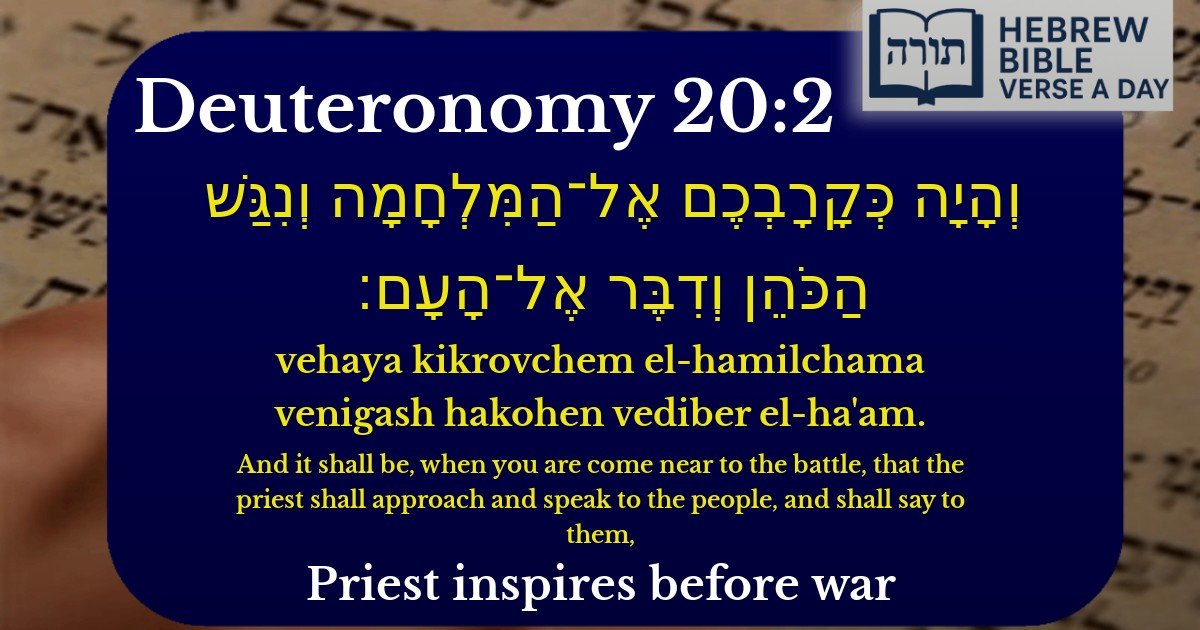
וְהָיָה כְּקָרָבְכֶם אֶל־הַמִּלְחָמָה וְנִגַּשׁ הַכֹּהֵן וְדִבֶּר אֶל־הָעָם׃
English Translation
And it shall be, when you are come near to the battle, that the priest shall approach and speak to the people, and shall say to them,
Transliteration
Vehaya kikrovchem el-hamilchama venigash hakohen vediber el-ha'am.
Hebrew Leining Text
וְהָיָ֕ה כְּקָֽרׇבְכֶ֖ם אֶל־הַמִּלְחָמָ֑ה וְנִגַּ֥שׁ הַכֹּהֵ֖ן וְדִבֶּ֥ר אֶל־הָעָֽם׃
🎵 Listen to leining
Parasha Commentary
📚 Talmud Citations
This verse is quoted in the Talmud.
📖 Sotah 42a
The verse is cited in the context of discussing the laws of war, specifically the priest's role in addressing the troops before battle.
Context in the Torah
The verse (Devarim 20:2) appears in the context of the laws of warfare, specifically outlining the role of the Kohen Mashuach Milchamah (the priest anointed for war) before the Jewish people engage in battle. This priestly address is meant to strengthen the people's faith and resolve as they prepare for war.
Role of the Kohen Mashuach Milchamah
Rashi (Devarim 20:2) explains that the priest designated for war is not the Kohen Gadol (High Priest), but a special priest appointed to inspire the troops with words of encouragement and divine assurance. The Talmud (Sotah 42a) elaborates that his role is to remind the soldiers of Hashem's presence and to ensure they do not falter in fear.
The Content of the Priest's Address
According to Rambam (Hilchot Melachim 7:1), the priest's speech includes four key messages:
Spiritual Preparation for War
The Midrash Tanchuma (Shoftim 19) emphasizes that physical warfare must be preceded by spiritual preparation. The priest's role is to elevate the consciousness of the soldiers, reminding them that victory comes from Hashem, not merely from military strength (as stated in Tehillim 20:8).
Halachic Implications
The Mishneh Torah (Hilchot Melachim 7:2-3) derives from this verse that war must be approached with proper religious protocol. The priest's involvement underscores that even in times of war, the Jewish people must maintain their connection to Torah and mitzvot.