

Join Our Newsletter To Be Informed When New Videos Are Posted
Hebrew Text
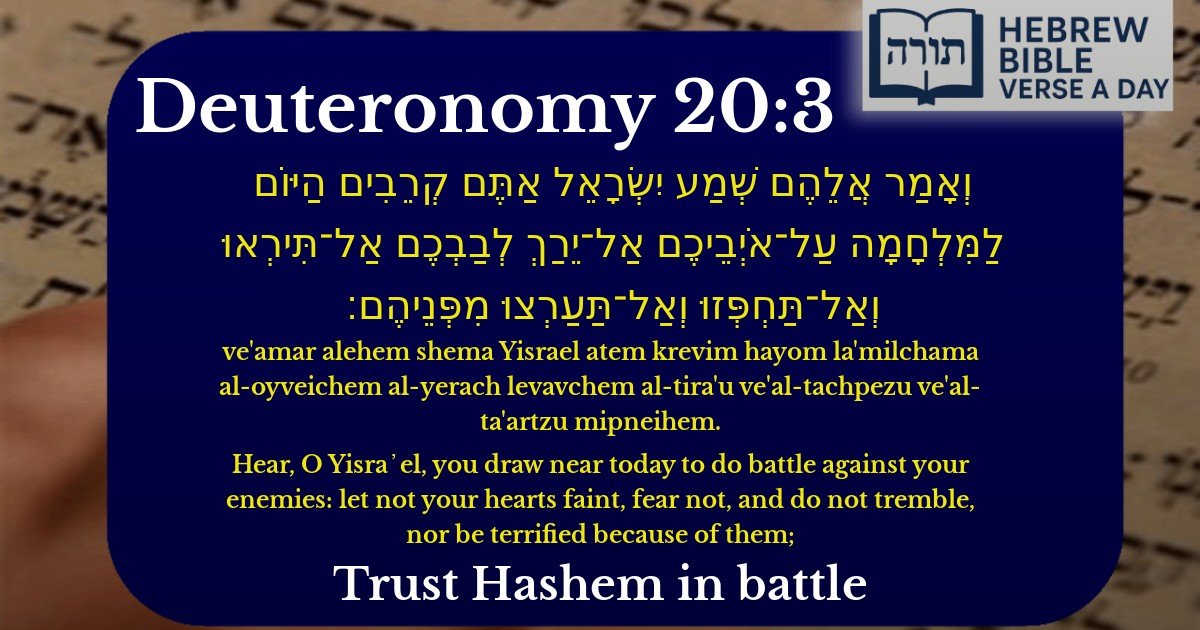
וְאָמַר אֲלֵהֶם שְׁמַע יִשְׂרָאֵל אַתֶּם קְרֵבִים הַיּוֹם לַמִּלְחָמָה עַל־אֹיְבֵיכֶם אַל־יֵרַךְ לְבַבְכֶם אַל־תִּירְאוּ וְאַל־תַּחְפְּזוּ וְאַל־תַּעַרְצוּ מִפְּנֵיהֶם׃
English Translation
Hear, O Yisra᾽el, you draw near today to do battle against your enemies: let not your hearts faint, fear not, and do not tremble, nor be terrified because of them;
Transliteration
Ve'amar alehem shema Yisrael atem krevim hayom la'milchama al-oyveichem al-yerach levavchem al-tira'u ve'al-tachpezu ve'al-ta'artzu mipneihem.
Hebrew Leining Text
וְאָמַ֤ר אֲלֵהֶם֙ שְׁמַ֣ע יִשְׂרָאֵ֔ל אַתֶּ֨ם קְרֵבִ֥ים הַיּ֛וֹם לַמִּלְחָמָ֖ה עַל־אֹיְבֵיכֶ֑ם אַל־יֵרַ֣ךְ לְבַבְכֶ֗ם אַל־תִּֽירְא֧וּ וְאַֽל־תַּחְפְּז֛וּ וְאַל־תַּֽעַרְצ֖וּ מִפְּנֵיהֶֽם׃
🎵 Listen to leining
Parasha Commentary
📚 Talmud Citations
This verse is quoted in the Talmud.
📖 Sotah 42a
The verse is cited in the context of discussing the laws and ethics of warfare, particularly the encouragement given to soldiers before battle to strengthen their resolve and trust in God.
📖 Berakhot 32b
Referenced in a discussion about prayer and the importance of not being fearful or faint-hearted when facing challenges, drawing a parallel to the encouragement given to Israel before battle.
Context of the Verse
This verse (Devarim 20:3) is part of Moshe Rabbeinu's instructions to Bnei Yisrael before they enter Eretz Yisrael and engage in battle. The Torah provides guidance on how to approach war spiritually and emotionally, emphasizing trust in Hashem.
Rashi's Explanation
Rashi explains that the phrase "שְׁמַע יִשְׂרָאֵל" (Hear, O Israel) serves as a call to unity and attentiveness. He notes that the Kohen Mashuach Milchamah (anointed priest for war) would recite these words to strengthen the people's resolve. Rashi also interprets "אַל־יֵרַךְ לְבַבְכֶם" (let not your hearts faint) as a warning against losing courage when hearing the enemy's shouts or seeing their weapons.
Rambam's Perspective
In Hilchot Melachim (Laws of Kings 7:15), the Rambam elaborates on the mitzvah of going to war with faith in Hashem. He emphasizes that the Kohen's role is to remind the soldiers that victory depends not on military strength alone but on divine assistance. The four prohibitions—fainting, fearing, trembling, and being terrified—are meant to instill complete reliance on Hashem.
Midrashic Insights
Practical Lessons from the Talmud
The Talmud (Sotah 42a) discusses the procedure of the Kohen Mashuach Milchamah, who would recite this verse to exempt those unfit for battle (e.g., those who built a new house or planted a vineyard). This teaches that war is not merely physical but requires spiritual readiness.
Chassidic Interpretation
The Baal Shem Tov teaches that this verse applies to personal spiritual battles as well. "Enemies" can refer to the yetzer hara (evil inclination), and the Torah's command to avoid fear reminds us that divine assistance is always present in overcoming challenges.