Frequently Asked Questions
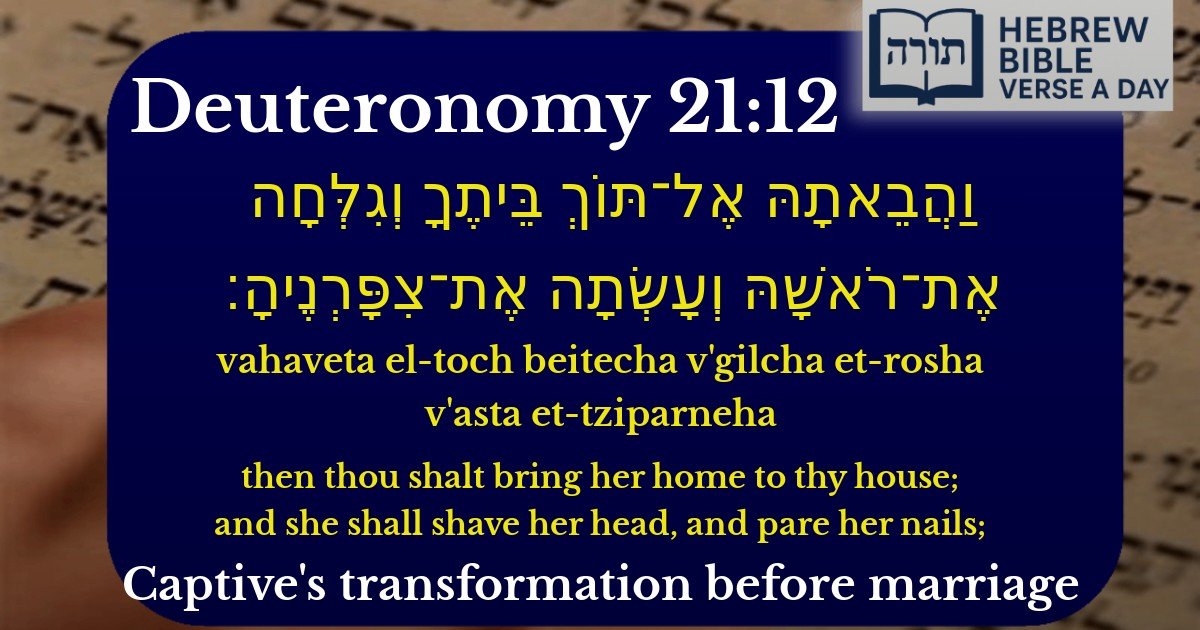
Q: What does Deuteronomy 21:12 mean when it says a captive woman should shave her head and pare her nails?
A: According to Rashi and traditional Jewish sources, this verse describes the process of a captive woman transitioning into Jewish life. Shaving her head and paring her nails symbolize removing her previous identity and attachments to idolatry. This period allows her to mourn her past and prepare for a new life under Jewish law.
Q: Why is the captive woman given time to mourn in Deuteronomy 21:12-13?
A: The Torah mandates this mourning period (30 days according to the Talmud, Kiddushin 21b) to give her time to emotionally detach from her previous life and make a sincere decision about joining the Jewish people. Rambam (Hilchos Melachim 8:5) explains this shows the Torah's sensitivity to human emotions, even in difficult circumstances.
Q: How does Jewish law apply Deuteronomy 21:12 about captive women today?
A: While the specific laws about captive women don't practically apply today (as we don't have biblical wars), the principles behind this verse - about treating captives with dignity, allowing time for transition, and rejecting forced conversions - remain important Jewish values. The Sages derived many ethical guidelines from these laws about proper treatment of others.
Q: What is the significance of the captive woman entering the Israelite's home in this verse?
A: The Midrash (Sifrei Devarim) explains that bringing her into his home (rather than keeping her as an outright servant) begins her process of exposure to Jewish family life. This environment, combined with the mourning period, allows her to make an informed choice about whether to accept Judaism and potentially marry her captor (if he still wishes after this period).
Q: Why does the Torah specify both shaving hair and cutting nails in Deuteronomy 21:12?
A: The Talmud (Yevamot 48a) discusses that these two actions serve different purposes: shaving represents removing outward signs of beauty (discouraging hasty marriage), while cutting nails removes dirt and impurity. Together they symbolize complete physical and spiritual cleansing before entering Jewish life.


Context in Torah
The verse (Devarim 21:12) is part of the laws concerning a yefat to'ar (a beautiful woman captured during war). The Torah outlines specific procedures to moderate the captor's desire and facilitate her transition into Jewish life, should he ultimately marry her.
Shaving the Head and Paring Nails
Rashi explains that these acts serve two purposes:
Halachic and Ethical Dimensions
Rambam (Hilchot Melachim 8:5) emphasizes that these laws are concessions to human weakness, not ideals. The Torah seeks to channel base impulses toward a constructive framework, ensuring the woman’s dignity and eventual integration into Klal Yisrael if she chooses conversion.
Midrashic Insight
The Midrash Tanchuma (Ki Teitzei 1) compares the shaving of her head to the nazirite’s haircut after completing vows—both symbolize a spiritual rebirth. Here, it marks her potential transition from idolatry to Torah life.