

Join Our Newsletter To Be Informed When New Videos Are Posted
Hebrew Text
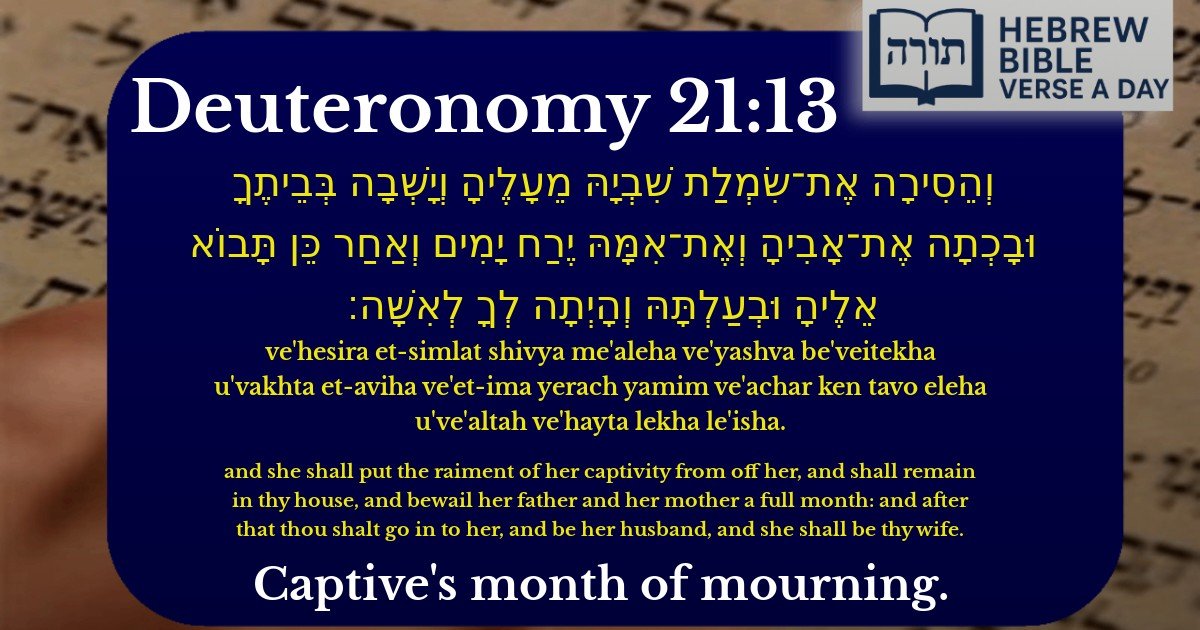
וְהֵסִירָה אֶת־שִׂמְלַת שִׁבְיָהּ מֵעָלֶיהָ וְיָשְׁבָה בְּבֵיתֶךָ וּבָכְתָה אֶת־אָבִיהָ וְאֶת־אִמָּהּ יֶרַח יָמִים וְאַחַר כֵּן תָּבוֹא אֵלֶיהָ וּבְעַלְתָּהּ וְהָיְתָה לְךָ לְאִשָּׁה׃
English Translation
and she shall put the raiment of her captivity from off her, and shall remain in thy house, and bewail her father and her mother a full month: and after that thou shalt go in to her, and be her husband, and she shall be thy wife.
Transliteration
Ve'hesira et-simlat shivya me'aleha ve'yashva be'veitekha u'vakhta et-aviha ve'et-ima yerach yamim ve'achar ken tavo eleha u've'altah ve'hayta lekha le'isha.
Hebrew Leining Text
וְהֵסִ֩ירָה֩ אֶת־שִׂמְלַ֨ת שִׁבְיָ֜הּ מֵעָלֶ֗יהָ וְיָֽשְׁבָה֙ בְּבֵיתֶ֔ךָ וּבָ֥כְתָ֛ה אֶת־אָבִ֥יהָ וְאֶת־אִמָּ֖הּ יֶ֣רַח יָמִ֑ים וְאַ֨חַר כֵּ֜ן תָּב֤וֹא אֵלֶ֙יהָ֙ וּבְעַלְתָּ֔הּ וְהָיְתָ֥ה לְךָ֖ לְאִשָּֽׁה׃
🎵 Listen to leining
Parasha Commentary
📚 Talmud Citations
This verse is quoted in the Talmud.
📖 Kiddushin 21b
The verse is discussed in the context of the laws regarding a captive woman and the procedures one must follow before marrying her.
📖 Yevamot 48a
The verse is referenced in a discussion about the conversion process and the mourning period for a captive woman.
Context of the Verse
This verse (Devarim 21:13) is part of the Torah's laws regarding the treatment of a yefat to'ar (a beautiful woman captured during wartime). The Torah outlines a process to ensure her dignity and emotional well-being before she may enter into marriage with her captor. The verse emphasizes compassion and respect, even in difficult circumstances.
Removing the Garments of Captivity
Rashi explains that the phrase "וְהֵסִירָה אֶת־שִׂמְלַת שִׁבְיָהּ מֵעָלֶיהָ" ("she shall put the raiment of her captivity from off her") refers to removing the clothing she wore during captivity, which may have been immodest or associated with idolatry (Rashi on Devarim 21:13). The Ramban adds that this act symbolizes her transition from a state of war and suffering to one of dignity and Jewish life.
Mourning for Her Parents
The verse requires her to mourn "אֶת־אָבִיהָ וְאֶת־אִמָּהּ" ("her father and her mother") for a full month (יֶרַח יָמִים). The Talmud (Yevamot 48a) discusses whether this mourning is literal or symbolic. Some opinions suggest that even if her parents are alive, she mourns the separation from her family and her former way of life. The month-long period allows her to process her emotions and make a deliberate choice about her future.
The Process of Marriage
The phrase "וְאַחַר כֵּן תָּבוֹא אֵלֶיהָ וּבְעַלְתָּהּ" ("after that thou shalt go in to her, and be her husband") indicates that the marriage cannot proceed until she has completed this period of adjustment. The Rambam (Hilchos Melachim 8:5) emphasizes that this law is designed to prevent impulsive or coercive relationships, ensuring that the woman's consent is meaningful.
Halachic and Ethical Considerations