

Join Our Newsletter To Be Informed When New Videos Are Posted
Hebrew Text
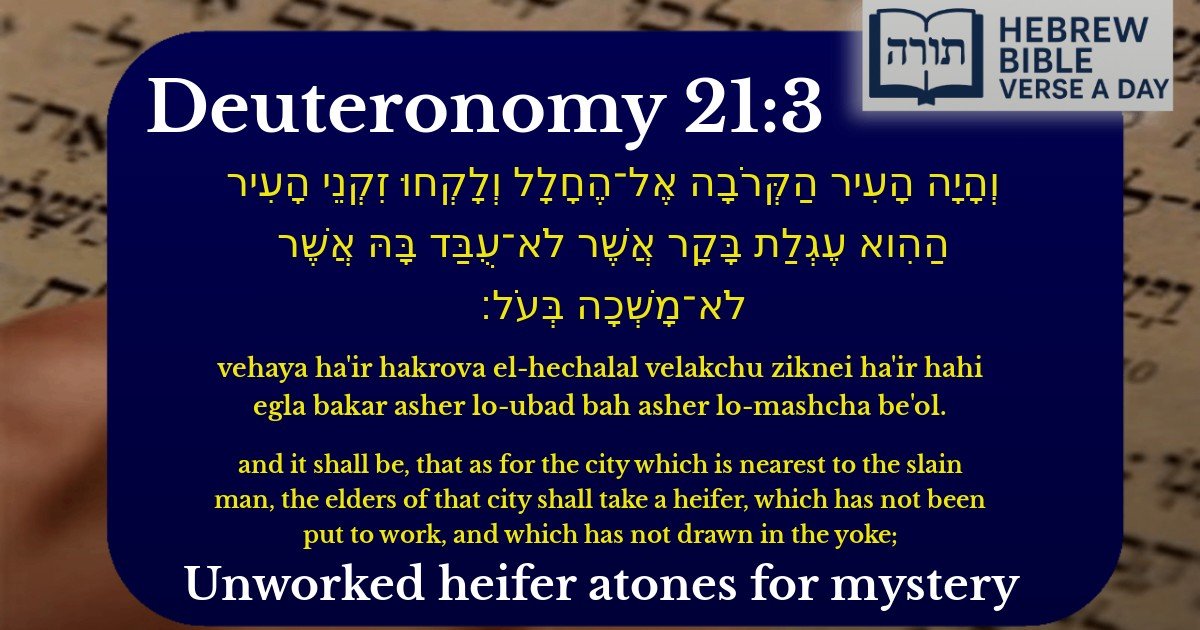
וְהָיָה הָעִיר הַקְּרֹבָה אֶל־הֶחָלָל וְלָקְחוּ זִקְנֵי הָעִיר הַהִוא עֶגְלַת בָּקָר אֲשֶׁר לֹא־עֻבַּד בָּהּ אֲשֶׁר לֹא־מָשְׁכָה בְּעֹל׃
English Translation
and it shall be, that as for the city which is nearest to the slain man, the elders of that city shall take a heifer, which has not been put to work, and which has not drawn in the yoke;
Transliteration
Vehaya ha'ir hakrova el-hechalal velakchu ziknei ha'ir hahi egla bakar asher lo-ubad bah asher lo-mashcha be'ol.
Hebrew Leining Text
וְהָיָ֣ה הָעִ֔יר הַקְּרֹבָ֖ה אֶל־הֶחָלָ֑ל וְלָֽקְח֡וּ זִקְנֵי֩ הָעִ֨יר הַהִ֜וא עֶגְלַ֣ת בָּקָ֗ר אֲשֶׁ֤ר לֹֽא־עֻבַּד֙ בָּ֔הּ אֲשֶׁ֥ר לֹא־מָשְׁכָ֖ה בְּעֹֽל׃
🎵 Listen to leining
Parasha Commentary
📚 Talmud Citations
This verse is quoted in the Talmud.
📖 Sotah 45b
The verse is discussed in the context of the ritual of the eglah arufah (the heifer whose neck is broken), which is performed when a slain person is found and the murderer is unknown. The Talmud elaborates on the details and requirements of this ritual as prescribed in the Torah.
📖 Chullin 114a
The verse is referenced in a discussion about the laws pertaining to animals that have not been worked or yoked, particularly in the context of sacrifices and rituals.
Explanation of the Verse
The verse describes the procedure of the Eglah Arufah (עגלה ערופה), the ritual performed when a slain body is found between cities, and the murderer is unknown. This mitzvah is detailed in Devarim 21:1-9, emphasizing communal responsibility for unresolved bloodshed.
Key Elements of the Ritual
Symbolism and Halachic Insights
The Eglah Arufah serves as both atonement and a public declaration that the elders did not neglect their duty. The Midrash Tanchuma (Shoftim 10) teaches that this ritual reminds the community of the gravity of bloodshed and the need for justice. The breaking of the heifer’s neck in an uncultivated valley (nachal eitan) signifies that such a tragedy should never recur.
Connection to Communal Accountability
The Talmud (Sotah 45b) elaborates that the elders must wash their hands and declare their innocence, yet they still bear responsibility. This teaches that even if no individual is guilty, the community must reflect on its moral state (Ramban, Devarim 21:7). The mitzvah underscores the Torah’s emphasis on collective responsibility in maintaining a just society.