

Join Our Newsletter To Be Informed When New Videos Are Posted
Hebrew Text
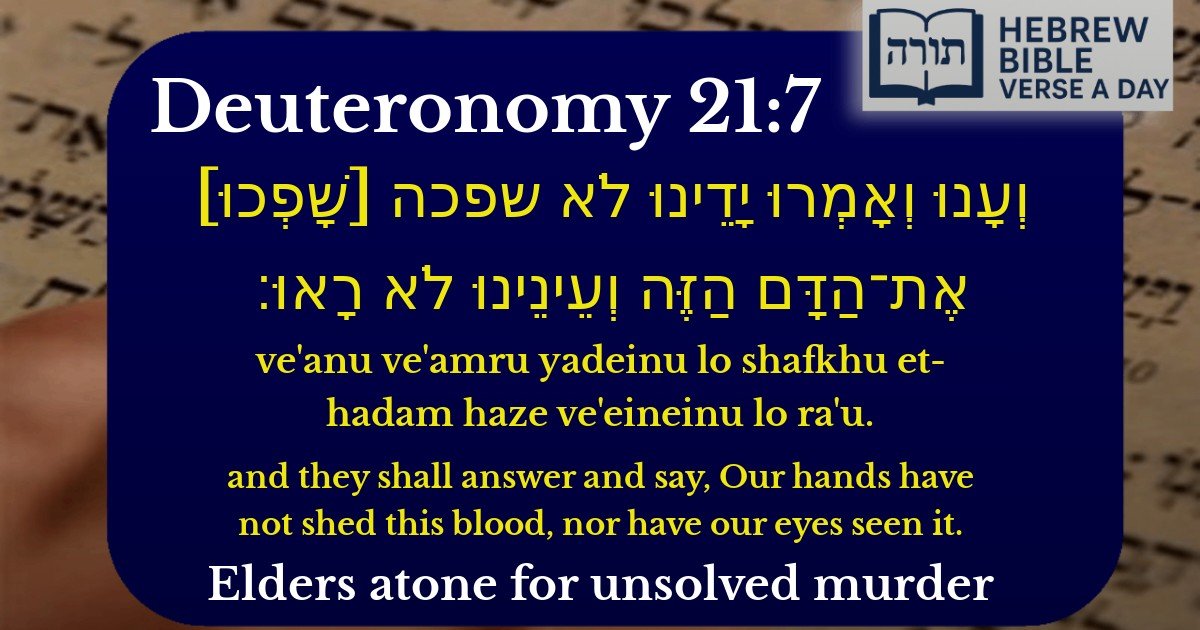
וְעָנוּ וְאָמְרוּ יָדֵינוּ לֹא שפכה [שָׁפְכוּ] אֶת־הַדָּם הַזֶּה וְעֵינֵינוּ לֹא רָאוּ׃
English Translation
and they shall answer and say, Our hands have not shed this blood, nor have our eyes seen it.
Transliteration
Ve'anu ve'amru yadeinu lo shafkhu et-hadam haze ve'eineinu lo ra'u.
Hebrew Leining Text
וְעָנ֖וּ וְאָמְר֑וּ יָדֵ֗ינוּ לֹ֤א (שפכה) [שָֽׁפְכוּ֙] אֶת־הַדָּ֣ם הַזֶּ֔ה וְעֵינֵ֖ינוּ לֹ֥א רָאֽוּ׃
🎵 Listen to leining
Parasha Commentary
📚 Talmud Citations
This verse is quoted in the Talmud.
📖 Sotah 45b
The verse is cited in the context of discussing the ritual of the eglah arufah (the broken-necked heifer), where the elders of the city nearest to a murder victim must declare their innocence in the matter.
📖 Sanhedrin 47b
The verse is referenced in a discussion about the responsibilities of the community and its leaders in cases of unsolved murders.
Context of the Verse
The verse (Devarim 21:7) is part of the Torah's discussion of the eglah arufah (the heifer whose neck is broken) ritual, performed when a slain body is found between cities and the murderer is unknown. The elders of the nearest city must declare their innocence in the matter.
Literal Meaning (Peshat)
Rashi explains that the elders declare, "Our hands have not shed this blood", meaning they did not directly kill the victim, nor did they "see it"—meaning they were unaware of the victim being in danger and thus failed to provide proper escort or protection (based on Sotah 45b). The Talmud emphasizes that this declaration is not merely about physical murder but also about communal responsibility.
Moral and Halachic Implications
Midrashic Interpretation
The Midrash (Tanchuma, Shoftim 10) elaborates that the declaration is not just about physical bloodshed but also about ensuring the victim was not neglected in terms of sustenance or kindness. The elders must affirm that they did not indirectly contribute to the death by failing to provide basic needs.
Philosophical Insight
Rabbi Samson Raphael Hirsch notes that the ritual serves as a public reminder that society must actively prevent violence and care for its members. The breaking of the heifer’s neck symbolizes the severing of life and the need for atonement when communal safeguards fail.