

Join Our Newsletter To Be Informed When New Videos Are Posted
Hebrew Text
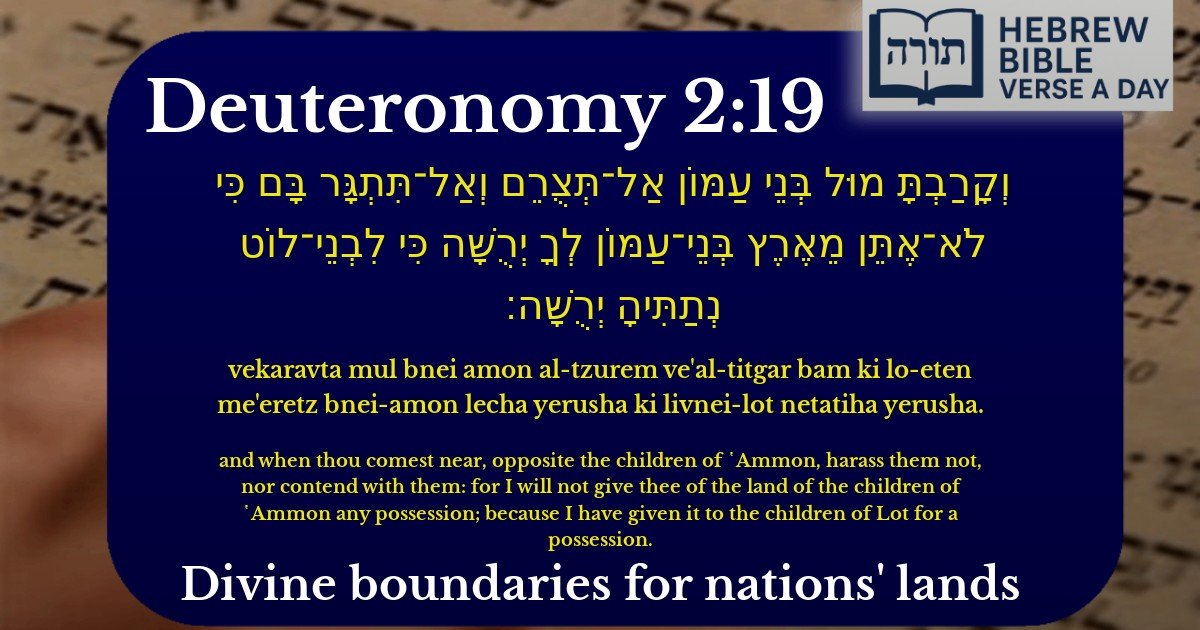
וְקָרַבְתָּ מוּל בְּנֵי עַמּוֹן אַל־תְּצֻרֵם וְאַל־תִּתְגָּר בָּם כִּי לֹא־אֶתֵּן מֵאֶרֶץ בְּנֵי־עַמּוֹן לְךָ יְרֻשָּׁה כִּי לִבְנֵי־לוֹט נְתַתִּיהָ יְרֻשָּׁה׃
English Translation
and when thou comest near, opposite the children of ῾Ammon, harass them not, nor contend with them: for I will not give thee of the land of the children of ῾Ammon any possession; because I have given it to the children of Lot for a possession.
Transliteration
Vekaravta mul bnei amon al-tzurem ve'al-titgar bam ki lo-eten me'eretz bnei-amon lecha yerusha ki livnei-lot netatiha yerusha.
Hebrew Leining Text
וְקָרַבְתָּ֗ מ֚וּל בְּנֵ֣י עַמּ֔וֹן אַל־תְּצֻרֵ֖ם וְאַל־תִּתְגָּ֣ר בָּ֑ם כִּ֣י לֹֽא־אֶ֠תֵּ֠ן מֵאֶ֨רֶץ בְּנֵי־עַמּ֤וֹן לְךָ֙ יְרֻשָּׁ֔ה כִּ֥י לִבְנֵי־ל֖וֹט נְתַתִּ֥יהָ יְרֻשָּֽׁה׃
🎵 Listen to leining
Parasha Commentary
📚 Talmud Citations
This verse is quoted in the Talmud.
📖 Chullin 60b
The verse is referenced in a discussion about the boundaries of the Land of Israel and the lands that were given to other nations, specifically mentioning the prohibition against taking the land of Ammon.
📖 Bava Kamma 38b
The verse is cited in a discussion about the ethical treatment of other nations and the divine commandments regarding territorial conquests.
Context of the Verse
This verse appears in Devarim (Deuteronomy) 2:19, where Moshe recounts Hashem's instructions to Bnei Yisrael regarding their interactions with neighboring nations as they approach Eretz Yisrael. The verse specifically addresses the prohibition against provoking or conquering the children of Ammon (Bnei Ammon).
Rashi's Explanation
Rashi (Devarim 2:19) explains that the land of Ammon was divinely designated as an inheritance for the descendants of Lot (Bnei Lot), specifically the children of Ammon and Moav. Hashem had already granted them this territory, and therefore, Bnei Yisrael were forbidden from taking it. Rashi emphasizes that this prohibition applies even though Ammon and Moav later acted hostilely toward Israel (e.g., in the time of Balak). The sanctity of their ancestral inheritance remains intact due to Hashem's original decree.
Rambam's Perspective
Rambam (Hilchot Melachim 5:1) cites this verse as part of the Torah's laws regarding warfare. He clarifies that Bnei Yisrael were commanded to first offer peace to certain nations before engaging in battle, but Ammon and Moav were exceptions—they were not to be attacked at all, as their land was not part of the divinely promised inheritance for Israel.
Midrashic Insights
Halachic Implications
The verse establishes a permanent boundary for Eretz Yisrael, excluding Ammon and Moav. Ramban (Devarim 2:9) adds that this prohibition applies even in future generations, reinforcing the sanctity of territorial divisions set by Hashem. The Chazon Ish (Eretz Yisrael 7:4) discusses how such boundaries reflect the divine will in land allocation, even beyond the immediate context of conquest.
Moral Lesson
This commandment teaches the importance of respecting divinely ordained boundaries and the property rights of others, even those outside Bnei Yisrael. The Kli Yakar (Devarim 2:19) suggests that this restraint also served to refine Bnei Yisrael's character, ensuring they did not become overly aggressive in their conquests.