

Join Our Newsletter To Be Informed When New Videos Are Posted
Hebrew Text
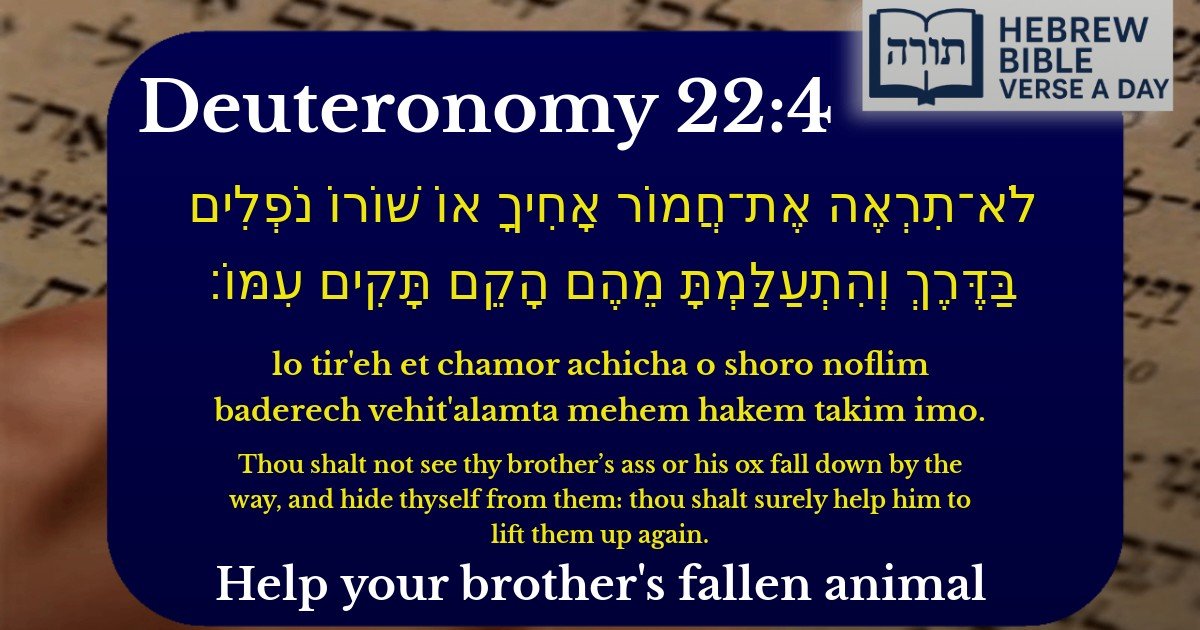
לֹא־תִרְאֶה אֶת־חֲמוֹר אָחִיךָ אוֹ שׁוֹרוֹ נֹפְלִים בַּדֶּרֶךְ וְהִתְעַלַּמְתָּ מֵהֶם הָקֵם תָּקִים עִמּוֹ׃
English Translation
Thou shalt not see thy brother’s ass or his ox fall down by the way, and hide thyself from them: thou shalt surely help him to lift them up again.
Transliteration
Lo tir'eh et chamor achicha o shoro noflim baderech vehit'alamta mehem hakem takim imo.
Hebrew Leining Text
לֹא־תִרְאֶה֩ אֶת־חֲמ֨וֹר אָחִ֜יךָ א֤וֹ שׁוֹרוֹ֙ נֹפְלִ֣ים בַּדֶּ֔רֶךְ וְהִתְעַלַּמְתָּ֖ מֵהֶ֑ם הָקֵ֥ם תָּקִ֖ים עִמּֽוֹ׃ {ס}
🎵 Listen to leining
Parasha Commentary
📚 Talmud Citations
This verse is quoted in the Talmud.
📖 Bava Metzia 32a
The verse is discussed in the context of the obligation to help unload and reload a fellow's animal that has fallen under its burden, emphasizing the ethical duty to assist others.
📖 Sanhedrin 73a
The verse is referenced in a discussion about the broader principle of not standing idly by when another's life or property is in danger, extending the commandment to various situations of assistance.
Overview of the Mitzvah
The verse (Devarim 22:4) commands us not to ignore a fellow Jew's struggling animal but rather to assist in lifting it up. This mitzvah falls under the broader category of tza'ar ba'alei chayim (preventing animal suffering) and gemilut chasadim (acts of kindness). The Torah emphasizes the obligation to help even when it requires personal effort, as seen in the double language of "הָקֵם תָּקִים" ("you shall surely help").
Rashi's Commentary
Rashi explains that the phrase "וְהִתְעַלַּמְתָּ מֵהֶם" ("and hide yourself from them") refers to deliberately avoiding the situation. He notes that one might rationalize ignoring the animal by claiming, "The owner will come soon," or "It’s not my responsibility." The Torah rejects such excuses, teaching that we must proactively assist.
Rambam's Legal Perspective
In Mishneh Torah (Hilchot Rotzeach 13:1-3), the Rambam expands on this mitzvah, ruling:
Talmudic and Midrashic Insights
The Talmud (Bava Metzia 32a) discusses whether this mitzvah applies to a non-Jew's animal. While there is a debate, the halacha follows the opinion that we assist a non-Jew's animal to avoid eivah (hostility) and to model ethical behavior.
The Midrash (Sifrei Devarim 225) connects this mitzvah to the broader principle of "לא תעמוד על דם רעך" ("Do not stand idly by your neighbor’s blood" – Vayikra 19:16), teaching that we must intervene to prevent suffering—whether to humans or animals.
Practical Applications
From this verse, we derive several halachic and ethical lessons: