Frequently Asked Questions
Q: What does Deuteronomy 24:17 mean?
A: Deuteronomy 24:17 commands us not to pervert justice for the stranger (ger) or the orphan, and not to take a widow's garment as collateral. Rashi explains that this verse emphasizes protecting vulnerable members of society who may not have advocates. The Torah repeatedly stresses kindness to these groups because they are often defenseless.
Q: Why is it forbidden to take a widow's garment as a pledge?
A: The Rambam (Hilchos Malveh v'Loveh 3:1) teaches that taking a widow's garment as collateral is prohibited because it may be her only source of warmth and dignity. The Talmud (Bava Metzia 115a) further explains that this applies even if she is wealthy, showing how seriously Judaism protects human dignity, especially for those who have suffered loss.
Q: How does this verse apply today?
A: This verse teaches timeless principles about social justice. Today, we apply it by: 1) Ensuring fair treatment for converts, immigrants, and disadvantaged people in legal matters 2) Being extra careful with financial dealings involving widows or single parents 3) Supporting organizations that protect vulnerable populations, as the Chofetz Chaim emphasized in his writings on interpersonal mitzvos.
Q: Why does the Torah mention stranger, orphan and widow together?
A: The Midrash (Sifrei Devarim 281) notes that these three groups represent classic examples of vulnerable people in society. The stranger lacks community ties, the orphan lacks parental protection, and the widow often lacks economic support. By grouping them, the Torah teaches that we must be especially vigilant to protect all who are disadvantaged.
Q: What's the connection between justice and taking collateral in this verse?
A: The Sefer HaChinuch (Mitzvah 580) explains that both parts of the verse deal with exploiting the vulnerable. Perverting justice denies their rights, while taking essential items as collateral exploits their poverty. Both show how the Torah demands we go beyond technical legality to act with compassion and righteousness in all dealings with those in need.

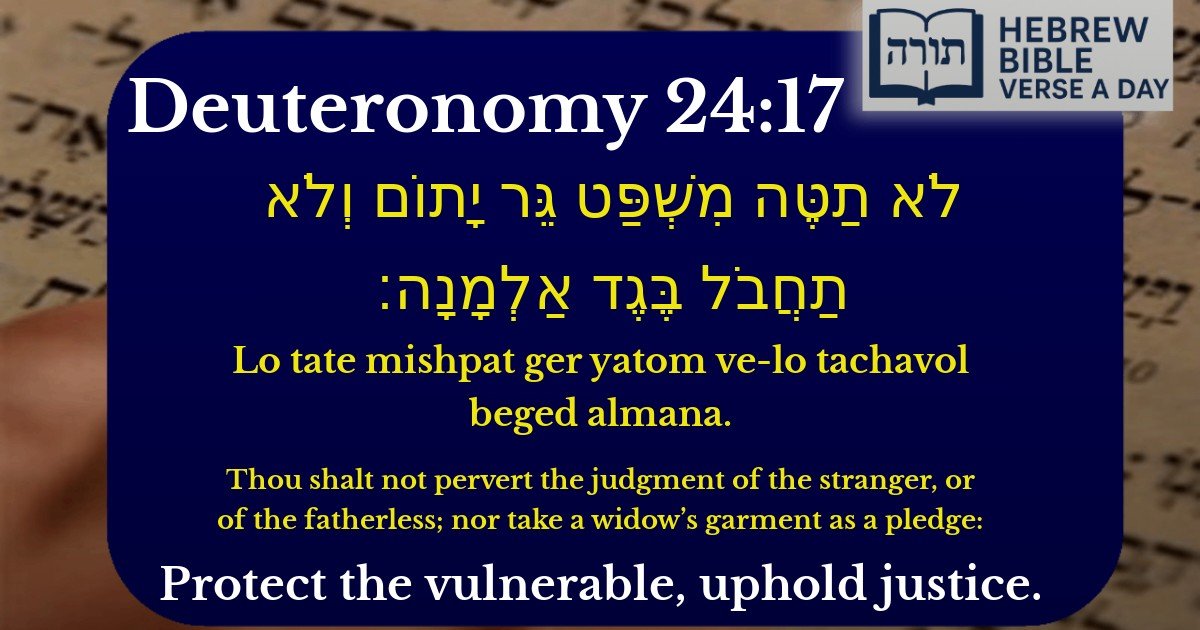

Prohibition Against Perverting Justice
The verse "לֹא תַטֶּה מִשְׁפַּט גֵּר יָתוֹם" ("Thou shalt not pervert the judgment of the stranger, or of the fatherless") underscores the Torah's emphasis on fair and impartial justice, particularly for vulnerable members of society. Rashi (Devarim 24:17) explains that the גֵר (stranger) and יָתוֹם (orphan) are singled out because they lack strong advocates, making them susceptible to injustice. The Rambam (Hilchot De'ot 6:10) further elaborates that one must be even more careful with their rights than with those of a powerful person, as Hashem hears their cries (Shemot 22:22).
Prohibition Against Taking a Widow’s Garment as Pledge
The second half of the verse, "וְלֹא תַחֲבֹל בֶּגֶד אַלְמָנָה" ("nor take a widow’s garment as a pledge"), is interpreted by the Talmud (Bava Metzia 115a) as a prohibition against taking any essential item from a widow, even if she is wealthy. The Midrash (Sifrei Devarim 281) teaches that this applies regardless of whether she is a widow of a first or second marriage, emphasizing the Torah’s broad protection for those in vulnerable circumstances.
Moral and Legal Implications