
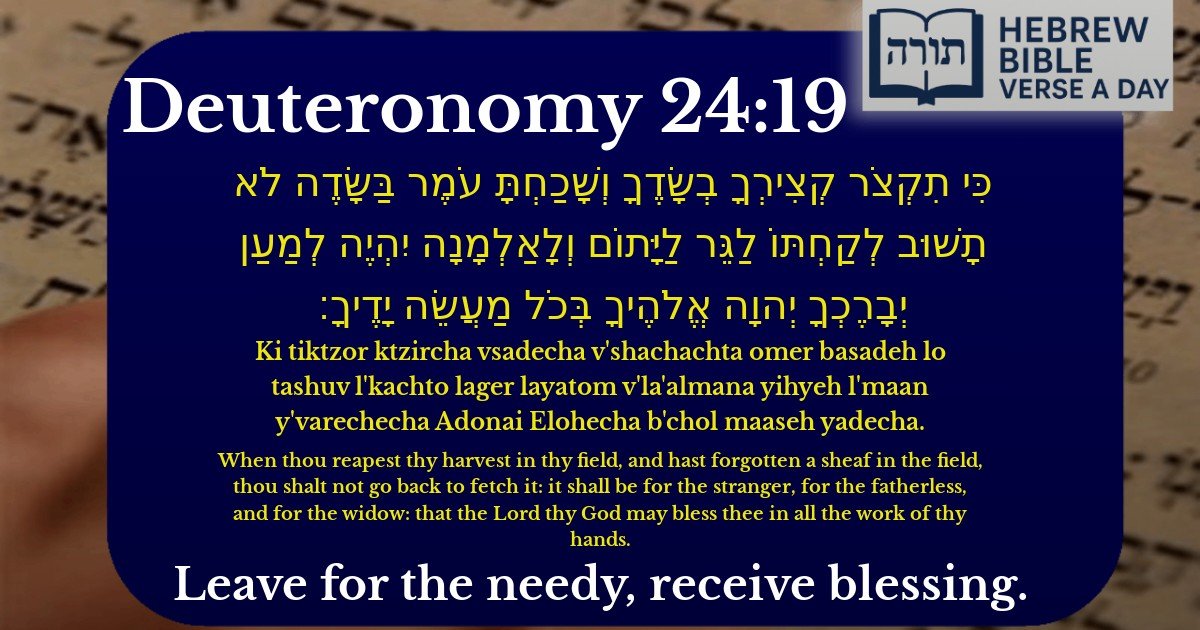

Deuteronomy 24:19 - Leave for the needy, receive blessing.

Deuteronomy 24:19 - דברים 24:19

Hebrew Text

כִּי תִקְצֹר קְצִירְךָ בְשָׂדֶךָ וְשָׁכַחְתָּ עֹמֶר בַּשָּׂדֶה לֹא תָשׁוּב לְקַחְתּוֹ לַגֵּר לַיָּתוֹם וְלָאַלְמָנָה יִהְיֶה לְמַעַן יְבָרֶכְךָ יְהוָה אֱלֹהֶיךָ בְּכֹל מַעֲשֵׂה יָדֶיךָ׃

English Translation

When thou reapest thy harvest in thy field, and hast forgotten a sheaf in the field, thou shalt not go back to fetch it: it shall be for the stranger, for the fatherless, and for the widow: that the Lord thy God may bless thee in all the work of thy hands.

Transliteration

Ki tiktzor ktzircha vsadecha v'shachachta omer basadeh lo tashuv l'kachto lager layatom v'la'almana yihyeh l'maan y'varechecha Adonai Elohecha b'chol maaseh yadecha.

Hebrew Leining Text

כִּ֣י תִקְצֹר֩ קְצִֽירְךָ֨ בְשָׂדֶ֜ךָ וְשָֽׁכַחְתָּ֧ עֹ֣מֶר בַּשָּׂדֶ֗ה לֹ֤א תָשׁוּב֙ לְקַחְתּ֔וֹ לַגֵּ֛ר לַיָּת֥וֹם וְלָאַלְמָנָ֖ה יִהְיֶ֑ה לְמַ֤עַן יְבָרֶכְךָ֙ יְהֹוָ֣ה אֱלֹהֶ֔יךָ בְּכֹ֖ל מַעֲשֵׂ֥ה יָדֶֽיךָ׃ {ס}        

🎵 Listen to leining

Parasha Commentary

The Mitzvah of Shikcha (Forgotten Sheaves)

The verse (Devarim 24:19) introduces the mitzvah of Shikcha, which obligates a landowner to leave forgotten sheaves (omer) in the field for the disadvantaged. Rashi explains that this applies only if the owner genuinely forgot the sheaf—not if he intentionally left it. The Torah emphasizes that one must not return to retrieve it, ensuring it remains for "the stranger, the fatherless, and the widow."

Beneficiaries of Shikcha

The verse specifies three groups who may claim the forgotten sheaf:

  • The stranger (ger): Rambam (Hilchos Matnos Aniyim 5:1) clarifies this refers to a ger toshav, a non-Jew living among Jews who observes the Noahide laws, or a convert.
  • The fatherless (yatom): The Talmud (Chulin 131a) notes this includes any minor without paternal support.
  • The widow (almanah): Midrash Tanchuma (Mishpatim 9) highlights this as an act of compassion for those without a provider.

Divine Reward for Fulfilling Shikcha

The verse concludes with a promise: "That the Lord thy God may bless thee in all the work of thy hands." The Sifrei (Devarim 283) teaches that this blessing extends beyond agricultural success—it encompasses all endeavors. Ramban adds that this mitzvah cultivates generosity, reminding us that material success ultimately comes from Hashem.

Halachic Details from the Talmud

Chazal derive several laws from this verse (Tractate Pe'ah 6:1-2):

  • Only sheaves forgotten in the field qualify—not those left in storage or during transport.
  • The mitzvah applies exclusively to grain crops (wheat, barley, etc.), not fruits or vegetables.
  • If the owner remembers the sheaf but abandons it for the poor, it does not fulfill Shikcha.

📚 Talmud Citations

This verse is quoted in the Talmud.

📖 Chullin 131a
The verse is cited in a discussion about the laws of forgotten sheaves (Shikcha) and the obligation to leave them for the poor.
📖 Sotah 9a
The verse is referenced in a discussion about the rewards for performing commandments related to charity and kindness to the poor.

Frequently Asked Questions

Q: What does Deuteronomy 24:19 mean?
A: Deuteronomy 24:19 teaches the mitzvah (commandment) of 'Shikcha'—leaving forgotten sheaves in the field for the poor. If a farmer forgets to gather a sheaf during harvest, he must not go back to retrieve it. Instead, it must be left for the stranger (ger), orphan, and widow, who may collect it for their needs. This demonstrates kindness and social responsibility.
Q: Why is leaving forgotten sheaves important in Judaism?
A: Leaving forgotten sheaves is one of several agricultural mitzvot (like Pe’ah and Leket) that emphasize caring for the less fortunate. Rashi explains that this teaches us to overcome selfishness and trust in Hashem’s blessings. By giving to the needy, we merit divine reward—'so that Hashem may bless you in all your deeds.'
Q: Who qualifies as a 'stranger, orphan, or widow' in this verse?
A: Traditional Jewish sources (e.g., Rambam in Hilchot Matnot Aniyim) define these groups as vulnerable members of society: The 'stranger' (ger) is a convert or non-citizen, the orphan has lost a father, and the widow lacks a husband’s support. The Torah prioritizes their needs to ensure they are not neglected.
Q: Does this law apply today if I don’t farm?
A: While this mitzvah specifically applies to landowners in Israel during harvest, its ethical lessons remain timeless. The Talmud (Chullin 131a) notes that many agricultural laws teach broader principles—here, generosity and awareness of others’ needs. Today, we apply this by supporting charities and ensuring no one is forgotten in our communities.
Q: How does forgetting a sheaf lead to blessing?
A: The verse concludes that this act brings divine blessing. The Midrash (Sifrei Devarim) explains that by relinquishing ownership willingly, we show trust in Hashem’s providence. Rambam (Hilchot Matnot Aniyim 10:2) adds that giving to the poor invites merit, as Hashem repays kindness with abundance in all our endeavors.