

Join Our Newsletter To Be Informed When New Videos Are Posted
Hebrew Text
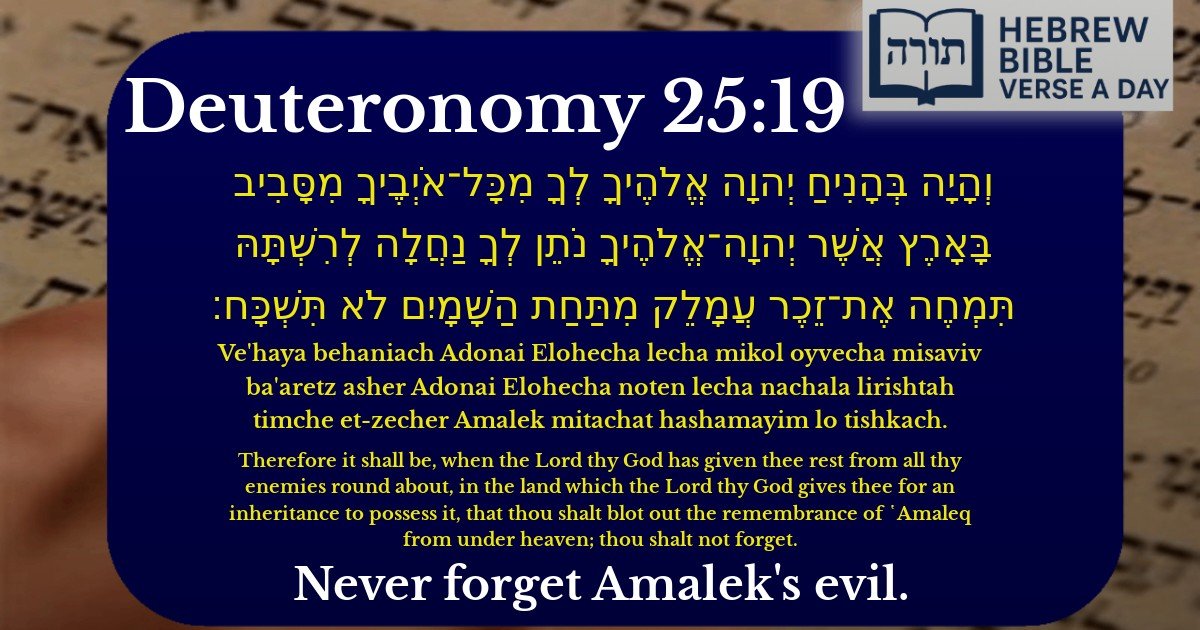
וְהָיָה בְּהָנִיחַ יְהוָה אֱלֹהֶיךָ לְךָ מִכָּל־אֹיְבֶיךָ מִסָּבִיב בָּאָרֶץ אֲשֶׁר יְהוָה־אֱלֹהֶיךָ נֹתֵן לְךָ נַחֲלָה לְרִשְׁתָּהּ תִּמְחֶה אֶת־זֵכֶר עֲמָלֵק מִתַּחַת הַשָּׁמָיִם לֹא תִּשְׁכָּח׃
English Translation
Therefore it shall be, when the Lord thy God has given thee rest from all thy enemies round about, in the land which the Lord thy God gives thee for an inheritance to possess it, that thou shalt blot out the remembrance of ῾Amaleq from under heaven; thou shalt not forget.
Transliteration
Ve'haya behaniach Adonai Elohecha lecha mikol oyvecha misaviv ba'aretz asher Adonai Elohecha noten lecha nachala lirishtah timche et-zecher Amalek mitachat hashamayim lo tishkach.
Hebrew Leining Text
וְהָיָ֡ה בְּהָנִ֣יחַ יְהֹוָ֣ה אֱלֹהֶ֣יךָ ׀ לְ֠ךָ֠ מִכׇּל־אֹ֨יְבֶ֜יךָ מִסָּבִ֗יב בָּאָ֙רֶץ֙ אֲשֶׁ֣ר יְהֹוָה־אֱ֠לֹהֶ֠יךָ נֹתֵ֨ן לְךָ֤ נַחֲלָה֙ לְרִשְׁתָּ֔הּ תִּמְחֶה֙ אֶת־זֵ֣כֶר עֲמָלֵ֔ק מִתַּ֖חַת הַשָּׁמָ֑יִם לֹ֖א תִּשְׁכָּֽח׃ {פ}
🎵 Listen to leining
Parasha Commentary
📚 Talmud Citations
This verse is quoted in the Talmud.
📖 Megillah 18a
The verse is referenced in the discussion about the commandment to remember and blot out the memory of Amalek.
📖 Sanhedrin 20b
The verse is cited in the context of discussing the mitzvah to destroy Amalek and the timing of this commandment.
📖 Yoma 22b
The verse is mentioned in relation to the obligation to remember what Amalek did to Israel and the commandment to eradicate them.
The Command to Wipe Out Amalek
The verse (Devarim 25:19) commands the Jewish people to eradicate the memory of Amalek once they are settled securely in the Land of Israel. Rashi explains that this mitzvah is contingent upon the Jewish people first achieving menuchah (rest) from all their enemies, as the verse states: "when Hashem your God has given you rest from all your enemies round about." Only then does the obligation to destroy Amalek take full effect.
The Nature of Amalek’s Evil
Rambam (Maimonides) in Sefer HaMitzvot (Positive Commandment 188) lists the eradication of Amalek as one of the 613 mitzvot. The Midrash (Tanchuma, Ki Teitzei 11) elaborates that Amalek represents the epitome of cruelty and defiance of Hashem, as they attacked the Jewish people unprovoked after the Exodus (Shemot 17:8-16). The Talmud (Sanhedrin 20b) emphasizes that this mitzvah applies even in future generations, as Amalek’s hatred is eternal.
Two Parts of the Mitzvah
Why "Under Heaven"?
The phrase "from under heaven" is interpreted by the Sifrei to mean that Amalek’s influence must be eradicated from the world entirely. The Kli Yakar adds that Amalek represents doubt (Amalek in gematria equals safek, doubt), and their ideology of denying Hashem’s providence must be eliminated.
Contemporary Implications
While the physical nation of Amalek may no longer be identifiable, the Vilna Gaon teaches that the spiritual battle against Amalek’s traits—cruelty and heresy—continues. The Chofetz Chaim (in Mishnah Berurah) stresses that remembering Amalek means opposing all forms of baseless hatred, which mirror Amalek’s attack on the Jewish people.