Frequently Asked Questions
Q: What is the context of Deuteronomy 25:8?
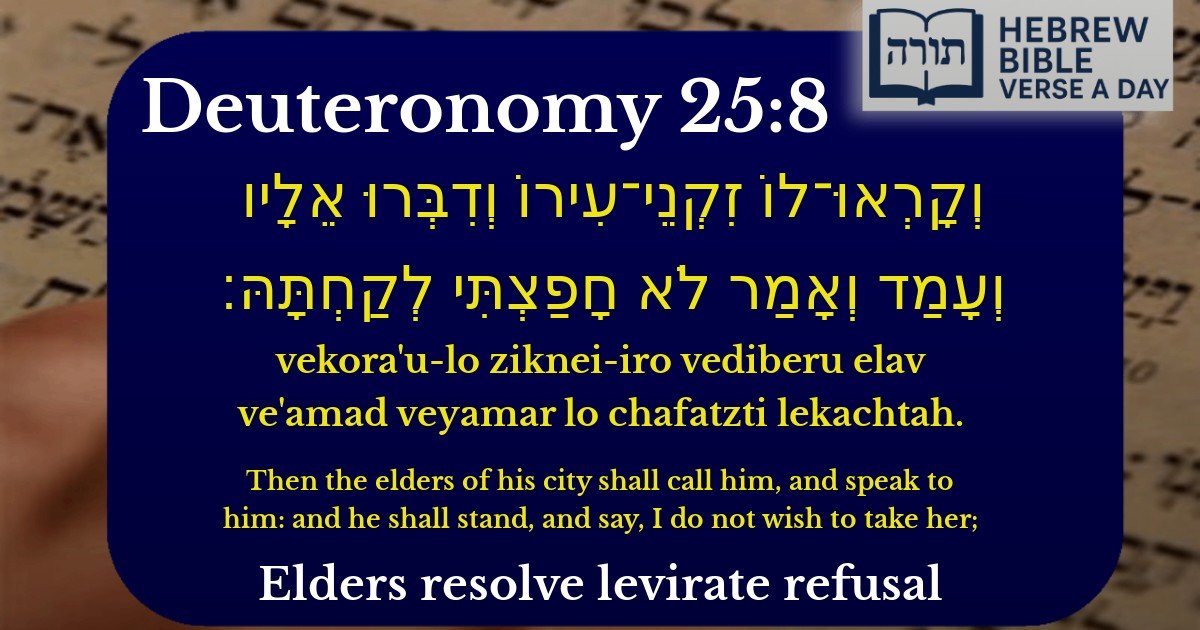
A: Deuteronomy 25:8 is part of the laws concerning levirate marriage (yibbum), where a man is required to marry his deceased brother's widow if the brother died childless. This verse describes the procedure if the brother-in-law refuses to perform this duty, leading to the ceremony of chalitzah (removing his shoe) as described in the following verses.
Q: Why does the brother-in-law say 'I do not wish to take her' in this verse?
A: The brother-in-law declares 'I do not wish to take her' to formally refuse the obligation of levirate marriage (yibbum). According to Rashi and Talmudic interpretation (Yevamot 39b), this public declaration ensures transparency and prevents coercion, allowing the widow to proceed with chalitzah and marry someone else.
Q: What is the role of the elders in Deuteronomy 25:8?
A: The elders of the city serve as witnesses and mediators in this process. As explained in the Talmud (Yevamot 101a), they ensure the refusal is properly recorded and that the subsequent chalitzah ceremony is performed according to Torah law, maintaining the dignity of the widow and the integrity of the mitzvah.
Q: Does this law still apply today?
A: While the Torah commandment of levirate marriage (yibbum) still exists, the Talmud (Bava Metzia 47b) and later halachic authorities (Rambam, Hilchos Yibbum 1:2) state that chalitzah is the preferred practice today. A beis din (Jewish court) oversees the process to ensure it follows halachic requirements.
Q: What lesson can we learn from this verse?
A: This verse teaches the importance of dignity and free will in mitzvah observance. As the Midrash (Sifrei Devarim 291) explains, Torah law prioritizes the feelings of individuals—even when dealing with sensitive obligations. It also highlights the community's role (through the elders) in upholding justice with compassion.


Context in Halacha
This verse (Devarim 25:8) is part of the mitzvah of chalitzah, the ceremony performed when a man refuses to marry his deceased brother's widow (yevamah). The Torah provides this alternative when the surviving brother (yavam) declares "I do not wish to take her" rather than fulfilling the mitzvah of yibum (levirate marriage).
Rashi's Explanation
Rashi explains that the elders must first attempt to persuade the yavam to perform yibum, as it is the preferred mitzvah. Only if he persists in his refusal do they proceed with chalitzah. The phrase "and he shall stand" indicates the formal, public nature of this declaration before the Beit Din.
Talmudic Analysis (Yevamot 106b)
The Talmud discusses why the Torah specifies that the elders "shall call him" rather than him coming on his own initiative. This teaches that the Beit Din must summon him, showing the seriousness of the matter. The Sages derive from this that all proceedings must be conducted with proper judicial protocol.
Rambam's Halachic Perspective (Hilchos Yibum 1:1-2)
The Rambam codifies that this procedure demonstrates the Torah's compassion - if the yavam truly cannot bring himself to marry his brother's widow, the Torah provides an honorable way out through chalitzah. However, he emphasizes that yibum remains the ideal when performed with proper intentions.
Midrashic Insight (Sifri Devarim 291)
The Midrash notes the phrasing "the elders of his city" rather than just "the elders" teaches that the court must be from his place of residence. This ensures the judges understand the family dynamics and can properly assess the situation.